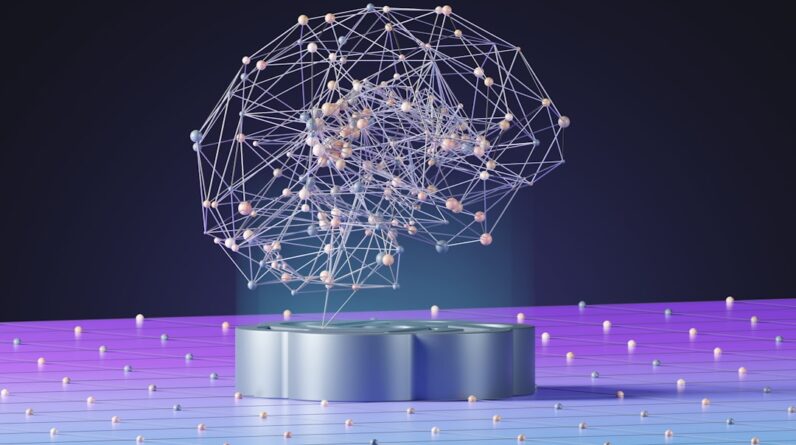
In recent years, artificial intelligence (AI) has emerged as a transformative force across various sectors, revolutionizing how we approach complex problems. You may have noticed its presence in everyday applications, from virtual assistants to advanced data analytics. AI encompasses a broad range of technologies that enable machines to mimic human cognitive functions, such as learning, reasoning, and problem-solving.
As you delve deeper into this fascinating field, you will encounter swarm intelligence, a concept inspired by the collective behavior of social organisms like ants, bees, and flocks of birds. This intriguing intersection of AI and swarm intelligence offers a unique lens through which to explore collective problem-solving. Swarm intelligence emphasizes the power of collaboration and decentralized decision-making.
When you observe a flock of birds or a colony of ants, you witness a remarkable phenomenon: individual agents working together to achieve a common goal without centralized control. This natural model has inspired researchers and engineers to develop algorithms that harness similar principles in artificial systems. By understanding how these biological systems operate, you can appreciate the potential for AI to enhance collective problem-solving capabilities in various domains.
Key Takeaways
- AI refers to the simulation of human intelligence in machines, while swarm intelligence involves the collective behavior of decentralized, self-organized systems.
- Collective problem-solving harnesses the power of group intelligence to find solutions that are often more effective than those of individual agents.
- AI plays a crucial role in collective problem-solving by analyzing large amounts of data, identifying patterns, and making predictions to aid in decision-making processes.
- Swarm intelligence contributes to collective problem-solving by enabling groups to adapt to changing environments, optimize resources, and find innovative solutions through collaboration.
- AI and swarm intelligence are applied in various fields such as healthcare, transportation, and finance, but they also come with limitations such as bias and ethical concerns that need to be addressed.
Understanding Collective Problem-solving
Collective problem-solving refers to the process by which groups of individuals or agents work together to address challenges or achieve objectives. You might think of it as a team effort where diverse perspectives and skills come together to create innovative solutions. This approach is particularly valuable in complex scenarios where no single individual possesses all the necessary knowledge or expertise.
By pooling resources and insights, groups can tackle problems more effectively than isolated efforts. In your daily life, you likely engage in collective problem-solving without even realizing it. Whether collaborating with colleagues on a project or brainstorming ideas with friends, you experience firsthand the benefits of shared knowledge and diverse viewpoints.
The synergy created through collaboration often leads to more creative solutions and better outcomes. As you explore the dynamics of collective problem-solving further, you will discover how AI and swarm intelligence can amplify these natural tendencies, enabling groups to tackle even more intricate challenges.
The Role of AI in Collective Problem-solving
AI plays a pivotal role in enhancing collective problem-solving by providing tools and frameworks that facilitate collaboration among individuals or agents. One of the most significant contributions of AI is its ability to analyze vast amounts of data quickly and efficiently. When faced with complex problems, you can leverage AI algorithms to identify patterns, generate insights, and propose potential solutions based on historical data.
This capability allows teams to make informed decisions grounded in evidence rather than relying solely on intuition. Moreover, AI can enhance communication and coordination among team members. In a world where remote work is becoming increasingly common, you may find yourself relying on AI-driven platforms that streamline collaboration.
These tools can help manage tasks, track progress, and ensure that everyone is aligned toward a common goal. By automating routine processes and providing real-time feedback, AI empowers teams to focus on higher-level strategic thinking and creative problem-solving.
The Role of Swarm Intelligence in Collective Problem-solving
Swarm intelligence offers a unique perspective on collective problem-solving by emphasizing decentralized decision-making and self-organization. In nature, you can observe how individual agents follow simple rules that lead to complex group behaviors. For instance, ants communicate through pheromones to find the shortest path to food sources, while fish schools change direction collectively in response to predators.
These behaviors illustrate how local interactions among individuals can lead to effective group outcomes without a central authority. Incorporating swarm intelligence principles into AI systems can significantly enhance their problem-solving capabilities. For example, algorithms inspired by swarm behavior can optimize resource allocation in logistics or improve traffic management in urban environments.
When you apply these principles to artificial systems, you create adaptive solutions that can respond dynamically to changing conditions. This adaptability is crucial in today’s fast-paced world, where challenges often arise unexpectedly and require quick responses.
Applications of AI and Swarm Intelligence in Problem-solving
The applications of AI and swarm intelligence in collective problem-solving are vast and varied. In the realm of environmental management, for instance, you might encounter AI-driven systems that analyze ecological data to optimize resource use or predict natural disasters. By harnessing swarm intelligence principles, these systems can adaptively manage resources based on real-time conditions, ensuring sustainability while minimizing waste.
In healthcare, AI and swarm intelligence are being utilized to improve patient outcomes through collaborative diagnosis and treatment planning. You may find that AI algorithms analyze patient data from multiple sources, identifying trends that inform treatment decisions. Meanwhile, swarm intelligence can facilitate collaboration among healthcare professionals, allowing them to share insights and expertise in real time.
This combination enhances the overall quality of care while streamlining processes that traditionally relied on siloed information.
Advantages and Limitations of AI and Swarm Intelligence in Collective Problem-solving
Processing Power and Insights
One significant advantage is the ability to process large datasets quickly and accurately. You can leverage AI algorithms to uncover insights that would be impossible for humans to discern alone.
Resilience and Adaptability
Additionally, swarm intelligence promotes resilience and adaptability within systems, allowing them to respond effectively to changing circumstances.
Limitations and Challenges
However, there are limitations to consider as well. One challenge is the potential for over-reliance on technology, which may lead to diminished critical thinking skills among individuals. As you become accustomed to relying on AI for decision-making support, it’s crucial to maintain your analytical abilities and not become overly dependent on automated systems. Furthermore, swarm intelligence systems may struggle with coordination when faced with highly complex problems that require specialized knowledge or expertise.
Ethical Considerations in AI and Swarm Intelligence
As you explore the intersection of AI and swarm intelligence in collective problem-solving, ethical considerations become paramount. The deployment of these technologies raises questions about accountability, transparency, and fairness. For instance, when AI algorithms make decisions based on data analysis, it is essential to ensure that these decisions are free from bias and do not perpetuate existing inequalities.
You must consider how data is collected, processed, and utilized within these systems to avoid unintended consequences. Moreover, the use of swarm intelligence raises ethical dilemmas related to autonomy and control. In decentralized systems where individual agents operate independently, it becomes challenging to establish accountability for actions taken by the group as a whole.
As you engage with these technologies, it is vital to advocate for ethical guidelines that prioritize human values and ensure that collective problem-solving efforts align with societal goals.
The Future of Collective Problem-solving with AI and Swarm Intelligence
Looking ahead, the future of collective problem-solving with AI and swarm intelligence holds immense promise. As technology continues to evolve, you can expect more sophisticated algorithms that enhance collaboration among individuals and groups. The integration of AI with swarm intelligence principles will likely lead to innovative solutions for pressing global challenges such as climate change, public health crises, and resource management.
Furthermore, as you become more familiar with these technologies, you may find opportunities to contribute actively to their development and application. Engaging with interdisciplinary teams that combine expertise in AI, biology, ethics, and social sciences will be crucial for creating holistic solutions that address complex problems effectively. By embracing the potential of AI and swarm intelligence in collective problem-solving, you can play a role in shaping a future where collaboration leads to meaningful progress for society as a whole.
In conclusion, the interplay between AI and swarm intelligence offers exciting possibilities for enhancing collective problem-solving capabilities across various domains. By understanding the principles behind these technologies and their applications, you can appreciate their potential while remaining mindful of ethical considerations and limitations. As we move forward into an increasingly interconnected world, harnessing the power of collaboration will be essential for addressing the challenges that lie ahead.
AI and Swarm Intelligence: the Future of Collective Problem-solving is a fascinating topic that explores how artificial intelligence and collective intelligence can work together to solve complex problems. One related article that delves deeper into the applications of AI is AI for Wildlife Conservation: Protecting Endangered Species. This article discusses how AI technology is being used to track and protect endangered species, showcasing the potential of AI in making a positive impact on the environment.
FAQs
What is AI and Swarm Intelligence?
AI, or artificial intelligence, refers to the simulation of human intelligence processes by machines, especially computer systems. Swarm intelligence, on the other hand, is the collective behavior of decentralized, self-organized systems, natural or artificial.
How do AI and Swarm Intelligence work together?
AI and swarm intelligence can work together by using algorithms inspired by the collective behavior of social insects, such as ants or bees, to solve complex problems. This can involve using AI to simulate and optimize the behavior of swarms in order to find solutions to various challenges.
What are the potential applications of AI and Swarm Intelligence?
The potential applications of AI and swarm intelligence are vast and varied, including but not limited to optimization problems, robotics, logistics, finance, and healthcare. These technologies can be used to improve efficiency, decision-making, and problem-solving in a wide range of fields.
What are the benefits of using AI and Swarm Intelligence for collective problem-solving?
Using AI and swarm intelligence for collective problem-solving can lead to more efficient and effective solutions, as well as the ability to tackle complex problems that may be beyond the capabilities of traditional methods. Additionally, these technologies can adapt and evolve over time, making them well-suited for dynamic and changing environments.
Are there any ethical considerations when using AI and Swarm Intelligence?
As with any technology, there are ethical considerations when using AI and swarm intelligence, particularly in terms of privacy, security, and the potential impact on employment. It is important to consider the potential consequences and ensure that these technologies are used responsibly and ethically.