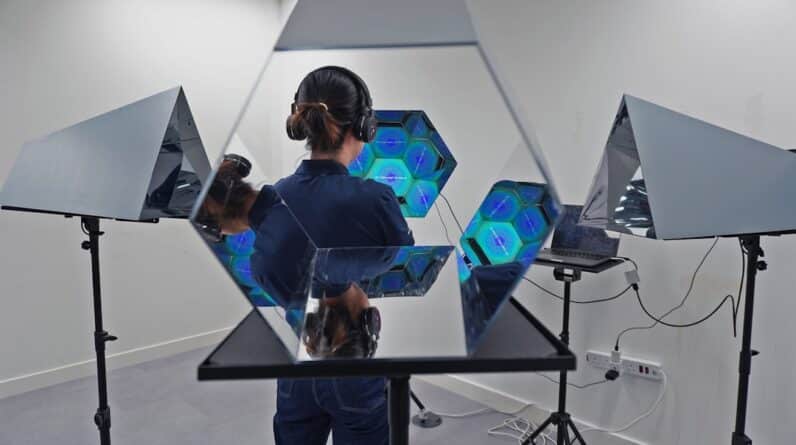
Imagine a world where you could step into a device and, in an instant, find yourself on the other side of the planet. This is not merely the stuff of science fiction; it is the tantalizing promise of quantum teleportation. As you delve into the realm of quantum mechanics, you will discover that this revolutionary concept holds the potential to redefine how we perceive distance and travel.
The idea of teleportation, once confined to the pages of novels and the frames of movies, is now being explored by scientists and researchers who are pushing the boundaries of what is possible. Quantum teleportation operates on principles that challenge our conventional understanding of physics. It involves the transfer of quantum information from one particle to another without the physical movement of the particles themselves.
This means that, theoretically, you could transmit your very essence—your information—across vast distances instantaneously. The implications of such a breakthrough are staggering, not only for transportation but for communication, security, and even our understanding of reality itself. As you consider the possibilities, it becomes clear that quantum teleportation could usher in a new era of connectivity and exploration.
Key Takeaways
- Quantum teleportation holds the promise of instantaneously transferring information and potentially even physical objects across vast distances.
- Understanding quantum mechanics and the concept of entanglement is crucial to grasp the principles behind quantum teleportation.
- Quantum teleportation has the potential to revolutionize transportation by enabling instantaneous travel and reducing the need for traditional modes of transportation.
- Advancements in quantum computing and teleportation technology are paving the way for practical applications of quantum teleportation in transportation.
- AI is expected to play a significant role in optimizing and managing quantum teleportation networks for efficient transportation systems.
Understanding Quantum Mechanics and Teleportation
To grasp the concept of quantum teleportation, you must first familiarize yourself with the fundamentals of quantum mechanics. At its core, quantum mechanics is a branch of physics that deals with the behavior of matter and energy at the smallest scales—atoms and subatomic particles. Unlike classical physics, which operates under predictable laws, quantum mechanics introduces a level of uncertainty and complexity that can be both fascinating and perplexing.
You will encounter phenomena such as superposition, where particles can exist in multiple states simultaneously, and entanglement, where particles become interconnected in ways that defy classical logic. Teleportation in the quantum realm hinges on these principles. When two particles become entangled, the state of one particle is directly linked to the state of another, regardless of the distance separating them.
This means that if you manipulate one particle, the other will respond instantaneously, as if they are communicating faster than the speed of light. In essence, quantum teleportation allows for the transfer of information about a particle’s state from one location to another without moving the particle itself. As you explore this concept further, you will begin to appreciate how it challenges our traditional notions of space and time.
Quantum Teleportation and Its Implications for Transportation
The implications of quantum teleportation for transportation are profound. Imagine a future where you no longer need to endure long flights or tedious commutes. Instead, you could simply step into a teleportation chamber and emerge at your destination in a matter of seconds.
This vision is not as far-fetched as it may seem; researchers are actively investigating how quantum teleportation could revolutionize travel as we know it. You might envision a world where traffic jams are a relic of the past and where global travel becomes as effortless as flipping a switch. However, while the concept is exhilarating, it also raises questions about feasibility and practicality.
The technology required to achieve such instantaneous travel is still in its infancy. Current experiments in quantum teleportation have successfully transmitted information over short distances, but scaling this up to accommodate human transportation presents significant challenges. You will need to consider not only the technical hurdles but also the safety and reliability of such systems.
As researchers continue to explore these possibilities, it becomes evident that while quantum teleportation holds immense promise, it is still a long way from becoming a reality.
Advancements in Quantum Computing and Teleportation Technology
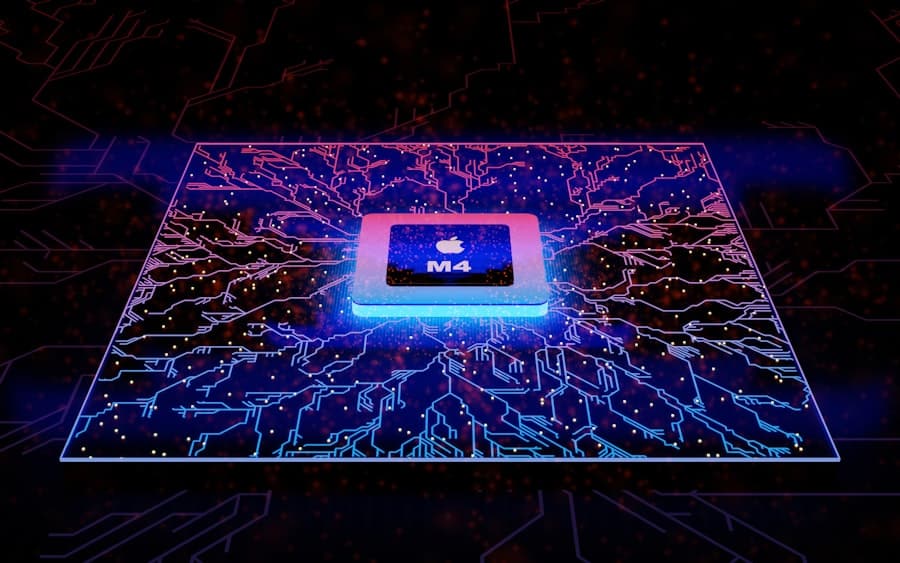
As you delve deeper into the world of quantum teleportation, it is essential to recognize the role that advancements in quantum computing play in this field. Quantum computers leverage the principles of quantum mechanics to perform calculations at speeds unimaginable with classical computers. This capability is crucial for simulating complex systems and processing vast amounts of data necessary for developing teleportation technology.
You may find it fascinating that researchers are already using quantum computers to explore algorithms that could facilitate more efficient teleportation processes. Moreover, breakthroughs in quantum communication technologies are paving the way for secure information transfer. Quantum key distribution (QKD) is one such advancement that ensures secure communication by utilizing the principles of quantum mechanics to detect eavesdropping attempts.
As you consider these developments, it becomes clear that advancements in quantum computing are not only enhancing our understanding of teleportation but also providing practical tools for its implementation. The synergy between these fields could ultimately lead to significant strides toward realizing the dream of instantaneous transportation.
The Role of AI in Quantum Teleportation and Transportation
Artificial intelligence (AI) is poised to play a pivotal role in advancing quantum teleportation technology. As you explore this intersection between AI and quantum mechanics, you will discover how machine learning algorithms can optimize processes involved in teleportation experiments. For instance, AI can analyze vast datasets generated during quantum experiments to identify patterns and improve efficiency.
This capability could accelerate research efforts and lead to breakthroughs that might otherwise take years to achieve. Furthermore, AI can enhance safety protocols associated with teleportation systems. By employing predictive analytics and real-time monitoring, AI can help ensure that teleportation devices operate smoothly and securely.
You might envision a future where AI systems oversee every aspect of teleportation—from pre-transport checks to post-transport assessments—ensuring that each journey is safe and reliable. As you consider these possibilities, it becomes evident that AI will be an indispensable partner in realizing the full potential of quantum teleportation.
Potential Applications of Quantum Teleportation in Future Transportation

The potential applications of quantum teleportation extend far beyond personal travel; they encompass various sectors that could benefit from instantaneous transportation solutions. For instance, in emergency response scenarios, imagine first responders being teleported directly to disaster sites within moments of an incident occurring. This capability could save countless lives by ensuring that help arrives precisely when it is needed most.
Additionally, industries such as logistics and supply chain management could be transformed by quantum teleportation technology. You might envision a world where goods are teleported directly from manufacturers to consumers without the need for traditional shipping methods. This would not only reduce delivery times but also minimize carbon footprints associated with transportation.
As you contemplate these applications, it becomes clear that quantum teleportation has the potential to revolutionize not just how we travel but how we conduct business on a global scale.
Challenges and Ethical Considerations in Implementing Quantum Teleportation for Transportation
While the prospects of quantum teleportation are exciting, they also come with a host of challenges and ethical considerations that must be addressed before implementation can occur. One significant challenge lies in ensuring safety during the teleportation process. You may wonder what safeguards would be necessary to prevent accidents or malfunctions during transport.
The idea of disassembling and reassembling matter at a molecular level raises questions about identity and continuity—what does it mean to be “you” if your atoms are rearranged? Ethical considerations also extend to issues of accessibility and equity. As with any groundbreaking technology, there is a risk that quantum teleportation could exacerbate existing inequalities if access is limited to certain populations or regions.
You might ponder how society can ensure that this transformative technology benefits everyone rather than creating new divides. Addressing these challenges will require collaboration among scientists, ethicists, policymakers, and communities to establish guidelines that prioritize safety, equity, and ethical responsibility.
The Future of Transportation: Quantum Teleportation as a Game-Changer
As you look toward the future, it becomes increasingly clear that quantum teleportation has the potential to be a game-changer in transportation. While we may still be years away from realizing this vision fully, ongoing research and technological advancements are laying the groundwork for what could be an extraordinary leap forward in how we navigate our world. The prospect of instantaneous travel challenges our perceptions of distance and time while opening up new avenues for exploration and connection.
In conclusion, as you reflect on the promise of quantum teleportation, consider not only its technological implications but also its broader impact on society. The journey toward realizing this dream will undoubtedly be fraught with challenges; however, with continued innovation and collaboration across disciplines, you may witness a future where teleportation becomes an integral part of everyday life—a future where barriers dissolve, and humanity can truly connect like never before.
AI’s Quantum Leap: Teleportation and the Future of Transportation explores the exciting possibilities of AI in revolutionizing transportation. In a related article, What Company Has the Most AI Patents? delves into the companies leading the way in AI innovation and patenting. This article provides insight into the competitive landscape of AI technology and the companies driving its advancement.
FAQs
What is quantum teleportation?
Quantum teleportation is a process by which the exact state of a particle or system can be transmitted from one location to another, without physically moving the particle itself. This is made possible through the phenomenon of quantum entanglement.
How does quantum teleportation relate to the future of transportation?
In the context of transportation, quantum teleportation could potentially revolutionize the way we travel by enabling instantaneous transportation of objects and potentially even humans across vast distances.
What are the potential benefits of using quantum teleportation for transportation?
The use of quantum teleportation for transportation could lead to significant reductions in travel time, as well as the elimination of traditional transportation barriers such as geographical obstacles and traffic congestion.
What are the current limitations of quantum teleportation for transportation?
At present, quantum teleportation has only been successfully demonstrated with individual particles over relatively short distances. Scaling this technology up to transport larger objects or humans over long distances presents significant technical and practical challenges.
What are some potential applications of quantum teleportation in transportation?
Potential applications of quantum teleportation in transportation include ultra-fast travel between distant locations, rapid delivery of goods and materials, and the development of new modes of transportation that are not bound by traditional physical limitations.