As you delve into the world of cardiology, you may find yourself increasingly intrigued by the transformative role of artificial intelligence (AI) in this vital field of medicine. The integration of AI technologies into cardiology is not merely a trend; it represents a significant shift in how healthcare professionals approach the diagnosis, treatment, and management of cardiovascular diseases. With the ability to analyze vast amounts of data quickly and accurately, AI is poised to enhance patient outcomes and streamline clinical workflows.
This evolution is particularly crucial given the rising prevalence of heart disease, which remains one of the leading causes of morbidity and mortality worldwide. In recent years, advancements in machine learning and data analytics have opened new avenues for understanding complex cardiovascular conditions. You may be surprised to learn that AI can process information from various sources, including electronic health records, imaging studies, and even wearable devices.
This capability allows for a more comprehensive view of a patient’s health status, enabling clinicians to make informed decisions based on real-time data. As you explore the implications of AI in cardiology, it becomes clear that this technology has the potential to revolutionize cardiac care, making it more personalized and efficient than ever before.
Key Takeaways
- Artificial intelligence (AI) is revolutionizing the field of cardiology by providing advanced tools for diagnosis, prediction, treatment planning, and imaging analysis.
- AI plays a crucial role in diagnosing cardiovascular diseases by analyzing complex data from various sources such as medical images, genetic information, and patient records.
- The use of AI in predicting heart attacks and strokes has shown promising results, as it can analyze large datasets to identify high-risk individuals and provide personalized preventive measures.
- AI is improving treatment plans for cardiac patients by analyzing patient data to recommend personalized treatment options and monitoring patient progress.
- AI has a significant impact on cardiac imaging and analysis by enhancing the accuracy and efficiency of interpreting medical images, leading to more precise diagnoses and treatment decisions.
The Role of Artificial Intelligence in Diagnosing Cardiovascular Diseases
When it comes to diagnosing cardiovascular diseases, the role of AI is becoming increasingly prominent. You might be fascinated to discover that AI algorithms can analyze electrocardiograms (ECGs) with remarkable precision, identifying abnormalities that may be missed by the human eye. By leveraging deep learning techniques, these algorithms can learn from vast datasets of ECG readings, improving their accuracy over time.
This capability not only enhances diagnostic accuracy but also reduces the time required for interpretation, allowing healthcare providers to focus on patient care rather than administrative tasks. Moreover, AI’s ability to integrate data from multiple sources enhances its diagnostic capabilities. For instance, you may encounter systems that combine ECG data with patient history, lab results, and imaging studies to provide a comprehensive assessment of cardiovascular health.
This holistic approach enables clinicians to identify risk factors and underlying conditions more effectively. As you consider the implications of AI in diagnostics, it becomes evident that this technology is not just a tool for efficiency; it is a partner in delivering high-quality care that can lead to earlier interventions and better patient outcomes.
The Use of Artificial Intelligence in Predicting Heart Attacks and Strokes
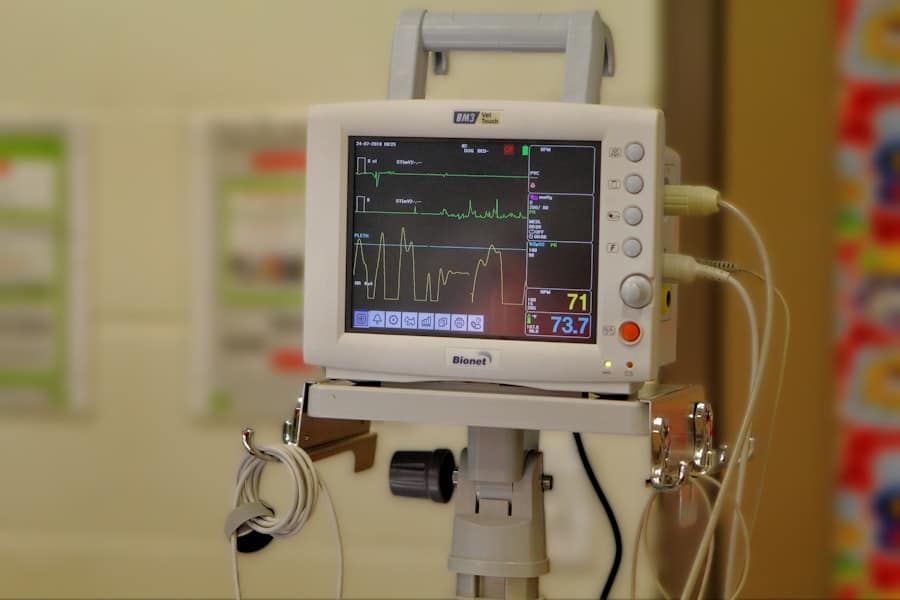
Predicting heart attacks and strokes is a critical aspect of cardiovascular care, and AI is making significant strides in this area. You may find it compelling that machine learning models can analyze patterns in patient data to identify individuals at high risk for these life-threatening events. By examining factors such as age, gender, medical history, and lifestyle choices, AI algorithms can generate risk scores that help clinicians prioritize interventions for those most in need.
In addition to risk assessment, AI can also play a role in real-time monitoring. Wearable devices equipped with AI capabilities can track vital signs and alert patients and healthcare providers to potential issues before they escalate into emergencies. Imagine receiving a notification on your smartwatch indicating an irregular heartbeat or elevated blood pressure—this proactive approach could save lives by prompting timely medical attention.
As you explore the predictive capabilities of AI in cardiology, you will likely appreciate how this technology empowers both patients and providers to take charge of cardiovascular health.
How Artificial Intelligence is Improving Treatment Plans for Cardiac Patients
The impact of AI extends beyond diagnosis and prediction; it is also reshaping treatment plans for cardiac patients. You may be intrigued by how AI-driven analytics can assist healthcare providers in tailoring therapies to individual patients based on their unique profiles. By analyzing data from previous cases and treatment outcomes, AI can recommend personalized treatment options that are more likely to succeed for specific patient populations.
Furthermore, AI can facilitate shared decision-making between patients and providers. Imagine sitting down with your healthcare team and reviewing treatment options that have been optimized through AI analysis. This collaborative approach not only enhances patient engagement but also fosters a sense of ownership over one’s health journey.
As you consider the implications of AI in treatment planning, it becomes clear that this technology is not just about improving clinical outcomes; it is about enhancing the overall patient experience.
The Impact of Artificial Intelligence on Cardiac Imaging and Analysis
Cardiac imaging is another area where AI is making significant contributions. You may be fascinated by how AI algorithms can enhance the interpretation of imaging studies such as echocardiograms, MRIs, and CT scans. By automating image analysis, AI can reduce the workload on radiologists and cardiologists while improving diagnostic accuracy.
For instance, algorithms can identify subtle changes in cardiac structure or function that may indicate early disease progression. Moreover, AI can assist in standardizing imaging protocols and ensuring consistency across different facilities. This standardization is particularly important in multicenter studies or when patients are referred between institutions.
As you explore the advancements in cardiac imaging driven by AI, you will likely appreciate how this technology not only improves diagnostic capabilities but also enhances collaboration among healthcare providers.
Ethical Considerations and Challenges of Using Artificial Intelligence in Cardiology

While the benefits of AI in cardiology are substantial, ethical considerations and challenges must also be addressed. You may find it essential to consider issues related to data privacy and security as AI systems rely on vast amounts of patient information to function effectively. Ensuring that sensitive health data is protected from breaches is paramount to maintaining patient trust and compliance with regulations such as HIPAA.
Additionally, there are concerns about algorithmic bias and fairness in AI applications. If the data used to train AI models is not representative of diverse populations, there is a risk that certain groups may receive suboptimal care. As you reflect on these ethical challenges, it becomes clear that addressing them will require collaboration among technologists, healthcare providers, ethicists, and policymakers to ensure that AI serves as a tool for equity rather than exacerbating existing disparities.
Future Prospects and Developments in Artificial Intelligence for Cardiology
Looking ahead, the future prospects for AI in cardiology are both exciting and promising. You may be intrigued by ongoing research aimed at developing more sophisticated algorithms capable of integrating even more diverse data sources—such as genomic information or social determinants of health—into clinical decision-making processes. This evolution could lead to even more personalized approaches to cardiovascular care.
Moreover, as technology continues to advance, you might anticipate the emergence of new applications for AI in cardiology beyond diagnosis and treatment planning. For instance, virtual health assistants powered by AI could provide patients with real-time support and education about their conditions, fostering better self-management practices. As you consider these developments, it becomes evident that the potential for AI to enhance cardiac care is vast and still largely untapped.
The Potential of Artificial Intelligence in Revolutionizing Cardiac Care
In conclusion, the integration of artificial intelligence into cardiology holds immense potential to revolutionize cardiac care as we know it. From improving diagnostic accuracy to personalizing treatment plans and enhancing patient engagement, AI is poised to transform every aspect of cardiovascular medicine. As you reflect on the advancements made thus far and the challenges that lie ahead, it becomes clear that embracing this technology will be crucial for healthcare providers seeking to deliver high-quality care in an increasingly complex landscape.
As you navigate this evolving field, consider how you can contribute to the responsible implementation of AI in cardiology—whether through advocacy for ethical practices or by staying informed about emerging technologies. The journey toward a future where AI plays an integral role in cardiac care is just beginning, and your involvement could help shape its trajectory for the betterment of patients worldwide.
Artificial Intelligence has become the ace up the sleeve in cardiology, revolutionizing the way doctors diagnose and treat heart conditions. One related article that delves into the main problem of artificial intelligence in healthcare can be found here. This article discusses the challenges and limitations that AI faces in the medical field, shedding light on the importance of addressing these issues for the technology to reach its full potential. For more insightful articles on AI and its applications, you can visit the AI Lab 360 blog. Additionally, if you are interested in the latest advancements in natural language processing, the article on GPT-3 and beyond can be found here.
FAQs
What is artificial intelligence (AI) in cardiology?
Artificial intelligence in cardiology refers to the use of advanced computer algorithms and machine learning techniques to analyze complex medical data related to heart health. AI can assist in diagnosing heart conditions, predicting patient outcomes, and personalizing treatment plans.
How is AI being used in cardiology?
AI is being used in cardiology to interpret medical imaging, such as echocardiograms and angiograms, to identify patterns and anomalies that may indicate heart disease. It is also used to analyze large datasets of patient information to identify risk factors and predict potential cardiac events.
What are the benefits of using AI in cardiology?
The use of AI in cardiology can lead to more accurate and timely diagnoses, personalized treatment plans, and improved patient outcomes. It can also help healthcare providers manage and interpret large volumes of data more efficiently.
Are there any limitations or challenges to using AI in cardiology?
Some limitations and challenges of using AI in cardiology include the need for high-quality data for training algorithms, concerns about data privacy and security, and the potential for algorithm bias. Additionally, there may be resistance to adopting AI technology among healthcare providers.
What is the future of AI in cardiology?
The future of AI in cardiology is promising, with ongoing research and development focused on improving the accuracy and reliability of AI algorithms for diagnosing and treating heart conditions. AI is expected to play an increasingly important role in personalized medicine and improving overall cardiovascular care.