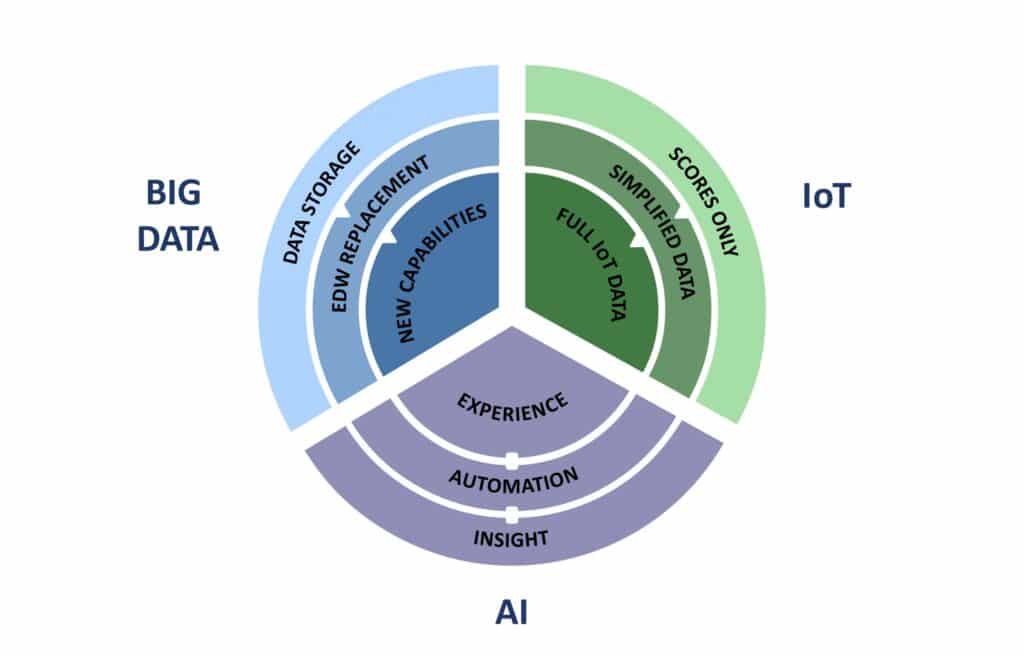
In today’s digital age, the amount of data being generated is growing at an unprecedented rate. This immense volume of information holds the potential to unlock valuable insights and drive informed decision-making for businesses across various industries. However, the sheer magnitude and complexity of this big data can be overwhelming to analyze and interpret manually. This is where artificial intelligence (AI) steps in to assist, playing a crucial role in transforming raw data into actionable insights. By leveraging advanced algorithms and machine learning capabilities, AI enables businesses to streamline their big data analytics processes, uncover patterns and trends, and make data-driven decisions that can propel them towards success.
The Importance of Big Data Analytics
Big data analytics has become increasingly vital in today’s world. With the vast amount of data being generated from various sources, organizations have the opportunity to harness this data to gain valuable insights and make informed decisions. By analyzing big data, businesses can identify patterns, trends, and correlations that would otherwise be difficult to uncover. This article will explore the value of big data analytics, the challenges and opportunities it presents, and the role of artificial intelligence (AI) in this field.
Understanding the Value of Big Data
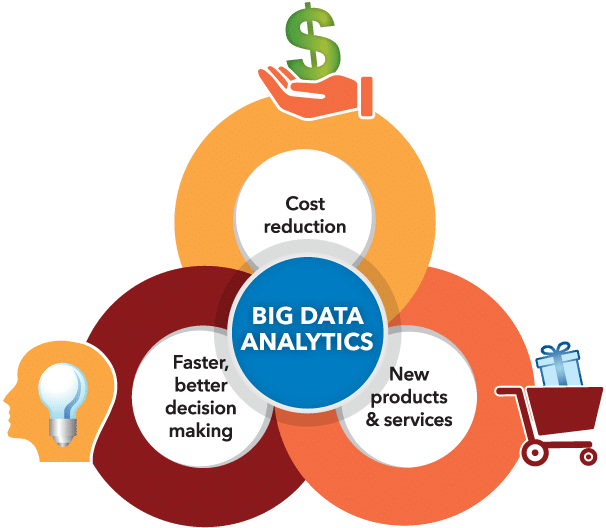
Big data holds immense value for organizations across various industries. With the ability to process and analyze large volumes of data, companies can gain deep insights into customer behavior, market trends, and operational efficiency. Through big data analytics, businesses can make data-driven decisions that can have a significant impact on their success.
By utilizing advanced analytics techniques, companies can identify patterns and trends that may not be easily noticeable with traditional data analysis methods. For example, predictive analytics can help forecast future trends and customer behavior based on historical data. This can enable businesses to make proactive decisions and stay ahead of the competition.
Furthermore, big data analytics allows organizations to optimize their operational processes. By analyzing data from different sources, they can identify areas for improvement, optimize resource allocation, and reduce costs. For instance, data analysis can help streamline supply chain management, anticipate maintenance needs, and enhance overall efficiency.
Challenges and Opportunities of Big Data Analytics
While the benefits of big data analytics are vast, there are also several challenges that organizations face. One of the primary challenges is the sheer volume and complexity of the data. Traditional data processing and analysis methods are not suitable for handling large volumes of data in a timely manner. This is where AI comes into play.
Artificial intelligence offers unique opportunities for big data analytics. Through machine learning algorithms and deep learning techniques, AI can process and analyze massive amounts of data much faster and more accurately than humans alone. It can uncover hidden patterns, make predictions, and automate complex tasks, making it an invaluable tool for big data analytics.
However, implementing AI in big data analytics also poses its own challenges. One of the main concerns is the ethical implications of AI-driven decision-making. Privacy and data security are crucial considerations, as organizations must ensure that the data they collect and analyze is protected. Transparency and explainability are also important, as AI algorithms should be understandable and auditable to gain users’ trust.
Introduction to Artificial Intelligence
To fully grasp the role of AI in big data analytics, it is essential to understand what artificial intelligence entails. AI refers to the development of computer systems that can perform tasks that would typically require human intelligence. These systems can learn from data, adapt to new situations, and autonomously make decisions.
Defining Artificial Intelligence
Artificial intelligence can be broadly categorized into two main types: narrow AI and general AI. Narrow AI, also known as weak AI, focuses on specific domains and tasks. It excels at a particular function but lacks the general intelligence of humans. General AI, on the other hand, aims to replicate human-level intelligence and excel in various cognitive tasks.
For the purpose of big data analytics, narrow AI is primarily used. It is designed to handle specific tasks, such as data processing, pattern recognition, and analysis. Narrow AI algorithms can be trained to become highly proficient in specific domains, making them valuable tools for big data analytics.
Types of AI in Big Data Analytics
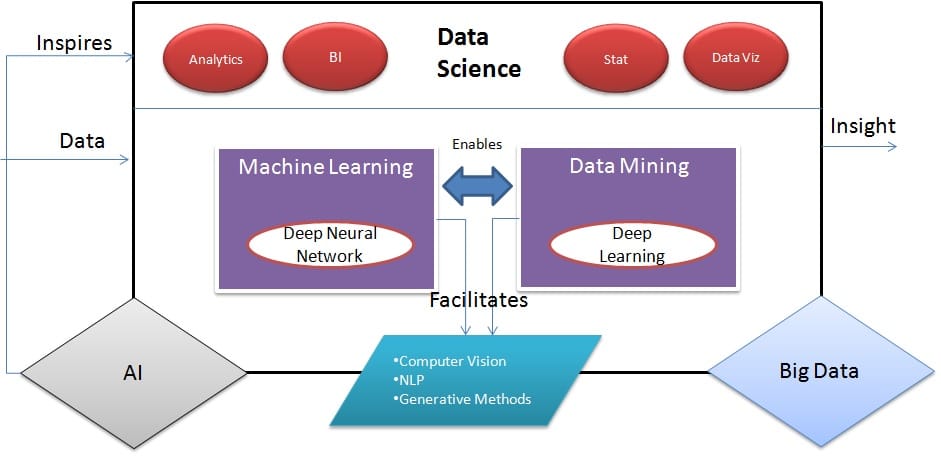
Within the field of big data analytics, there are several types of AI techniques that can be employed. Machine learning, deep learning, and natural language processing are among the most commonly used AI techniques in this domain.
Machine learning algorithms enable computers to learn and improve from experience without being explicitly programmed. They can identify patterns and make predictions based on historical data. In big data analytics, machine learning algorithms can be used to uncover hidden insights and predict future trends.
Deep learning, a subset of machine learning, focuses on training algorithms to learn layered representations of data. It uses artificial neural networks to model human-like thought processes. Deep learning has proven to be highly effective in areas such as image and speech recognition, making it a valuable tool for analyzing vast amounts of data.
Natural language processing (NLP) enables computers to understand, interpret, and generate human language. It plays a significant role in analyzing unstructured data, such as customer reviews or social media posts. NLP techniques can extract sentiment, identify topics, and even generate human-like responses, providing valuable insights for big data analytics.
The Synergy between AI and Big Data Analytics
Artificial intelligence and big data analytics are inherently interconnected, with each complementing the other to achieve valuable insights and informed decision-making.
How AI Enhances Big Data Analytics
AI enhances big data analytics by enabling faster and more accurate data processing and analysis. Traditional methods of data analysis often require significant time and effort, especially when dealing with vast amounts of data. By leveraging AI techniques, organizations can automate and streamline these processes, significantly reducing the time and resources required.
AI algorithms can handle the complexity and variety of big data, allowing for more accurate analysis and predictions. Additionally, AI’s ability to continuously learn and adapt from new data enhances the quality and relevance of insights obtained from big data.
The Role of AI in Data Collection and Organization
AI plays a crucial role in data collection and organization. With the enormous volume of data available, it is essential to have efficient mechanisms for capturing and storing relevant information. AI techniques, such as web scraping and data crawling, can automate the collection of data from various sources.
Once the data is collected, AI algorithms can organize and categorize it based on predefined criteria. This enables organizations to easily access and retrieve specific data sets for further analysis. AI algorithms can also identify and merge similar data points from different sources, ensuring data consistency and accuracy.
AI’s Contribution to Data Processing and Analysis
AI significantly contributes to data processing and analysis in big data analytics. Machine learning algorithms can process large volumes of data at high speeds, allowing businesses to obtain insights in near real-time. These algorithms can identify patterns, correlations, and anomalies that humans might miss, providing valuable insights and improving decision-making.
In addition, AI techniques can automate the analysis of unstructured data, such as text or images, which accounts for a significant portion of big data. Natural language processing algorithms can extract meaning and sentiment from textual data, while image and video analysis algorithms can identify objects, faces, and emotions. This enables organizations to gain valuable insights from diverse data sources and make informed decisions.
Applications of AI in Big Data Analytics
The combination of AI and big data analytics opens up a wide range of applications across different industries. Here are some notable applications of AI in big data analytics:
Predictive Analytics
Predictive analytics uses historical data and AI algorithms to make predictions about future events or trends. By analyzing patterns and correlations in big data, organizations can anticipate customer behavior, market trends, and even potential risks. This can inform decision-making and help businesses stay ahead of the competition.
Natural Language Processing
Natural language processing enables computers to understand, interpret, and generate human language. This is particularly useful for analyzing unstructured data, such as customer reviews, social media posts, and emails. By extracting sentiment, identifying topics, and detecting trends, organizations can gain valuable insights into customer preferences and opinions.
Image and Video Analysis
With the increasing prevalence of visual content, image and video analysis have become essential components of big data analytics. AI algorithms can analyze images and videos to identify objects, faces, emotions, and even detect anomalies. This has applications in various fields, such as surveillance, healthcare, and marketing.
Recommendation Systems
Recommendation systems have become ubiquitous in today’s digital landscape. AI algorithms analyze user behavior and preferences to provide personalized recommendations. Whether it is recommending products, movies, or music, recommendation systems enhance the customer experience and drive sales.
Anomaly Detection
Anomaly detection involves identifying unusual patterns or outliers in data. This can be vital for fraud detection, network security, and quality control. AI algorithms can analyze vast amounts of data to identify anomalies and trigger alerts, allowing organizations to take immediate action.
Machine Learning Algorithms in Big Data Analytics
Machine learning algorithms are a key component of big data analytics. These algorithms enable computers to learn from data and make predictions or decisions without being explicitly programmed. They can be broadly categorized into supervised learning, unsupervised learning, and reinforcement learning algorithms.
Supervised Learning Algorithms
Supervised learning algorithms learn from labeled data, where the input and output are known. They are trained to recognize patterns and make predictions based on these patterns. In big data analytics, supervised learning algorithms are often used for classification and regression tasks.
Classification algorithms assign data points to predefined categories or classes based on their characteristics. For example, a supervised learning algorithm can be trained to classify emails as spam or legitimate based on their content. Regression algorithms, on the other hand, predict numerical values based on input variables. For instance, they can predict the price of a house based on its characteristics.
Unsupervised Learning Algorithms
Unsupervised learning algorithms learn from unlabeled data, where only the input is known. These algorithms identify patterns and structures in the data without predefined categories. Clustering and dimensionality reduction are common tasks performed by unsupervised learning algorithms.
Clustering algorithms group similar data points together based on their characteristics. This can be useful for customer segmentation, anomaly detection, and recommendation systems. Dimensionality reduction algorithms reduce the number of input variables while retaining the most relevant information. This can simplify data analysis and visualization.
Reinforcement Learning Algorithms
Reinforcement learning algorithms learn through trial and error by interacting with an environment. They receive feedback in the form of rewards or penalties based on their actions and adjust their behavior accordingly. Reinforcement learning has applications in fields such as gaming, robotics, and autonomous vehicles.
In big data analytics, reinforcement learning algorithms can be utilized to optimize resource allocation, personalize user experiences, and improve decision-making processes. By learning from historical data and taking appropriate actions, these algorithms can continuously improve their performance.
Deep Learning in Big Data Analytics
Deep learning has emerged as a powerful technique within the field of big data analytics. It utilizes artificial neural networks to model and simulate human-like thought processes. Deep learning has proven to be highly effective in tasks such as image recognition, natural language processing, and speech synthesis, making it an invaluable tool for analyzing and predicting big data.
Understanding Deep Learning
Deep learning architectures consist of multiple layers of interconnected artificial neurons. Each neuron processes and transmits information to the next layer, gradually extracting higher-level features from the input data. This hierarchical structure enables deep learning models to learn complex representations of data.
Deep learning algorithms rely on training processes that involve feeding large amounts of labeled data into the neural network. By adjusting the weights and biases of the network through an iterative process, the algorithm can learn to recognize patterns and make predictions. This process, known as backpropagation, allows deep learning models to continuously improve their performance.
Neural Networks and Deep Learning
Neural networks are the building blocks of deep learning models. They are composed of artificial neurons that simulate the behavior of biological neurons. Each neuron takes a set of input values, applies weights and biases, and produces an output value.
The connections between neurons are represented by weights, which determine the importance of each input value. During the training process, these weights are adjusted to minimize the error between the predicted output and the actual output. As more data is fed into the network, the neural network becomes more proficient at making accurate predictions.
Applications of Deep Learning in Big Data Analysis and Prediction
Deep learning has found applications in various domains of big data analysis and prediction. In image and video analysis, deep learning models can recognize objects, faces, and recognize complex patterns. This has implications in fields such as surveillance, autonomous vehicles, and healthcare diagnostics.
In natural language processing, deep learning models can extract meaning, sentiment, and topics from textual data. This can be applied to sentiment analysis, chatbots, and text summarization. Deep learning techniques are also used in recommendation systems to personalize recommendations based on user preferences and behaviors.
The ability of deep learning models to learn complex representations of data makes them highly valuable in analyzing and predicting big data. As more advanced architectures and techniques are developed, the applications of deep learning in big data analytics are expected to expand further.
Data Visualization and AI
Data visualization is an essential aspect of big data analytics. It allows businesses to effectively communicate insights and trends to decision-makers. AI plays a significant role in data visualization, enhancing its capabilities and providing valuable insights.
The Role of AI in Data Visualization
AI enhances data visualization by automating the process of creating visual representations of data. AI algorithms can analyze large volumes of data and generate visualizations that effectively convey the underlying patterns and trends. This can save time and effort, especially when dealing with massive datasets.
AI can also optimize data visualization by automatically selecting the most appropriate visualizations based on the nature of the data. By analyzing the data characteristics and the intended message, AI algorithms can choose the most effective visualization techniques, ensuring that the insights are easily understood.
Benefits of AI-Driven Data Visualization
AI-driven data visualization offers several benefits to organizations. Firstly, it enables faster and more efficient data exploration. AI algorithms can automatically identify trends, outliers, and correlations in the data, allowing decision-makers to quickly grasp key insights.
Secondly, AI-driven data visualization enhances the interpretability of complex data. By representing data visually, AI algorithms can simplify complex relationships and make them more accessible. Decision-makers can easily understand and analyze the insights, which can inform their strategic decisions.
Lastly, AI-driven data visualization allows for interactive and dynamic visualizations. Users can explore and interact with data in real-time, gaining deeper insights and uncovering hidden patterns. This level of interactivity enhances the usability and effectiveness of data visualization tools.
Ethical Considerations in AI-Driven Big Data Analytics
While the integration of AI and big data analytics offers numerous benefits, it also raises ethical concerns that must be addressed.
Privacy and Data Security
One of the primary ethical considerations in AI-driven big data analytics is privacy and data security. Organizations must ensure that the data they collect and analyze is protected from unauthorized access or misuse. This includes implementing robust security measures, anonymizing data when necessary, and obtaining proper consent from individuals.
Furthermore, transparency regarding data collection and usage is crucial. Organizations should clearly communicate how data will be used and for what purposes. Providing individuals with control over their data, such as the ability to opt out or request data deletion, is also essential to uphold privacy rights.
Transparency and Explainability
Transparency and explainability are vital aspects of AI-driven big data analytics. As AI algorithms make decisions and predictions, it is essential for organizations to be able to explain how these decisions are reached. This is particularly important for applications that impact individuals’ lives, such as healthcare or finance.
By enabling transparency and explainability, organizations can ensure accountability and build trust with users. Tools such as interpretable machine learning models and audit trails can help shed light on the decision-making process, making it more understandable and less prone to biases or discrimination.
Bias and Fairness
Bias in AI algorithms is another ethical consideration in big data analytics. AI algorithms learn from historical data, which may contain biases that are reflected in the predictions or decisions made. This can perpetuate existing inequalities or discrimination.
Organizations must actively address bias in AI algorithms by carefully curating and cleaning the training data. Additionally, ongoing monitoring and evaluation of the algorithms’ performance can help identify and mitigate potential biases. Employing diverse teams in developing AI models can also contribute to a more fair and balanced perspective.
Real-World Examples of AI in Big Data Analytics
The application of AI in big data analytics is already prevalent in various industries. Here are some real-world examples that highlight the impact of AI in this field:
AI for Fraud Detection and Prevention
Financial institutions and e-commerce platforms utilize AI algorithms for fraud detection and prevention. By analyzing large volumes of transaction data in real-time, AI algorithms can flag suspicious activities and identify potential fraud attempts. This enables organizations to take immediate action and protect their customers’ assets.
AI in Healthcare Analytics
AI is transforming healthcare analytics by enabling faster and more accurate diagnosis, personalized treatment, and predictive modeling. Deep learning models can analyze medical images to detect diseases at an early stage, while predictive analytics can help forecast disease outbreaks. AI-driven healthcare analytics has the potential to save lives and improve patient outcomes.
AI for Customer Behavior Analysis
AI plays a crucial role in analyzing customer behavior in various industries, including e-commerce and marketing. By analyzing browsing patterns, purchase history, and social media interactions, AI algorithms can predict customer preferences and personalize recommendations. This enhances the customer experience and drives sales.
The Future of AI in Big Data Analytics
The future of AI in big data analytics holds immense promise. Advancements and trends in AI are expected to revolutionize the field and open up new opportunities.
Advancements and Trends in AI for Big Data Analytics
One of the key advancements in AI for big data analytics is the development of more sophisticated deep learning architectures. Researchers are continually exploring new ways to improve neural networks, making them more efficient, interpretable, and capable of handling even larger datasets.
Another trend is the integration of AI into edge computing. Edge computing brings AI capabilities closer to the source of data, reducing latency and enabling real-time analysis. This is particularly relevant in applications such as autonomous vehicles, industrial IoT, and smart cities.
Furthermore, the integration of AI and other emerging technologies, such as blockchain and Internet of Things (IoT), will further enhance big data analytics capabilities. These technologies can provide additional layers of security, data integrity, and real-time data collection, enabling more advanced and accurate analysis.
Challenges and Opportunities for AI in Big Data Analytics
While the future of AI in big data analytics is promising, there are still challenges to address. These include the ethical implications of AI-driven decision-making, the need for skilled AI professionals, and ensuring data quality and integrity.
Addressing these challenges presents opportunities for organizations to leverage AI in big data analytics successfully. By implementing robust ethical frameworks, investing in AI talent, and ensuring access to high-quality data, businesses can unlock the full potential of AI in big data analytics.
In conclusion, big data analytics has become an essential component of decision-making in today’s data-driven world. The integration of artificial intelligence enhances the capabilities of big data analytics, enabling faster and more accurate processing, analysis, and visualization of data. By leveraging AI techniques, organizations can gain valuable insights, make informed decisions, and stay ahead of the competition. However, ethical considerations, such as privacy, transparency, and fairness, must be addressed to ensure responsible and trustworthy use of AI in big data analytics. With advancements and trends in AI, the future of big data analytics holds immense potential for organizations to create new opportunities, solve complex problems, and drive innovation.