As you delve into the fascinating world of astronomy, you may find yourself captivated by the vastness of the universe and the mysteries it holds. The advent of artificial intelligence (AI) has revolutionized this field, enabling astronomers to explore celestial phenomena with unprecedented efficiency and accuracy. AI technologies are not merely tools; they are transforming the way you gather, analyze, and interpret astronomical data.
From identifying distant galaxies to predicting cosmic events, AI is becoming an indispensable ally in your quest to understand the cosmos. The integration of AI into astronomy is a testament to human ingenuity and the relentless pursuit of knowledge. As you navigate through this article, you will discover how AI is reshaping various aspects of astronomical research.
The synergy between human intellect and machine learning algorithms is paving the way for groundbreaking discoveries, allowing you to push the boundaries of what is possible in the study of the universe. With each advancement in AI technology, you are not just observing the stars; you are engaging in a dynamic dialogue with the cosmos itself.
Key Takeaways
- AI is revolutionizing the field of astronomy by enabling faster and more efficient data analysis and processing.
- AI plays a crucial role in data analysis by helping astronomers sift through massive amounts of data to identify patterns and anomalies.
- In image recognition and classification, AI algorithms can quickly and accurately identify celestial objects and phenomena, saving astronomers valuable time.
- AI is used in predictive modeling and simulation to forecast and simulate astronomical events and phenomena, aiding in the understanding of the universe.
- AI is instrumental in the discovery of exoplanets by analyzing data from telescopes and identifying potential candidates for further study.
The Role of AI in Data Analysis
In the realm of astronomy, data is abundant and often overwhelming. Telescopes and observatories generate vast amounts of information, from light curves to spectral data, which can be challenging to process manually. This is where AI steps in as a powerful ally.
By employing machine learning algorithms, you can sift through enormous datasets with remarkable speed and precision. These algorithms can identify patterns and anomalies that might elude even the most experienced astronomers, allowing you to focus on interpreting results rather than getting lost in data. Moreover, AI enhances your ability to make sense of complex datasets by automating routine tasks.
For instance, classification of celestial objects can be a labor-intensive process, but with AI, you can train models to recognize different types of stars, galaxies, and other astronomical phenomena. This not only accelerates the pace of research but also increases the accuracy of your findings. As you harness the power of AI in data analysis, you are empowered to uncover new insights and make connections that were previously hidden within the noise of data.
AI in Image Recognition and Classification
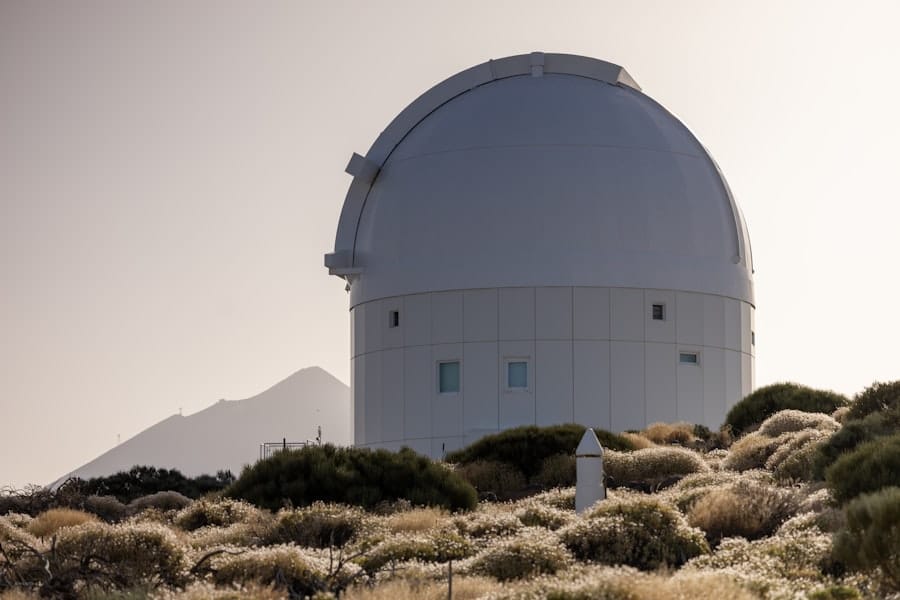
When it comes to astronomy, images are a primary source of information about celestial bodies. The ability to recognize and classify these images accurately is crucial for advancing your understanding of the universe. AI excels in image recognition tasks, utilizing deep learning techniques to analyze astronomical images with remarkable efficiency.
You may find that convolutional neural networks (CNNs) are particularly effective in distinguishing between different types of celestial objects, such as stars, planets, and galaxies. The application of AI in image classification extends beyond mere identification; it also aids in quantifying various properties of celestial objects. For example, by analyzing the light emitted from a galaxy, AI can help determine its distance from Earth or its composition.
This capability allows you to build a more comprehensive picture of the universe’s structure and evolution. As you explore the potential of AI in image recognition, you will likely appreciate how it enhances your observational capabilities and enriches your understanding of cosmic phenomena.
AI in Predictive Modeling and Simulation
Predictive modeling is another area where AI shines in astronomy. By leveraging historical data and advanced algorithms, you can create models that forecast future cosmic events or simulate complex astrophysical processes. For instance, AI can help predict the behavior of supernovae or the dynamics of galaxy formation.
These simulations provide valuable insights into the underlying mechanisms that govern the universe’s evolution. As you engage with predictive modeling, you may find that AI not only enhances your ability to make accurate predictions but also allows for real-time adjustments based on new data. This adaptability is crucial in a field where new discoveries are constantly reshaping our understanding of cosmic phenomena.
By incorporating AI into your predictive modeling efforts, you are better equipped to navigate the uncertainties inherent in astronomical research and make informed decisions based on evolving data.
AI in Exoplanet Discovery
The search for exoplanets—planets outside our solar system—has gained significant momentum in recent years, thanks in large part to advancements in AI technology. You may be aware that traditional methods for detecting exoplanets often involve meticulous analysis of light curves from distant stars. However, with AI’s ability to process vast amounts of data quickly, you can identify potential exoplanets more efficiently than ever before.
Machine learning algorithms can analyze data from missions like Kepler and TESS (Transiting Exoplanet Survey Satellite) to detect subtle changes in starlight that indicate the presence of an orbiting planet. By training these algorithms on known exoplanetary systems, you can improve their accuracy in identifying new candidates for further study. As you participate in this exciting frontier of astronomy, you will likely find that AI not only accelerates the discovery process but also opens up new avenues for understanding planetary systems beyond our own.
AI in Gravitational Wave Detection
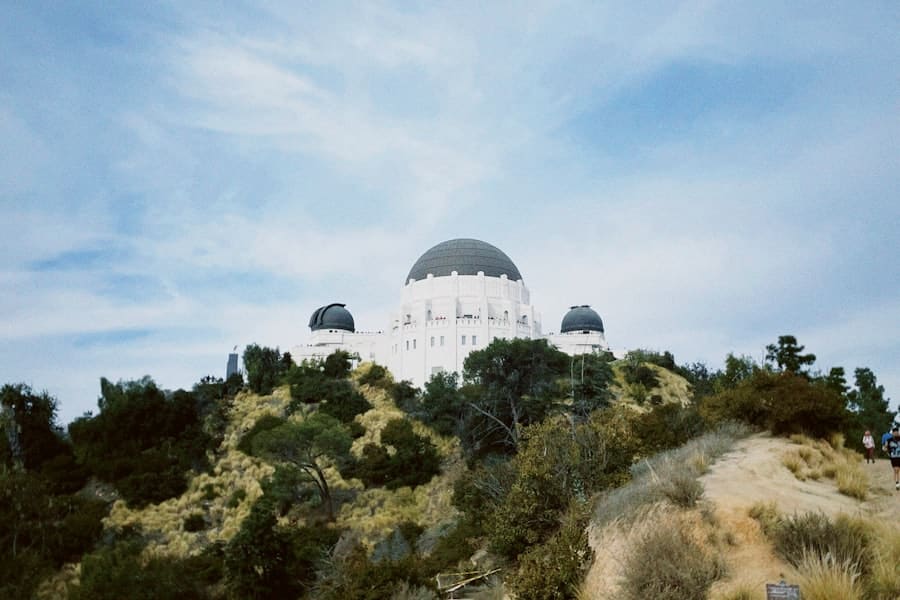
The detection of gravitational waves has ushered in a new era of astrophysics, allowing you to observe cosmic events that were previously undetectable through traditional means. The challenge lies in analyzing the data generated by gravitational wave detectors like LIGO (Laser Interferometer Gravitational-Wave Observatory). Here again, AI plays a pivotal role.
By employing machine learning techniques, you can enhance signal detection and reduce noise interference, making it easier to identify genuine gravitational wave events. AI algorithms can be trained to recognize patterns associated with gravitational waves amidst a sea of background noise. This capability not only improves detection rates but also allows for more accurate localization of events such as black hole mergers or neutron star collisions.
As you engage with this cutting-edge research area, you’ll likely appreciate how AI is transforming our understanding of fundamental physics and providing new insights into the nature of spacetime itself.
The Future of AI in Astronomy
Looking ahead, the future of AI in astronomy appears bright and full of potential. As technology continues to advance, you can expect even more sophisticated algorithms capable of tackling increasingly complex problems. The integration of AI with other emerging technologies—such as quantum computing—could further enhance your ability to analyze astronomical data and simulate cosmic phenomena.
Moreover, as more telescopes come online and new missions are launched, the volume of data generated will only increase. In this context, AI will become even more essential for managing and interpreting vast datasets efficiently. You may find yourself at the forefront of this exciting evolution, using cutting-edge tools to unlock new discoveries and deepen your understanding of the universe.
Ethical Considerations in AI-Assisted Astronomy
While the benefits of AI in astronomy are undeniable, it is essential to consider the ethical implications that accompany its use. As you embrace these powerful technologies, questions arise regarding data privacy, algorithmic bias, and the potential for over-reliance on automated systems. Ensuring that AI systems are transparent and accountable is crucial for maintaining public trust and fostering collaboration within the scientific community.
Additionally, as AI continues to shape astronomical research, it is vital to address issues related to accessibility and inclusivity. You may find that promoting diverse perspectives within the field will lead to more comprehensive solutions and innovative approaches to problem-solving. By engaging with these ethical considerations, you can contribute to a responsible and equitable future for AI-assisted astronomy.
In conclusion, as you explore the intersection of artificial intelligence and astronomy, you will discover a realm filled with possibilities for discovery and innovation. From data analysis to exoplanet discovery and gravitational wave detection, AI is transforming how you engage with the cosmos. Embracing these advancements while remaining mindful of ethical considerations will ensure that your journey through the universe remains both enlightening and responsible.
AI in Astronomy: A Journey to the Stars and Beyond explores the fascinating intersection of artificial intelligence and astronomy, showcasing how cutting-edge technology is revolutionizing our understanding of the universe. For further insights into the capabilities of AI, readers may also be interested in the article Is Google an AI?, which delves into the role of AI in everyday technology.
FAQs
What is AI in astronomy?
AI in astronomy refers to the use of artificial intelligence techniques, such as machine learning and data mining, to analyze and interpret astronomical data. It helps astronomers to process large volumes of data, identify patterns, and make predictions about celestial objects and phenomena.
How is AI used in astronomy?
AI is used in astronomy for various purposes, including image recognition, data analysis, pattern recognition, and prediction of celestial events. It helps astronomers to automate the process of identifying and classifying celestial objects, such as stars, galaxies, and exoplanets, from large datasets.
What are the benefits of using AI in astronomy?
The use of AI in astronomy enables astronomers to process and analyze large volumes of data more efficiently and accurately. It also helps in discovering new celestial objects, understanding complex phenomena, and making predictions about the behavior of celestial bodies.
What are some examples of AI applications in astronomy?
Some examples of AI applications in astronomy include automated detection of exoplanets, classification of galaxies, analysis of astronomical images, prediction of supernova events, and identification of gravitational wave signals.
What are the challenges of using AI in astronomy?
Challenges of using AI in astronomy include the need for large and high-quality datasets, the development of accurate and reliable algorithms, and the interpretation of complex astronomical phenomena. Additionally, ensuring the ethical use of AI in astronomy is also a challenge.