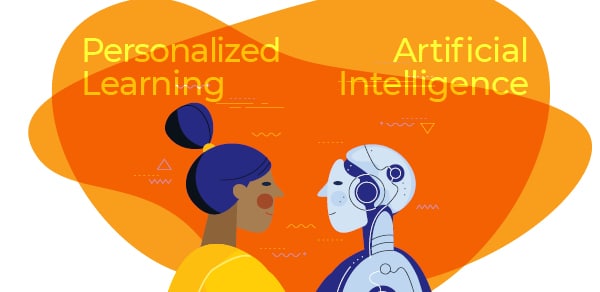
In the realm of education, the potential of artificial intelligence (AI) has sparked excitement and fascination. With AI, personalized learning takes center stage, revolutionizing the traditional classroom experience. This article explores the transformative power of AI in education, specifically focusing on personalized learning and tutoring systems. Discover how AI can adapt to individual student needs, enhancing their educational journey and revolutionizing the way we approach teaching and learning.
1. What is AI in Education?
1.1 Introduction to AI in Education
AI, which stands for Artificial Intelligence, has revolutionized various industries, and education is no exception. AI has the potential to transform teaching and learning, making education more personalized, adaptive, and engaging. In the context of education, AI refers to the use of intelligent systems and technologies that can mimic human intelligence and perform tasks such as understanding natural language, recognizing patterns, and making informed decisions.
1.2 Benefits of AI in Education
The integration of AI in education offers several benefits. It enables personalized learning experiences by tailoring educational content and activities to meet the individual needs and preferences of students. AI-powered tutoring systems provide personalized feedback, guiding students towards a deeper understanding of the subject matter. Moreover, AI can analyze large amounts of data to identify learning gaps, allowing educators to intervene and provide targeted support. Overall, AI has the potential to enhance the effectiveness and efficiency of education while promoting student engagement and motivation.
2. Personalized Learning using AI
2.1 Overview of Personalized Learning
Personalized learning is an instructional approach that takes into account the unique characteristics and needs of each student. It recognizes that individuals learn differently and at different paces, and thus, aims to tailor educational experiences to suit each learner’s strengths, weaknesses, and interests. Personalized learning empowers students to take ownership of their learning journey and enables them to progress at their own pace.
2.2 Role of AI in Personalized Learning
AI plays a crucial role in enabling personalized learning experiences. Through intelligent algorithms, AI can analyze vast amounts of data, including students’ performance, preferences, and learning styles, to customize educational content and activities. AI-powered learning platforms can adapt the level of difficulty, pacing, and delivery mode of instruction to match each student’s needs. By providing targeted feedback and interventions, AI can support students in overcoming challenges and reinforcing their understanding of concepts.
2.3 Challenges and Limitations
While personalized learning with AI holds immense potential, it also presents challenges and limitations. One significant concern is the privacy and security of student data. AI systems collect and analyze extensive data about students, raising concerns about data protection and misuse. Additionally, AI algorithms must be carefully designed to avoid reinforcing biases or perpetuating inequalities. Furthermore, the implementation of AI-powered personalized learning requires sufficient infrastructure and resources, which may be a barrier in certain educational settings.

3. AI-based Tutoring Systems
3.1 Introduction to AI-based Tutoring Systems
AI-based tutoring systems leverage AI technologies to provide personalized support and guidance to students. These systems aim to emulate the role of a human tutor by analyzing student performance, identifying areas of improvement, and offering tailored feedback and assistance. AI tutoring systems can be used for various subjects and are particularly effective in domains where there is a single correct answer or well-defined problem-solving strategies.
3.2 Components of AI-based Tutoring Systems
AI tutoring systems consist of several key components that work together to deliver personalized learning experiences. These components include content representation and understanding, student modeling, pedagogical strategies, and feedback generation. Content representation and understanding involve the system’s ability to interpret and comprehend educational materials and tasks. Student modeling focuses on capturing and analyzing individual learner characteristics, such as prior knowledge and learning preferences. Pedagogical strategies encompass the selection and sequencing of instructional content, while feedback generation involves providing timely and relevant feedback to students.
3.3 Advantages and Disadvantages
AI-based tutoring systems offer several advantages in comparison to traditional instruction methods. They provide immediate and personalized feedback, allowing students to address misconceptions and improve their performance. These systems can adapt to individual learning styles, providing tailored instruction that suits each student’s needs. Moreover, AI systems can work independently, enabling students to learn at their own pace and reducing the dependence on human tutors. However, AI tutoring systems may lack the nuanced understanding and contextualization that a human tutor can provide. They may struggle with topics that require creativity, critical thinking, or complex reasoning skills.
3.4 Examples of AI-based Tutoring Systems
Various AI-based tutoring systems have been developed to support student learning across different subjects. For instance, Carnegie Learning’s Cognitive Tutor provides adaptive math instruction, adjusting the difficulty level and pacing to match individual student needs. Another example is Woofound’s AI-powered platform, which offers career guidance and college recommendations based on students’ interests and personality traits. Furthermore, Duolingo employs AI algorithms to personalize language learning, tailoring lessons based on learners’ proficiency and performance.
4. Intelligent Tutoring Systems
4.1 Overview of Intelligent Tutoring Systems
Intelligent Tutoring Systems (ITS) are a specific type of AI-based tutoring system that utilizes advanced technologies to provide personalized instruction and guidance. ITS goes beyond content delivery and feedback generation. It incorporates sophisticated algorithms and models that adapt to individual student needs, support problem-solving and critical thinking skills, and even possess certain levels of emotional intelligence.
4.2 Features and Functionality
Intelligent Tutoring Systems boast several features and functionalities that set them apart from traditional tutoring methods. They use data-driven models to continuously assess and update the learner’s knowledge and progress. ITS can dynamically adjust the instructional content, adapting the difficulty level and pacing in real-time. These systems often include interactive interfaces, allowing students to engage with the content through dialogues, simulations, and virtual manipulatives. Additionally, some ITS possess natural language processing capabilities, enabling students to interact with the system using spoken or written language.
4.3 Effectiveness and Impact
Research has demonstrated the effectiveness and positive impact of Intelligent Tutoring Systems on student learning outcomes. Compared to traditional instruction methods, ITS have been shown to improve knowledge retention, problem-solving abilities, and overall academic performance. These systems offer personalized exercises, individualized feedback, and adaptive instruction, facilitating deeper understanding and mastery of concepts. Furthermore, ITS can enhance student engagement and motivation by providing interactive and engaging learning experiences.

5. Adaptive Learning with AI
5.1 Understanding Adaptive Learning
Adaptive learning is an educational approach that leverages AI and technology to deliver personalized instruction that adapts to each learner’s needs. Adaptive learning systems use algorithms and data analysis to assess students’ strengths, weaknesses, and learning styles. They then modify the instructional content, delivery, and pace to optimize the learning experience for each individual.
5.2 AI Techniques in Adaptive Learning
AI techniques play a crucial role in enabling adaptive learning. Machine learning algorithms are utilized to analyze vast amounts of student data, such as performance records and learning patterns. This analysis helps the system create individual learner profiles, identify areas of improvement, and generate tailored recommendations. Natural language processing techniques allow adaptive learning systems to understand and respond to student queries and provide targeted explanations. Additionally, predictive analytics can anticipate students’ needs and proactively offer relevant resources and interventions.
5.3 Benefits and Challenges
Adaptive learning with AI offers numerous benefits for learners. It promotes self-paced learning, allowing individuals to progress at their own speed while receiving targeted support. Adaptive learning can identify learning gaps and provide personalized interventions, leading to improved understanding and mastery of concepts. Moreover, adaptive learning systems can enhance student engagement and motivation by tailoring content to individual interests and learning preferences.
However, there are challenges associated with implementing adaptive learning systems. The quality and reliability of data used for personalization must be ensured to avoid biased recommendations or inaccurate predictions. Additionally, creating adaptive learning materials requires significant time and resources. Educators and instructional designers need to collaborate closely with AI experts and domain specialists to develop effective and engaging adaptive learning experiences.
5.4 Case Studies
Several case studies have showcased the benefits and effectiveness of adaptive learning with AI. For instance, Knewton, an adaptive learning company, has partnered with educational institutions to implement personalized learning experiences. By analyzing student data and providing real-time recommendations, Knewton’s platform has demonstrated improved learning outcomes and increased student engagement. Another example is the use of adaptive learning in language learning apps such as Babbel and Rosetta Stone, which customize lessons based on learners’ proficiency and learning goals.
6. Virtual Assistants for Education
6.1 Introduction to Virtual Assistants
Virtual assistants are AI-powered systems that interact with users through natural language processing capabilities. These systems provide assistance, answer questions, and perform tasks based on user inquiries. Virtual assistants, such as Amazon’s Alexa, Apple’s Siri, and Google Assistant, have gained popularity in various domains, including education.
6.2 Application in Education
In the field of education, virtual assistants have the potential to support students, educators, and administrators in various ways. For students, virtual assistants can offer academic guidance, provide instant access to information and resources, and assist with organizing schedules and reminders. Educators can benefit from virtual assistants by automating administrative tasks, accessing real-time information during lectures, and receiving personalized recommendations for instructional strategies. Additionally, virtual assistants can facilitate communication and collaboration between administrators, teachers, students, and parents.
6.3 Future Possibilities
The future possibilities for virtual assistants in education are vast. As AI technology continues to evolve, virtual assistants could become even more intelligent and context-aware. They may develop the ability to understand the emotional state of learners and provide appropriate support and encouragement. Virtual assistants could also leverage data analytics to offer personalized recommendations for career choices, college pathways, and further educational opportunities. Furthermore, the integration of virtual assistants with other AI-powered systems, such as tutoring or adaptive learning systems, could create a comprehensive and seamless educational experience.

7. Natural Language Processing in Education
7.1 Role of Natural Language Processing
Natural Language Processing (NLP) is a branch of AI that focuses on enabling computers to understand, interpret, and generate human language. In the context of education, NLP plays a vital role in facilitating interaction and communication between humans and AI systems. NLP is used to develop chatbots, virtual assistants, and language learning platforms that can understand and respond to student queries and provide targeted feedback.
7.2 Enhancing Communication and Feedback
NLP technologies enhance communication and feedback in educational settings. Chatbots powered by NLP can engage in natural language conversations with students, answering questions, providing explanations, and guiding them through problem-solving processes. These chatbots can alleviate the burden on educators by addressing common queries and concerns. Furthermore, NLP can enable automated essay grading, providing students with immediate feedback on their written work and helping educators save time in the assessment process.
7.3 Challenges and Ethical Considerations
Despite the promise of NLP in education, there are challenges and ethical considerations to be addressed. NLP technologies must be designed and trained to understand diverse languages, accents, and dialects to ensure inclusivity and cultural sensitivity. Moreover, the quality and accuracy of NLP outputs must be continually monitored and improved to avoid misleading or erroneous information. Data privacy and security concerns also arise when using NLP technologies, as they involve processing and analyzing large amounts of student data.
8. Gamification and AI in Education
8.1 Integration of Gamification and AI
Gamification refers to the use of game elements and mechanics in non-game contexts to engage and motivate users. When combined with AI, gamification can enhance the learning experience by personalizing challenges, providing immediate feedback, and fostering a sense of achievement. AI-powered systems can analyze gameplay data to assess students’ strengths and weaknesses, adapt the difficulty level, and create personalized learning paths.
8.2 Gamified Learning Environments
Gamified learning environments leverage AI and gamification techniques to create engaging and immersive educational experiences. These environments often incorporate elements such as points, badges, leaderboards, and quests to motivate students and make learning more enjoyable. AI algorithms analyze students’ interactions and progress in the game, dynamically adjusting the content and challenges to optimize learning outcomes. Gamified learning environments can be used for a wide range of subjects, from language learning to mathematics and science.
8.3 Benefits and Potential of Gamification
Gamification, when combined with AI, offers several benefits in education. It enhances student motivation and engagement by making learning a fun and interactive experience. Gamified learning environments provide immediate feedback, encouraging students to persist and improve their performance. AI algorithms can identify areas of weakness and generate targeted challenges to help students overcome difficulties. Furthermore, gamification encourages collaboration and competition among students, fostering a sense of community and enhancing social learning.

9. Data Analytics in AI-powered Education
9.1 Importance of Data Analytics
Data analytics plays a crucial role in AI-powered education. It involves the collection, analysis, and interpretation of large amounts of data generated by students and educational systems. Data analytics enables the identification of patterns, trends, and insights that can inform instructional design, personalize learning experiences, and improve educational outcomes. By leveraging AI algorithms, data analytics can extract meaningful information from raw data and generate actionable recommendations for educators and learners.
9.2 AI-powered Insights and Recommendations
AI-powered data analytics in education offers valuable insights and recommendations for educators and learners alike. It can identify learning gaps and misconceptions, enabling educators to provide targeted interventions and support. Data analytics can also predict future performance and recommend personalized learning paths for each student. Moreover, AI algorithms can analyze data across a large cohort of students to identify effective teaching strategies, optimize curriculum design, and inform policy decisions in education.
9.3 Privacy and Security Concerns
The use of data analytics in AI-powered education raises significant privacy and security concerns. Student data must be collected and handled with utmost care to protect individual privacy rights. Strict data protection regulations and safeguards must be in place to ensure compliance and mitigate the risk of data breaches. Transparency is critical, with clear communication to students and their families about the data that is being collected, how it is used, and who has access to it. Educators and administrators must implement robust data security measures to safeguard student information from unauthorized access or misuse.
10. Implementing AI in Education
10.1 Considerations for Implementation
Implementing AI in education requires careful consideration of various factors. Firstly, clear educational goals and objectives must be defined, ensuring that the use of AI aligns with the intended outcomes. The infrastructure and technical requirements to support AI-powered systems should be assessed and established. Ethical considerations regarding student data privacy, algorithmic bias, and transparency must be given utmost importance. Additionally, robust evaluation frameworks should be put in place to assess the effectiveness and impact of AI implementations in education.
10.2 Teacher Training and Support
The successful implementation of AI in education heavily relies on adequately training and supporting educators. Teachers should receive training on how to effectively use AI-powered tools and platforms as they integrate them into their teaching practices. Professional development programs should focus not only on the technical aspects of AI but also on the pedagogical strategies and ethical considerations associated with its use. Ongoing support and mentorship should be provided to educators to ensure their confidence and competence in utilizing AI in the classroom.
10.3 Scalability and Affordability
Scalability and affordability are crucial considerations in the implementation of AI in education. AI-powered systems and technologies should be scalable to cater to diverse educational contexts, from individual classrooms to large-scale institutions. Additionally, the costs associated with implementing and maintaining AI systems should be affordable and sustainable. Collaboration between educational institutions, policymakers, and AI developers is essential to create cost-effective solutions that can be easily scaled across different educational settings.
10.4 Future Trends
The future of AI in education is promising, with several emerging trends on the horizon. Advanced technologies, such as augmented reality and virtual reality, are likely to integrate with AI to create immersive and interactive learning experiences. The integration of AI with Internet of Things (IoT) devices may enable seamless data collection and analysis, providing real-time insights into student learning. Additionally, advancements in affective computing may enable AI systems to understand and respond to students’ emotions, effectively supporting their socio-emotional development. As AI continues to evolve, it will undoubtedly reshape the education landscape, making learning more personalized, adaptive, and engaging.
In conclusion, AI has the potential to revolutionize education by enabling personalized learning experiences, providing intelligent tutoring and feedback, and enhancing communication and interaction. While there are challenges and ethical considerations associated with AI in education, the benefits and opportunities it presents are undeniable. With careful implementation, teacher training, and support, AI can empower educators and learners, transforming education into a more effective and inclusive endeavor.