In today’s fast-paced business environment, the integration of Artificial Intelligence (AI) with Business Intelligence (BI) has become a game-changer for organizations across various sectors. As you navigate through the complexities of data management and analysis, understanding how AI can enhance your BI efforts is crucial. AI technologies, such as machine learning and natural language processing, are revolutionizing the way businesses collect, analyze, and interpret data.
This transformation not only streamlines operations but also empowers you to make informed decisions that drive growth and innovation. As you delve deeper into the world of AI and BI, you will discover that these technologies work hand in hand to provide actionable insights. While traditional BI tools focus on historical data analysis, AI introduces predictive capabilities that allow you to anticipate future trends and behaviors.
This synergy between AI and BI is not just a trend; it represents a fundamental shift in how businesses operate, enabling you to harness the power of data like never before. By embracing this integration, you position yourself at the forefront of a data-driven revolution that can significantly enhance your competitive edge.
Key Takeaways
- AI and Business Intelligence are becoming increasingly intertwined, offering new opportunities for businesses to gain insights and make data-driven decisions.
- Leveraging AI for Business Intelligence can lead to improved efficiency, accuracy, and scalability in data analysis and decision making processes.
- AI can enhance data analysis by identifying patterns, trends, and correlations that may not be immediately apparent to human analysts, leading to more informed decision making.
- AI plays a crucial role in predictive analytics and forecasting by using historical data to make accurate predictions about future trends and outcomes.
- Implementing AI-powered tools for Business Intelligence requires careful planning, investment in technology, and training for employees to effectively utilize these tools for maximum benefit.
The Benefits of Leveraging AI for Business Intelligence
One of the most compelling advantages of leveraging AI for business intelligence is the ability to process vast amounts of data quickly and accurately. As you sift through mountains of information, AI algorithms can identify patterns and correlations that may not be immediately apparent to human analysts. This capability allows you to uncover insights that can inform strategic decisions, optimize operations, and enhance customer experiences.
By automating data processing tasks, AI frees up your time and resources, enabling you to focus on higher-level analysis and strategy formulation. Moreover, AI enhances the accuracy of your business intelligence efforts. Traditional BI tools often rely on static reports and historical data, which can lead to outdated or misleading conclusions.
In contrast, AI-driven BI solutions continuously learn from new data inputs, ensuring that your insights are based on the most current information available. This dynamic approach not only improves decision-making but also fosters a culture of agility within your organization. As you adapt to changing market conditions and customer preferences, AI empowers you to pivot quickly and effectively.
How AI Can Improve Data Analysis and Decision Making
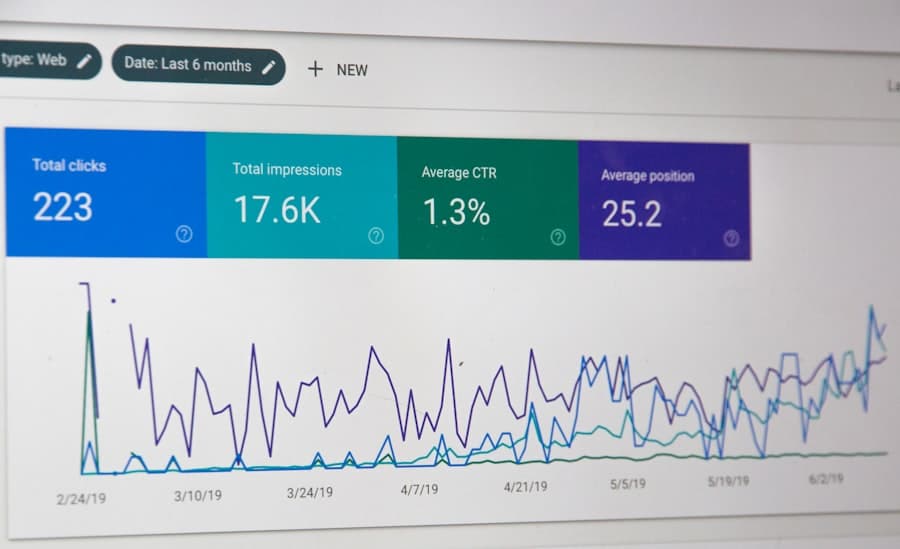
AI’s impact on data analysis is profound, as it enables you to derive insights from complex datasets with unprecedented speed and precision. By employing machine learning algorithms, you can automate the identification of trends and anomalies in your data. This means that instead of manually sifting through spreadsheets or reports, you can rely on AI to highlight key findings that warrant your attention.
As a result, your decision-making process becomes more efficient, allowing you to respond to challenges and opportunities in real-time. Furthermore, AI enhances the quality of your decision-making by providing predictive analytics capabilities. With access to advanced algorithms that analyze historical data and identify patterns, you can forecast future outcomes with greater accuracy.
This predictive power allows you to make proactive decisions rather than reactive ones, positioning your organization for success in an ever-evolving marketplace. By integrating AI into your data analysis processes, you not only improve the quality of your insights but also foster a more strategic approach to decision-making.
The Role of AI in Predictive Analytics and Forecasting
Predictive analytics is one of the most exciting applications of AI in business intelligence. As you explore this realm, you’ll find that AI algorithms can analyze historical data to identify trends and make predictions about future events. This capability is invaluable for various business functions, including sales forecasting, inventory management, and customer behavior analysis.
By leveraging predictive analytics, you can anticipate market shifts and customer needs, allowing you to stay ahead of the competition. Moreover, the role of AI in forecasting extends beyond mere predictions; it also enhances the accuracy of those forecasts. Traditional forecasting methods often rely on simplistic models that may not account for complex variables or changing market dynamics.
In contrast, AI-driven predictive models can incorporate a multitude of factors, including economic indicators, social media sentiment, and even weather patterns. This comprehensive approach enables you to generate more reliable forecasts that inform your strategic planning and resource allocation.
Implementing AI-powered Tools for Business Intelligence
As you consider implementing AI-powered tools for business intelligence, it’s essential to approach the process strategically. Start by assessing your organization’s specific needs and objectives. Identify the areas where AI can add the most value—whether it’s improving data visualization, enhancing reporting capabilities, or automating routine tasks.
By aligning your AI initiatives with your business goals, you can ensure that your investment yields meaningful results. Once you’ve defined your objectives, it’s time to explore the various AI-powered BI tools available in the market. From advanced analytics platforms to natural language processing applications, there are numerous options tailored to different business requirements.
As you evaluate these tools, consider factors such as ease of integration with existing systems, scalability, and user-friendliness. Additionally, investing in training for your team will be crucial to maximize the benefits of these tools. By fostering a culture of data literacy within your organization, you empower your employees to leverage AI effectively in their decision-making processes.
Overcoming Challenges and Pitfalls in Leveraging AI for Business Intelligence

While the potential benefits of integrating AI into business intelligence are significant, it’s essential to acknowledge the challenges that may arise during implementation. One common pitfall is the risk of over-reliance on AI-generated insights without critical human oversight. As you embrace AI technologies, it’s vital to maintain a balance between automated analysis and human intuition.
Remember that while AI can provide valuable insights, it should complement rather than replace human judgment. Another challenge lies in data quality and accessibility. For AI algorithms to deliver accurate results, they require high-quality data inputs.
If your organization struggles with data silos or inconsistent data formats, it may hinder the effectiveness of your AI initiatives. To overcome this challenge, prioritize data governance practices that ensure data integrity and accessibility across departments. By fostering a culture of collaboration and transparency around data management, you can enhance the overall effectiveness of your AI-powered business intelligence efforts.
Ethical Considerations and Responsible Use of AI in Business Intelligence
As you navigate the integration of AI into business intelligence, ethical considerations must remain at the forefront of your strategy. The use of AI raises important questions about data privacy, bias in algorithms, and transparency in decision-making processes. It’s crucial to establish guidelines that prioritize ethical practices when collecting and analyzing data.
Ensure that your organization complies with relevant regulations and respects individuals’ privacy rights. Additionally, addressing bias in AI algorithms is essential for maintaining fairness in decision-making. As you implement AI-powered tools, regularly assess their outputs for potential biases that could impact outcomes negatively.
By fostering an inclusive approach to data collection and analysis, you can mitigate bias and promote equitable decision-making within your organization.
Future Trends and Opportunities in AI-driven Business Intelligence
Looking ahead, the future of AI-driven business intelligence is filled with exciting trends and opportunities that can further enhance your organization’s capabilities. One emerging trend is the increasing use of augmented analytics—an approach that combines AI with human expertise to create more intuitive data analysis experiences. As these technologies evolve, you’ll find that they enable even non-technical users to derive insights from complex datasets effortlessly.
Moreover, as organizations continue to embrace remote work and digital transformation, the demand for real-time analytics will grow exponentially. The ability to access insights on-the-go will empower you to make informed decisions regardless of location or time constraints. By staying attuned to these trends and investing in innovative solutions, you position yourself to capitalize on new opportunities as they arise.
In conclusion, integrating AI into business intelligence offers a wealth of benefits that can transform how you operate within your organization. From improving data analysis and decision-making processes to enhancing predictive capabilities and addressing ethical considerations, the potential is vast. By embracing this technology thoughtfully and strategically, you can unlock new levels of efficiency and insight that drive your business forward in an increasingly competitive landscape.
Leveraging AI for Enhanced Business Intelligence is crucial for companies looking to stay competitive in today’s market. One related article that explores the potential of AI in a different industry is AI in Agriculture: Smart Farming and Sustainable Practices. This article discusses how AI is revolutionizing the agriculture sector by enabling smart farming practices and promoting sustainability. By leveraging AI technology, farmers can optimize crop yields, reduce waste, and make more informed decisions. This demonstrates the versatility and impact of AI across various industries, including agriculture.
FAQs
What is AI?
AI, or artificial intelligence, refers to the simulation of human intelligence processes by machines, especially computer systems. These processes include learning, reasoning, and self-correction.
What is Business Intelligence (BI)?
Business Intelligence (BI) refers to the use of technology, applications, and practices for the collection, integration, analysis, and presentation of business information to support better decision-making within organizations.
How can AI be leveraged for enhanced business intelligence?
AI can be leveraged for enhanced business intelligence by automating data analysis, providing predictive insights, enabling natural language processing for easier data interpretation, and facilitating personalized recommendations for decision-making.
What are the benefits of leveraging AI for enhanced business intelligence?
The benefits of leveraging AI for enhanced business intelligence include improved data accuracy, faster and more efficient decision-making, identification of new business opportunities, and the ability to adapt to changing market conditions.
What are some examples of AI applications in business intelligence?
Some examples of AI applications in business intelligence include predictive analytics for forecasting sales trends, chatbots for customer service and support, and machine learning algorithms for identifying patterns in large datasets.
What are the potential challenges of leveraging AI for enhanced business intelligence?
Potential challenges of leveraging AI for enhanced business intelligence include data privacy and security concerns, the need for skilled AI professionals, and the risk of bias in AI algorithms leading to inaccurate insights.