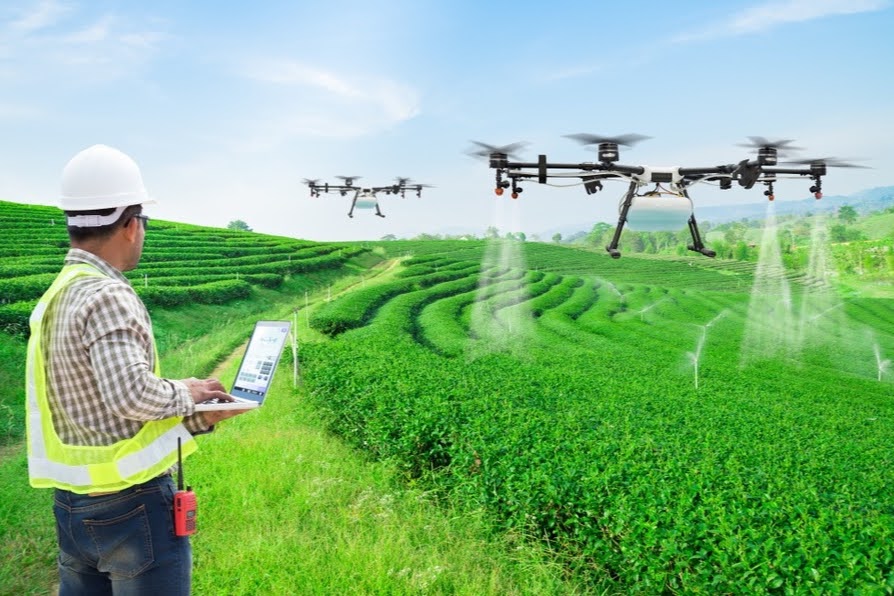
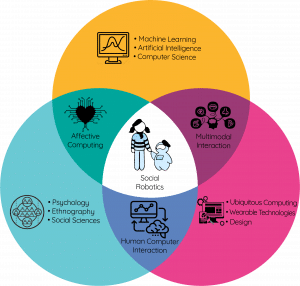
In today’s rapidly evolving world, the impact of artificial intelligence (AI) can be seen in various industries, and agriculture is no exception. AI in agriculture, also known as smart farming, has the potential to revolutionize the way we produce food and practice sustainable farming. By harnessing the power of AI, farmers can optimize crop yields, minimize resources, and reduce environmental impact. This article explores the exciting possibilities and benefits that AI brings to agriculture, paving the way for a more efficient and sustainable future in farming.

I. AI in Agriculture: An Overview
A. Definition of AI in Agriculture
AI in agriculture refers to the application of artificial intelligence technologies and algorithms in the field of farming, with the aim of improving productivity, efficiency, and sustainability. By utilizing advanced data analysis and automation techniques, AI in agriculture enables farmers to make more informed decisions, optimize resource allocation, and enhance crop management practices.
B. Importance of AI in Agriculture
AI is increasingly gaining importance in agriculture due to its potential to address key challenges faced by the industry. With a growing global population and limited land resources, there is a need for innovative solutions to increase agricultural productivity while minimizing environmental impact. AI offers promising opportunities to achieve sustainable farming practices by optimizing resource usage, reducing waste, and enhancing crop quality and yield.
C. The Role of AI in Smart Farming
AI plays a crucial role in the concept of smart farming, where digital technologies are integrated into agricultural practices to achieve more efficient and precise farming operations. AI-powered systems can collect and analyze real-time data from various sources such as sensors, drones, and satellites to provide farmers with valuable insights regarding crop health, soil conditions, weather patterns, and pest infestations. This enables farmers to make data-driven decisions and take proactive measures to optimize crop management.
D. AI’s Contribution to Sustainable Agriculture
Sustainable agriculture aims to meet the present needs of food production without compromising future generations’ ability to do the same. AI contributes to sustainable agriculture by enabling farmers to adopt precision farming practices, minimize the use of chemical inputs, optimize irrigation and fertilization, and reduce waste through efficient harvesting and post-harvesting operations. By integrating AI technologies into agricultural systems, it becomes possible to achieve higher resource efficiency and reduce the environmental impact associated with conventional farming methods.
II. Applications of AI in Agriculture
A. Crop Monitoring and Management
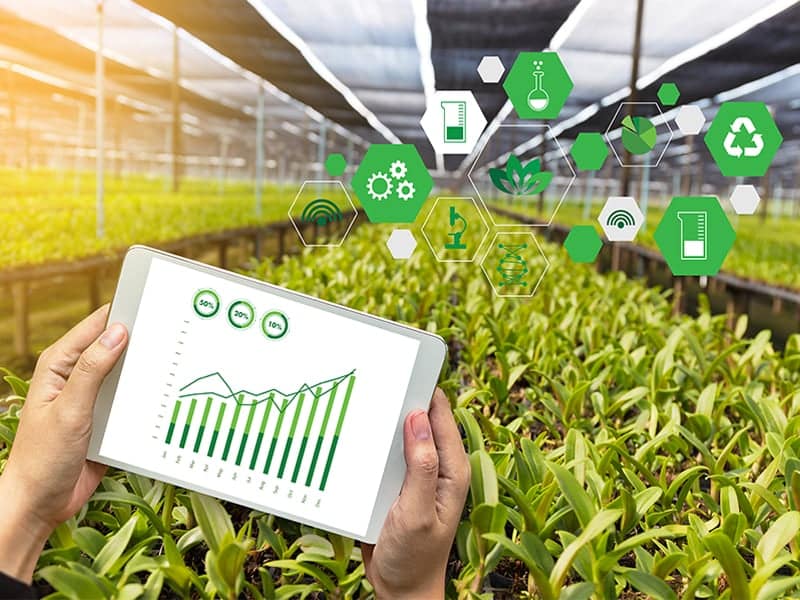
AI-based systems play a crucial role in crop monitoring and management. With the help of sensors and imaging technologies, these systems can collect and analyze data on factors such as soil moisture, nutrient levels, temperature, and crop health. By leveraging machine learning algorithms, AI systems can analyze this data and provide farmers with real-time insights on crop conditions, allowing them to take timely actions such as adjusting irrigation levels, applying appropriate fertilizers, or implementing pest control measures.
B. Soil and Water Management
AI technologies are instrumental in improving soil and water management practices. By analyzing data on soil composition, moisture levels, and nutrient content, AI systems can help farmers optimize irrigation and fertilizer application, thereby minimizing water waste and nutrient runoff. Additionally, AI-powered predictive models can provide accurate forecasts of soil erosion and salinization, enabling farmers to implement preventive measures to maintain soil health and fertility.
C. Pest and Disease Control
AI plays a crucial role in pest and disease control in agriculture. By analyzing data from various sources such as imagery, weather patterns, and historical records, AI systems can detect early signs of pest infestations or disease outbreaks. This enables farmers to take proactive measures, such as targeted spraying or implementing integrated pest management strategies, to prevent the spread of pests and minimize crop damage. Moreover, AI-powered technologies can assist in identifying pest-resistant crop varieties and optimizing pesticide usage, further reducing environmental impact.
D. Harvesting and Post-Harvesting Operations
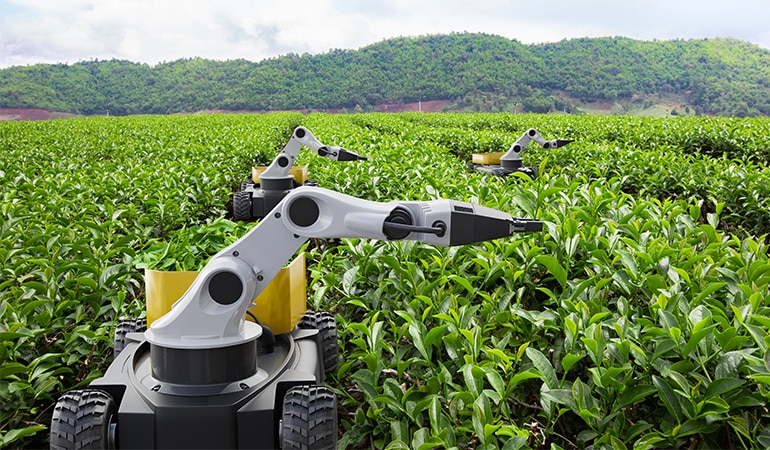
AI technologies are revolutionizing harvesting and post-harvesting operations in agriculture. Autonomous robots equipped with computer vision and machine learning capabilities can efficiently harvest crops while minimizing losses and reducing labor requirements. AI systems can also analyze data on factors such as temperature, humidity, and storage conditions to optimize post-harvesting practices, ensuring longer shelf life and better quality for agricultural produce.
III. AI Technologies in Agriculture
A. Machine Learning
Machine learning, a subset of AI, involves algorithms that enable computers to learn from and analyze data without explicit programming. In agriculture, machine learning algorithms can process large datasets, identify patterns, and make predictions or recommendations based on the analyzed data. This technology is vital for tasks such as crop yield prediction, pest detection, and optimizing resource allocation.
B. Computer Vision
Computer vision enables AI systems to analyze and interpret visual data, making it crucial for various agricultural applications. By employing image recognition techniques, computer vision systems can identify and categorize objects, including plants, pests, and diseases. This technology enables quick and accurate assessment of crop health, quality, and maturity, thus facilitating timely interventions and informed decision-making.
C. Internet of Things (IoT)
The Internet of Things (IoT) refers to a network of interconnected devices that can collect and exchange data. In agriculture, IoT plays a crucial role in data collection and real-time monitoring. IoT devices such as sensors, drones, and weather stations can collect data on various parameters, including soil moisture, temperature, humidity, and air quality. AI algorithms can then analyze this data to provide farmers with actionable insights for optimal crop management.
D. Robotics and Automation
Robotics and automation technologies enable the use of autonomous or semi-autonomous machines in agriculture. AI-powered robots can perform tasks such as planting, harvesting, and weeding with precision and efficiency. By automating labor-intensive processes, AI-driven robotics can help reduce costs, increase productivity, and minimize the need for manual labor.
IV. Benefits of AI in Agriculture
A. Enhancing Productivity and Efficiency
By leveraging AI technologies, farmers can achieve higher productivity levels and optimize resource usage, leading to increased efficiency. AI-powered systems provide real-time insights and recommendations, enabling farmers to make informed decisions and implement timely interventions. This helps in minimizing crop losses, maximizing yield, and streamlining farming operations.
B. Improving Crop Quality and Yield
AI-based crop management systems contribute to improved crop quality and higher yields. By monitoring crop health, nutrient levels, and environmental conditions, AI systems can identify any deficiencies or potential issues early on, allowing farmers to take corrective actions. Additionally, AI-based technologies can optimize irrigation, fertilizer application, and pest control, leading to healthier plants and higher-quality produce.
C. Reducing Resource Consumption
AI in agriculture facilitates precision farming practices, enabling farmers to optimize resource usage and minimize waste. By analyzing soil and weather data, AI systems can optimize irrigation schedules, reducing water consumption. AI-powered predictive models can also optimize fertilizer usage, minimizing nutrient runoff and environmental pollution. These resource-saving practices contribute to sustainable farming and long-term environmental preservation.
D. Lowering Environmental Impact
Traditional agricultural practices often lead to environmental degradation due to excessive use of agrochemicals and inefficient resource management. AI technologies play a crucial role in reducing the environmental impact of agriculture by enabling data-driven decision-making and precise resource allocation. By optimizing pesticide and fertilizer usage, minimizing water waste, and adopting sustainable farming practices, AI in agriculture promotes eco-friendly farming methods.
V. Challenges and Limitations of AI in Agriculture
A. Data Collection and Validation
One of the main challenges in AI adoption in agriculture is the collection and validation of quality data. AI algorithms require large quantities of diverse and reliable data to generate accurate predictions and recommendations. However, obtaining such data can be challenging due to factors such as limited accessibility, data privacy concerns, and the need for extensive data validation processes.
B. High Initial Investment
The initial investment required for implementing AI technologies in agriculture can be a significant barrier, especially for small-scale farmers. AI-powered hardware, software, and infrastructure can be costly, making it difficult for farmers with limited financial resources to adopt these technologies. Government support and financial incentives can help overcome this limitation and promote wider adoption of AI in agriculture.
C. Limited Accessibility for Small Farmers
AI technologies, particularly those based on high-speed internet connectivity, may not be readily accessible to farmers in remote or underdeveloped regions. Lack of infrastructure and poor internet connectivity can limit the reach and effectiveness of AI in agriculture, disproportionately affecting small farmers who may benefit the most from these technologies. Efforts should be made to bridge the digital divide and ensure equal access to AI-driven agricultural solutions.
D. Ethical Concerns
The use of AI in agriculture raises ethical concerns related to data privacy, ownership, and potential job displacement. As AI systems rely on collecting and analyzing vast amounts of data, ensuring data privacy and ownership rights becomes crucial. Additionally, the adoption of AI-driven automation may lead to job displacement and workforce transition challenges. Ethical frameworks and regulations should be developed to address these concerns and promote responsible AI practices in agriculture.
VI. Success Stories of AI in Agriculture
A. Case Study 1: Autonomous Crop Monitoring
In a case study conducted in a large-scale farm, autonomous drones equipped with computer vision and AI algorithms were used for crop monitoring. The drones captured high-resolution images of the fields, which were then analyzed by AI systems to assess crop health, identify nutrient deficiencies, and detect signs of pest infestations. By enabling early intervention and targeted treatments, this AI-driven system helped the farm optimize crop management practices and achieve higher yields.
B. Case Study 2: Precision Irrigation Systems
In another case study, AI-powered precision irrigation systems were implemented in a vineyard. These systems used soil moisture sensors and weather data to optimize irrigation schedules based on crop water requirements. Machine learning algorithms analyzed the collected data to determine optimal irrigation levels, resulting in reduced water usage and improved water efficiency. This AI-driven approach not only improved crop health but also helped conserve water resources.
C. Case Study 3: Smart Pest Detection
A case study on smart pest detection showcased the effectiveness of AI in minimizing pesticide usage and reducing environmental impact. The study involved the use of AI-powered cameras and sensors to monitor pest activity in a greenhouse. By analyzing real-time data on pest behavior, temperature, and humidity, the system accurately detected pest presence and provided early warnings to farmers. This enabled timely interventions, resulting in reduced pesticide application and improved crop quality.

VII. Adoption and Future Scope of AI in Agriculture
A. Current Adoption Trends
The adoption of AI in agriculture is gradually gaining traction worldwide. Large-scale commercial farms are increasingly embracing AI technologies to improve productivity and sustainability. However, there is also growing interest among small-scale farmers who recognize the potential benefits of AI in optimizing resource usage and enhancing crop management. Collaborative efforts between governments, industry players, and research institutions are driving the adoption of AI in agriculture.
B. Potential Areas for Future Development
The future of AI in agriculture holds immense potential for further advancements. Areas that show promise for future development include autonomous farm machinery, advanced crop management systems, and AI-enhanced supply chain management. Additionally, research in areas such as plant genomics, predictive modeling, and plant breeding can further leverage AI to develop resilient and high-yielding crop varieties.
C. Policy and Regulation
As the adoption of AI technologies in agriculture expands, it becomes crucial to develop appropriate policies and regulations. These should address concerns related to data privacy, ownership, and ethical issues. Governments and regulatory bodies should work closely with industry stakeholders to establish guidelines and standards that promote responsible AI practices and ensure equitable access to AI-driven agricultural solutions.
VIII. Conclusion
AI has the potential to revolutionize the agriculture industry by enabling smart farming practices that enhance productivity, efficiency, and sustainability. Through applications such as crop monitoring, soil and water management, pest control, and automation, AI technologies offer valuable insights and recommendations to farmers, optimizing farming operations and reducing environmental impact. While challenges such as data collection, initial investment, limited accessibility, and ethical concerns need to be addressed, the success stories and potential benefits of AI in agriculture make it a promising field with a bright future. By embracing these technologies responsibly and implementing supportive policies, the agriculture sector can harness the full potential of AI to feed a growing global population while preserving the planet’s resources for generations to come.