In the rapidly evolving field of finance, artificial intelligence (AI) has proven to be a game-changer, offering tools and techniques that revolutionize the way financial institutions operate. From predictive analysis to risk management, AI is empowering businesses to make more informed decisions and drive better outcomes. As we navigate this article, we’ll explore the myriad applications of AI in finance, uncovering how it is transforming the industry and paving the way for a more efficient and secure financial ecosystem. So, buckle up and get ready to witness the future of finance unfold before your eyes.
AI in Finance

Predictive Analysis
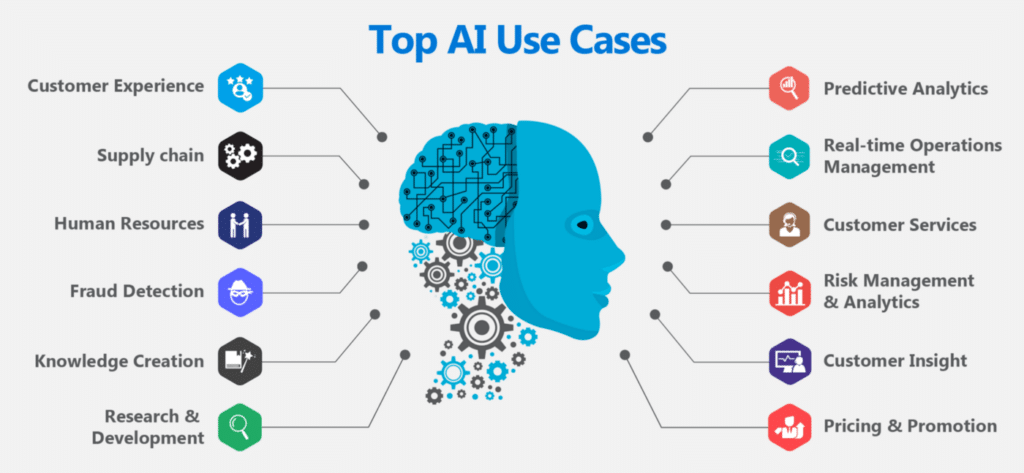
In the world of finance, predictive analysis plays a crucial role in forecasting future trends and making informed decisions. It involves the use of various mathematical and statistical models to analyze historical data and identify patterns that can help predict future outcomes. AI technologies, such as machine learning algorithms, have greatly enhanced the accuracy and efficiency of predictive analysis in finance. By analyzing large volumes of data, AI-powered predictive models can provide valuable insights and forecasts for a range of financial markets, including stocks, currencies, and commodities.
Risk Management
Risk management is a fundamental aspect of finance, and AI has revolutionized this field by providing advanced tools and techniques to identify, assess, and mitigate risks. AI can analyze vast amounts of data in real-time and detect anomalies or irregularities that may indicate potential risks. By automating the risk assessment process, AI-powered systems can not only save time but also provide more accurate and consistent results. AI can also assist in the development of risk models by identifying patterns and trends that may contribute to future risks.
Robo-Advisory
Robo-advisory has gained popularity in recent years as an automated investment advisory service, powered by AI algorithms. Robo-advisors use sophisticated algorithms to analyze an individual’s financial goals, risk tolerance, and market trends to provide personalized investment advice. The use of AI in robo-advisory allows for better portfolio diversification, efficient asset allocation, and continuous monitoring of investments. While robo-advisors offer convenience and affordability, it is essential to understand their limitations, such as the lack of human judgment and personalized advice for complex financial situations.
Quantitative Trading
Quantitative trading, also known as algorithmic trading, relies heavily on AI technologies to execute trades based on predefined parameters and market data analysis. AI algorithms can analyze vast amounts of market data and identify profitable trading opportunities, while also managing risk through automated risk control mechanisms. High-speed data analysis allows for real-time decision making, enabling traders to capitalize on market movements swiftly. However, it is crucial to continuously refine AI-based trading strategies to adapt to changing market conditions and avoid over-optimization.

Fraud Detection
Fraud detection is a critical concern in the financial industry, and AI has become an invaluable tool in combating financial crimes. Traditional methods of fraud detection often rely on rule-based systems that may not keep up with the ever-evolving tactics of fraudsters. AI, on the other hand, can use machine learning algorithms to analyze large volumes of data, detect patterns, and identify anomalies that may indicate fraudulent activities. Real-time monitoring and analysis enable swift detection and response to potential threats, safeguarding financial institutions and their customers.
Credit Scoring
Credit scoring is the assessment of an individual’s creditworthiness, used by lenders to make informed decisions regarding loan approvals and interest rates. AI-based credit scoring systems utilize machine learning algorithms to analyze vast amounts of data and predict the likelihood of a borrower repaying their debts. By considering various factors, such as payment history, credit utilization, and personal information, AI can provide more accurate and timely credit scores compared to traditional scoring methods. Additionally, AI-based credit scoring systems can help reduce bias and discrimination by focusing solely on relevant data and eliminating human bias.

Customer Support
AI has transformed customer support in the finance industry by providing more efficient and personalized services. Natural language processing (NLP) enables AI systems to understand and respond to customer inquiries and requests effectively. Automated responses and chat assistance can handle routine queries, allowing human agents to focus on more complex issues. AI algorithms can also analyze customer data and provide personalized recommendations and guidance based on individual financial goals and preferences. By integrating AI into customer support systems, financial institutions can enhance customer satisfaction and improve overall service quality.
Data Mining
Data mining is the process of extracting valuable insights and patterns from large datasets. In finance, AI plays a crucial role in data mining by automating the analysis of vast amounts of financial data. AI algorithms can identify market trends and opportunities, allowing financial institutions to make data-driven decisions to optimize business strategies. With AI, data mining becomes more efficient and accurate, enabling finance professionals to explore complex relationships in the data and uncover hidden insights that can drive competitive advantages.

Chatbots
Chatbots have become increasingly common in the financial industry as a means of providing instant customer support and assistance. AI-powered chatbots use natural language processing and machine learning algorithms to understand and respond to customer inquiries. By simulating human-like conversations, chatbots can provide quick and accurate information on various financial topics, such as account balances, transaction history, and investment options. Chatbots also learn from customer interactions, continuously improving their responses and providing personalized recommendations based on individual preferences.
Trading Strategy Optimization
AI technologies have revolutionized trading strategy optimization by automating the process of developing and fine-tuning trading strategies. AI algorithms can analyze historical market data, identify patterns, and optimize trading strategies to maximize returns and minimize risk. Automated portfolio optimization allows traders to allocate assets efficiently and make informed decisions based on risk-adjusted returns. Real-time market analysis and decision-making enable traders to respond swiftly to changing market conditions and capitalize on emerging opportunities. By leveraging AI in trading strategy optimization, investors can achieve more consistent and profitable outcomes.
In conclusion, AI has transformed various aspects of the finance industry, from predictive analysis to risk management, robo-advisory to fraud detection. By leveraging AI technologies, finance professionals can gain valuable insights, make informed decisions, and enhance customer service. As AI continues to evolve, its integration into the financial sector will likely lead to further advancements and improvements, enabling more accurate predictions, efficient processes, and better risk management.