In a world powered by increasingly sophisticated technology, understanding algorithms can seem like an impossible task. However, the field of Explainable AI seeks to bridge the gap between complex algorithms and human comprehension. By deciphering the inner workings of AI models and making their decision-making processes transparent, Explainable AI aims to provide clarity and foster trust in the age of artificial intelligence. Whether it’s ensuring fairness, avoiding bias, or simply demystifying the enigmatic nature of algorithms, Explainable AI is paving the way for a future where humans can truly comprehend the decisions made by machines.

What is Explainable AI?
Explainable AI (XAI) refers to the capability of artificial intelligence (AI) systems to provide clear explanations for their actions and decision-making process. It aims to bridge the gap between the complex algorithms used in AI and human understanding. In simpler terms, it means being able to understand why and how an AI system arrived at a particular outcome or decision.
Definition of Explainable AI
Explainable AI can be defined as the ability of an AI system to provide clear, understandable, and valid explanations for its actions and reasoning, in a manner that humans can comprehend. It involves translating the often intricate and opaque inner workings of AI algorithms into more straightforward and interpretable insights for users.
Importance of Explainable AI
The importance of explainable AI cannot be overstated. In various domains where AI is being deployed, such as finance, healthcare, and autonomous vehicles, the ability to understand the reasoning behind AI decisions is essential. It helps to build trust, improve accountability, mitigate biases, ensure compliance with regulations, and, ultimately, make AI systems more transparent and responsible.
Challenges in Understanding Complex AI Algorithms
Understanding complex AI algorithms poses several challenges due to their inherent nature and characteristics.
Black box nature of AI algorithms
Many AI algorithms operate as black boxes, meaning that they give outputs without providing insights into the underlying logic. This lack of transparency makes it difficult for users to comprehend and trust the decisions made by AI systems.
Lack of interpretability
AI algorithms often lack interpretability, making it hard for users to determine how and why a particular decision was made. This lack of interpretability creates a barrier to understanding and limits the trustworthiness of AI systems.
High dimensionality and complexity
AI algorithms, particularly those using deep learning techniques, often operate in high-dimensional spaces with complex interactions. It becomes challenging for humans to grasp and explain the reasoning behind AI decisions when dealing with such complexity.
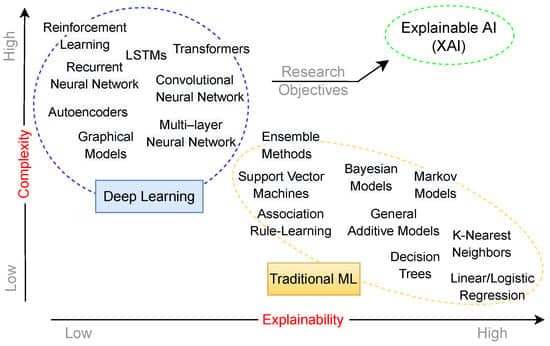
Trade-off between accuracy and interpretability
There is often a trade-off between the accuracy of AI models and their interpretability. Highly accurate models may sacrifice interpretability, which hinders the ability to understand and explain their decision-making process.
Benefits of Explainable AI
Explainable AI brings several benefits that contribute to improved transparency, trust, fairness, and compliance.
Enhanced transparency
Explainable AI increases the transparency of AI systems by providing clear explanations of the decision-making process. This transparency allows users to understand how AI models work and builds trust in their functionality.
Improved trust and accountability
By providing explanations for the actions of AI systems, explainable AI enhances trust and accountability. When users can obtain insights into the reasoning behind AI decisions, they are more likely to trust the system and hold it accountable for its actions.
Mitigating bias and discrimination
Explainable AI can help mitigate biases and discrimination in AI systems. By uncovering the factors and variables that influence decisions, it becomes possible to identify and address any biases present in the data or algorithms.
Enabling regulatory compliance
Explainable AI is crucial for ensuring regulatory compliance in fields where AI is being deployed. Regulations often require the ability to explain and justify AI decisions. By providing interpretable explanations, AI systems can comply with legal and regulatory requirements.
Methods for Explainable AI
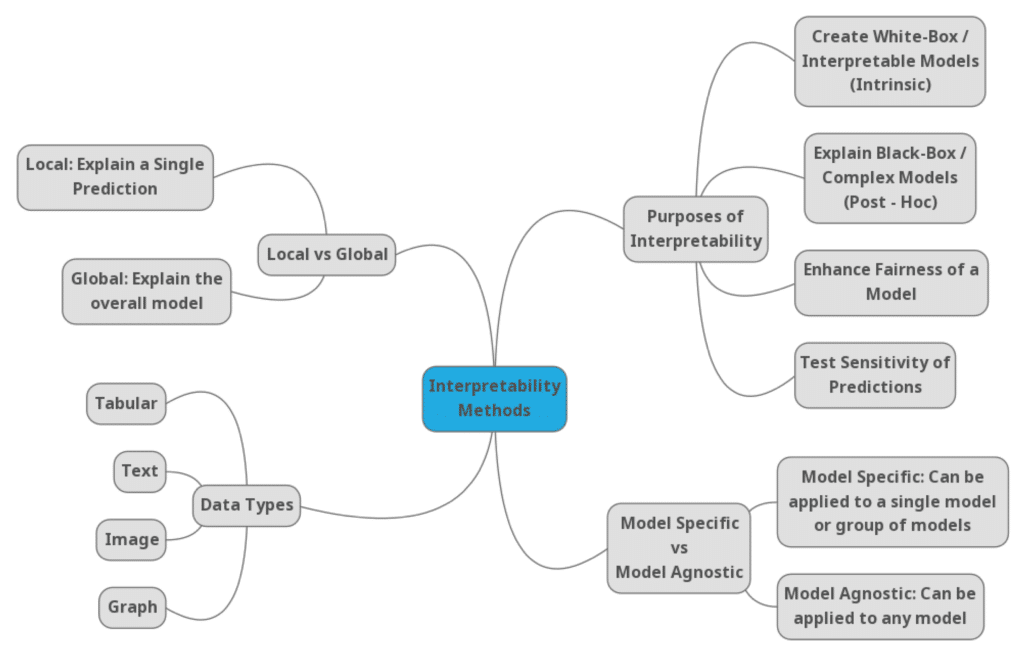
Several methods and techniques have been developed to achieve explainable AI.
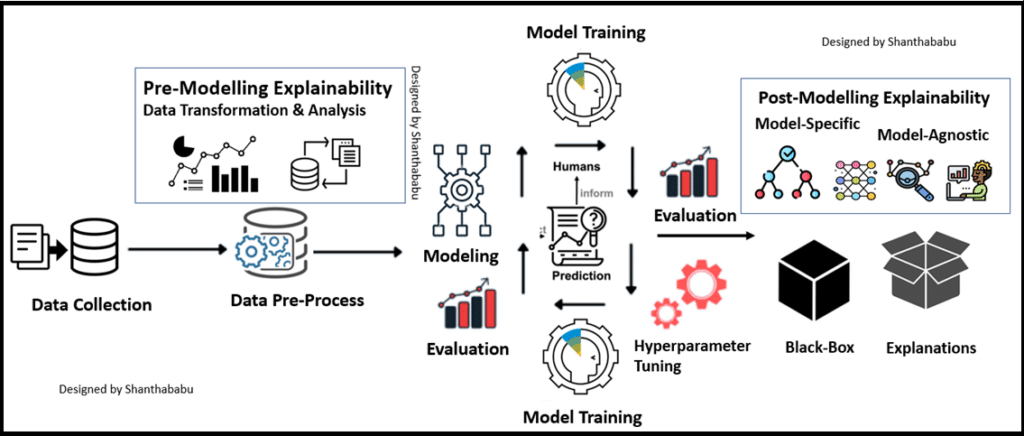
Feature importance analysis
Feature importance analysis involves identifying the features or variables that have the most significant impact on an AI model’s decision-making process. This method helps to unveil the factors driving the model’s predictions and provides insights into its reasoning.
Rule-based models
Rule-based models utilize a set of predefined rules to make decisions. These rules are often human-readable and can be easily understood and interpreted. Rule-based models excel in providing transparent explanations for their decisions.
Local surrogate models
Local surrogate models aim to approximate the behavior of complex AI algorithms using simpler and more interpretable models. These surrogate models provide insights into the decision-making process of the underlying black-box models.
Model-agnostic approaches
Model-agnostic approaches focus on understanding AI models’ behavior without relying on specific characteristics or assumptions of the models. They aim to provide general insights into the decisions made by AI systems, regardless of the underlying algorithms.
Visual explanations
Visual explanations use visualizations to represent the decision-making process of AI models. By presenting the information in a visual format, users can easily understand and interpret the reasoning behind AI decisions.
Interpretable Machine Learning Techniques
Several interpretable machine learning techniques offer explainability by design.
Decision Trees
Decision trees are simple and intuitive models that use a tree-like structure to make decisions. They are easy to understand and interpret, as each branching represents a decision based on specific features.
Linear models
Linear models, such as linear regression or logistic regression, provide straightforward explanations for their decisions. The coefficients assigned to each feature directly indicate their importance in the decision-making process.
Generalized additive models
Generalized additive models (GAMs) allow for non-linear relationships between features and target variables. They provide interpretable explanations by representing complex interactions between variables using smooth functions.
Model-based reasoning
Model-based reasoning focuses on using explicit models and rules to derive explanations. By relying on domain-specific knowledge, it becomes easier to understand and interpret the decision-making process.
Symbolic reasoning
Symbolic reasoning involves representing knowledge and rules using symbolic logic. It enables AI systems to generate explanations based on logical reasoning, which can be easily understood and interpreted by humans.
Techniques for Explainability in Deep Learning
Deep learning, known for its complexity, also offers methods for achieving explainability.
Layer-wise relevance propagation
Layer-wise relevance propagation (LRP) is a technique that assigns relevance scores to individual input features based on their contribution to the output. This method helps identify the most influential features and explains the decisions made by deep learning models.
Deep Taylor decomposition
Deep Taylor decomposition provides a method to decompose the output of deep learning models into contributions from individual input features. It assigns relevance scores to each feature and explains their impact on the final decision.
Gradient-weighted class activation mapping
Gradient-weighted class activation mapping (Grad-CAM) highlights the regions of an input that highly contribute to the predicted class. By visualizing the important regions, it provides explanations for the decisions made by deep learning models.
Attention mechanisms
Attention mechanisms in deep learning models focus on identifying the most relevant parts of the input at each step of the model’s decision-making process. By highlighting these relevant parts, attention mechanisms offer explanations for the model’s decisions.

Trade-offs and Limitations of Explainable AI
While explainable AI offers many benefits, it also presents trade-offs and limitations that need to be considered.
Interpretability-accuracy trade-off
There is often a trade-off between the interpretability and accuracy of AI models. Highly interpretable models may sacrifice some accuracy, while highly accurate models may be less interpretable. Striking the right balance between the two is a challenge.
Loss of predictive performance
In some cases, techniques used to achieve explainability may lead to a loss of predictive performance. Simplified models or approximations may not capture all the complexities of the original AI models, resulting in a decrease in their predictive power.
Scalability challenges
Explainable AI techniques may face scalability challenges when dealing with large datasets or complex models. The time and computational resources required for explanations can increase significantly, making them less practical for real-time or resource-constrained scenarios.
Human biases and cognitive limitations
Despite efforts to mitigate biases, human biases can still influence the interpretability of AI models. Humans may have difficulty understanding complex models or may misinterpret the explanations provided, leading to biased interpretations.
Applications and Use Cases of Explainable AI
Explainable AI finds applications in various domains where AI systems are deployed.
Finance and credit scoring
In the finance industry, explainable AI helps in credit scoring by providing transparent explanations for creditworthiness determinations. By understanding the factors contributing to credit decisions, financial institutions can communicate these to customers and regulators.
Healthcare and medical decision making
Explainable AI is crucial in healthcare and medical decision-making processes. It helps clinicians and patients understand the reasoning behind diagnoses, treatment recommendations, and predictions, enabling informed decision-making and fostering trust.
Legal and regulatory compliance
Explainable AI plays a significant role in legal and regulatory compliance. AI systems used in legal proceedings, such as case law prediction or legal document analysis, need to provide clear explanations for their decisions to ensure fairness and transparency.
Autonomous vehicles
In the field of autonomous vehicles, explainable AI is essential to understand and trust the decisions made by self-driving cars. By providing explanations for their actions, these vehicles can improve safety, accountability, and public acceptance.
Ethical Implications of Explainable AI
Explainable AI has ethical implications that need to be addressed.
Fairness and discrimination
Explainable AI can help identify and mitigate biases and discrimination present in AI systems. However, it also raises concerns about fairness, as explanations for discriminatory decisions may not be acceptable or justified.
Privacy and data protection
Explainable AI may involve sharing personal and sensitive data to provide explanations. Ensuring the privacy and protection of this data is crucial to avoid potential breaches of privacy and misuse of sensitive information.
Responsibility and accountability
With the increased transparency offered by explainable AI, questions of responsibility and accountability arise. It becomes necessary to determine who is responsible for the actions and decisions made by AI systems and how accountability can be enforced.
Human-AI collaboration
Explainable AI promotes collaboration between humans and AI systems. The challenge lies in establishing clear roles and responsibilities, ensuring proper training and understanding of the explanations provided, and maintaining trust in the AI systems.
Future Trends in Explainable AI
The field of explainable AI is continuously evolving, and several future trends can be expected.
Advancements in interpretable machine learning
Continued advancements in interpretable machine learning techniques are expected, improving the balance between accuracy and interpretability. Researchers will likely develop new methods to provide more accurate explanations without compromising predictive performance.
Increased adoption of XAI in critical domains
As the benefits of explainable AI become more evident, its adoption in critical domains, such as healthcare and finance, is expected to increase. Regulatory bodies will likely require explainability for AI systems used in these domains to ensure transparency and accountability.
Regulatory requirements for explainability
Regulatory bodies are likely to establish clearer guidelines and requirements for the explainability of AI systems. Regulations may mandate the provision of explanations, ensuring fairness, and protecting individuals’ rights in AI-driven decision-making.
Human-centered design and user feedback
The future of explainable AI will involve more human-centered design approaches and user feedback. Improving the usability and understandability of explanations will be a priority, enabling users to interact effectively with AI systems and make informed decisions.
In conclusion, explainable AI plays a vital role in making complex algorithms understandable to humans. It addresses the challenges of understanding AI decision-making, offers several benefits, and provides methods and techniques for achieving explainability. As the field continues to grow, it is essential to consider its trade-offs, applications, ethical implications, and future trends. By enabling transparency, trust, fairness, and collaboration between humans and AI, explainable AI paves the way for responsible and accountable AI systems in various domains.