


Artificial Intelligence has been a buzzword in the tech industry for quite some time now. It’s a field that has seen rapid progress in recent years with advancements in machine learning neural networks and natural language processing. But how close are we to achieving true AI the kind of intelligence that can mimic human thought processes and behavior?
While we have made significant strides in developing AI systems that can perform specific tasks with incredible accuracy such as image recognition language translation and playing games like chess and Go true AI also known as artificial general intelligence (AGI) still eludes us. AGI refers to AI systems that can perform any intellectual task that a human can do.
Current State of AI
Artificial narrow intelligence (ANI) is the current state of AI technology. ANI refers to AI systems that are designed to perform specific tasks or solve specific problems. These systems excel at those tasks but lack the ability to generalize their learning to new situations. Examples of ANI include virtual assistants like Siri and Alexa self driving cars and chatbots.
While ANI has made significant progress in recent years true AI AGI remains a distant goal. Creating a system that can think and learn like a human brain is an incredibly complex challenge that requires breakthroughs in multiple areas of AI research.
Challenges to Achieving True AI
There are several challenges that need to be addressed before we can achieve true AI –
- Understanding human intelligence – Despite decades of research we still don’t fully understand how the human brain works and how intelligence emerges from it. Mimicking the complexity of human thought processes is a daunting task.
- Generalization – One of the key aspects of human intelligence is the ability to generalize knowledge and apply it to new scenarios. Current AI systems struggle with generalization and often fail when faced with tasks that are slightly different from their training data.
- Ethical considerations – The development of AGI raises ethical concerns such as the potential for AI systems to outperform humans in all intellectual tasks leading to unemployment and social inequality.
- Safety and security – AGI systems have the potential to cause harm if not properly controlled. Ensuring the safety and security of AI systems is crucial to prevent unintended consequences.

Recent Advances in AI
Despite these challenges there have been significant advances in AI research that bring us closer to achieving true AI –
- Deep learning – Deep learning a subset of machine learning that uses artificial neural networks to mimic the human brain has revolutionized the field of AI. Deep learning algorithms have achieved remarkable results in image recognition natural language processing and other tasks.
- Reinforcement learning – Reinforcement learning is a type of machine learning where an agent learns to take actions in an environment to maximize some reward. This approach has been successfully applied to games like Go and Dota 2 showing the potential for AI systems to learn complex tasks from scratch.
- Neuromorphic computing – Neuromorphic computing is an emerging field that aims to design computer chips that mimic the architecture of the human brain. These chips could enable more energy efficient and powerful AI systems.
The Road Ahead
While we have made significant progress in AI research true AI artificial general intelligence remains a distant goal. Achieving AGI will require continued collaboration and breakthroughs in multiple areas of AI research. Understanding human intelligence improving generalization capabilities addressing ethical concerns and ensuring the safety and security of AI systems are all crucial steps on the road to true AI.
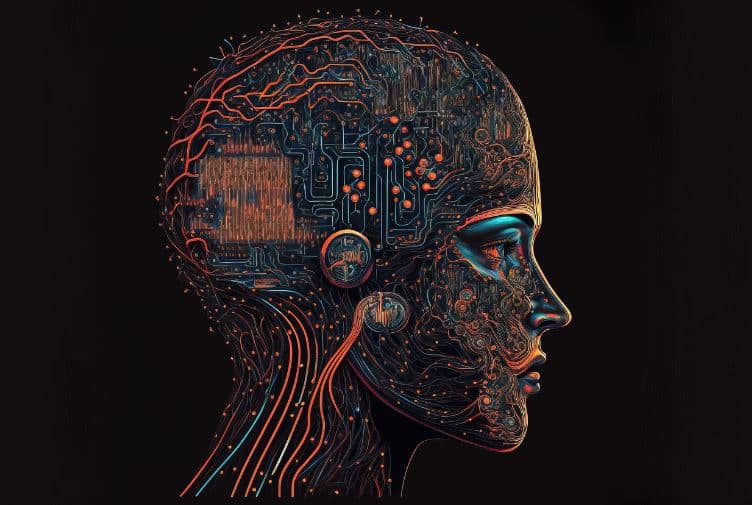
So how close are we to achieving true AI? While we may not have a definitive answer the progress we have made in recent years gives us hope that we are moving in the right direction. It’s only a matter of time before we unlock the secrets of human intelligence and create AI systems that can truly think and learn like us.


