As you delve into the world of music, you may find yourself captivated by the intersection of technology and creativity. Artificial Intelligence (AI) has emerged as a powerful tool in various fields, and music composition is no exception. The ability of AI to analyze vast amounts of data and generate original compositions is reshaping how music is created, produced, and consumed.
This transformation invites you to explore the implications of AI in music, from its historical roots to its potential future. In this era of rapid technological advancement, AI composition is not merely a novelty; it represents a significant shift in the creative landscape. You might wonder how machines can replicate the nuances of human emotion and artistry.
Yet, as you investigate further, you’ll discover that AI’s role in music is multifaceted, blending mathematical precision with artistic expression. This article will guide you through the evolution of AI in music, the algorithms that drive it, and the ethical considerations that arise as we embrace this new frontier.
Key Takeaways
- AI composition is the use of artificial intelligence to create music, revolutionizing the way music is composed and produced.
- The evolution of AI in music has seen advancements in technology and algorithms, leading to more sophisticated and realistic music compositions.
- Algorithms play a crucial role in music composition by analyzing patterns, styles, and structures to generate original compositions.
- AI has had a significant impact on the music industry, from assisting in creating new music to enhancing the production and distribution process.
- Ethical considerations in AI composition include issues of copyright, ownership, and the potential impact on human creativity and employment in the music industry.
The Evolution of AI in Music
The journey of AI in music composition began several decades ago, with early experiments in algorithmic composition. You may be surprised to learn that pioneers like Iannis Xenakis and Lejaren Hiller were among the first to explore the potential of computers in creating music. Their work laid the groundwork for future developments, demonstrating that machines could generate musical structures based on mathematical principles.
As technology advanced, so did the sophistication of these algorithms, leading to more complex and nuanced compositions. In recent years, the rise of machine learning has propelled AI music composition into the mainstream. You might recall hearing about programs like OpenAI’s MuseNet or Google’s Magenta, which utilize deep learning techniques to analyze existing music and create new pieces.
These advancements have made it possible for AI to not only mimic human composers but also to innovate in ways that were previously unimaginable. As you listen to AI-generated music, you may find yourself questioning the boundaries between human creativity and machine-generated art.
The Role of Algorithms in Music Composition
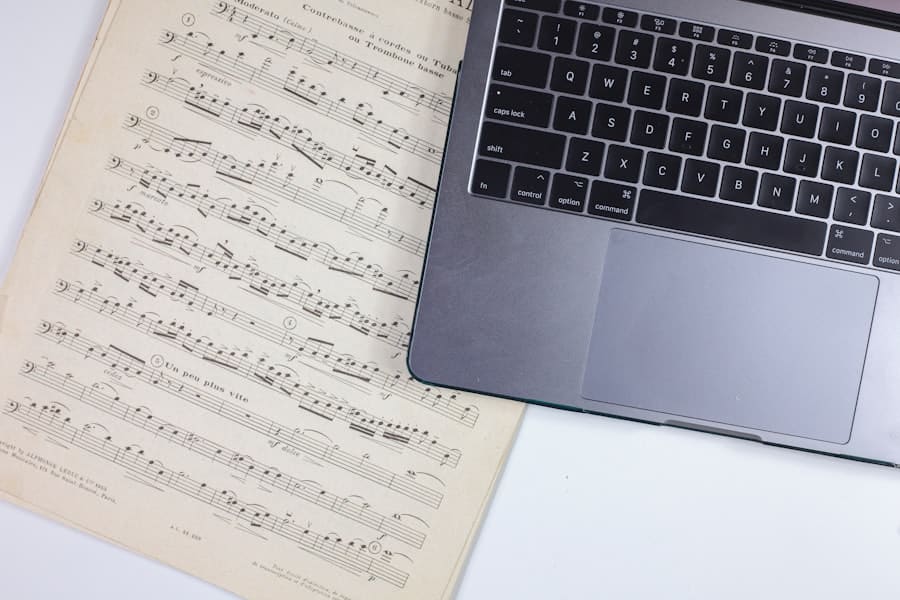
At the heart of AI composition lies a series of algorithms designed to analyze patterns and generate new musical ideas. You may be intrigued by how these algorithms function, as they rely on vast datasets of existing music to learn and adapt. By examining elements such as melody, harmony, rhythm, and structure, AI can create compositions that reflect various styles and genres.
This process often involves training neural networks to recognize patterns and make predictions about what comes next in a piece of music. As you explore this topic further, you’ll discover that algorithms can also incorporate user input, allowing for a more interactive experience. For instance, you might engage with an AI system that asks for your preferences in terms of mood or style before generating a unique composition tailored to your tastes.
This level of personalization not only enhances your listening experience but also blurs the lines between creator and audience, inviting you to participate in the creative process.
The Impact of AI on the Music Industry
The integration of AI into the music industry has far-reaching implications for artists, producers, and consumers alike. As you consider the impact on musicians, you may recognize that AI can serve as both a collaborator and a competitor. On one hand, it offers artists new tools for inspiration and experimentation; on the other hand, it raises questions about originality and authorship.
You might find yourself pondering whether an AI-generated song can truly be considered “music” in the same way as a human-composed piece. Moreover, AI’s influence extends beyond composition to areas such as marketing and distribution. You may have noticed how streaming platforms use algorithms to curate playlists based on your listening habits.
This data-driven approach not only enhances your experience but also shapes how artists reach their audiences. As you navigate this evolving landscape, it’s essential to consider how AI is redefining traditional roles within the industry and what that means for the future of music.
Ethical Considerations in AI Composition
As you engage with the concept of AI in music creation, ethical considerations inevitably arise. One pressing issue is the question of authorship: who owns a piece of music generated by an algorithm? You may find yourself grappling with the implications of copyright laws in an age where machines can produce original works.
The challenge lies in determining whether the creator is the programmer who designed the algorithm, the user who provided input, or the machine itself. Additionally, there are concerns about the potential for AI to perpetuate biases present in its training data. If an algorithm learns from a dataset that lacks diversity, it may produce music that reflects those limitations.
As you reflect on this issue, you might consider how important it is for creators and technologists to ensure that AI systems are trained on a wide range of musical styles and cultural influences. This awareness can help foster a more inclusive musical landscape that celebrates diversity rather than stifling it.
The Future of AI in Music Creation
Looking ahead, the future of AI in music creation is both exciting and uncertain. You may envision a world where AI becomes an integral part of the creative process, collaborating with human musicians to push artistic boundaries. As technology continues to evolve, you might anticipate advancements that allow for even more sophisticated interactions between humans and machines.
Imagine an AI that not only composes but also understands emotional nuances and can adapt its creations based on real-time feedback from listeners. However, as you contemplate this future, it’s essential to remain mindful of the challenges that lie ahead. The rapid pace of technological change raises questions about job displacement within the industry and how artists will adapt to new tools and methods.
You may wonder how musicians will carve out their unique identities in a landscape increasingly populated by algorithmically generated content. Balancing innovation with tradition will be crucial as you navigate this brave new world.
The Collaboration between AI and Human Creativity
One of the most compelling aspects of AI composition is its potential for collaboration with human creativity. As you explore this dynamic relationship, you might find it fascinating how artists are beginning to embrace AI as a partner rather than a replacement. By leveraging AI’s analytical capabilities, musicians can gain fresh perspectives on their work and discover new avenues for exploration.
This collaboration can lead to innovative compositions that blend human emotion with machine precision. You may also appreciate how this partnership encourages experimentation and risk-taking among artists. With AI handling certain technical aspects of composition, musicians can focus on their creative instincts without being bogged down by traditional constraints.
This freedom can result in groundbreaking works that challenge conventional notions of what music can be. As you listen to these collaborations unfold, you may find yourself inspired by the possibilities that arise when human ingenuity meets technological advancement.
The Potential of AI to Revolutionize Music Creation
As you reflect on the potential of AI to revolutionize music creation, it’s clear that we are only scratching the surface of what is possible. The ability of machines to analyze vast amounts of data and generate original compositions opens up new avenues for artistic expression that were previously unimaginable. You might envision a future where anyone can create music using intuitive AI tools, democratizing access to composition and fostering a diverse array of voices within the industry.
Moreover, as technology continues to advance, you may anticipate even more innovative applications for AI in music production and performance. Imagine live concerts where AI collaborates with musicians in real-time or immersive experiences that adapt based on audience reactions. The possibilities are endless, inviting you to consider how these advancements will shape not only the soundscape but also our cultural understanding of music itself.
In conclusion, as you navigate this fascinating intersection of technology and creativity, it’s essential to remain open-minded about the role of AI in music composition. While challenges exist, so too do opportunities for growth and innovation. Embracing this new frontier can lead to a richer musical landscape that celebrates both human artistry and machine intelligence—a harmonious blend that has the potential to redefine what it means to create music in the 21st century.
If you are interested in exploring more about AI tools and frameworks, you may want to check out this article on AI Tools and Frameworks. It delves into the various technologies and platforms that are revolutionizing the way we approach artificial intelligence. This could provide valuable insights into the advancements that have enabled the creation of an AI composer capable of producing chart-topping hits with algorithms.
FAQs
What is an AI composer?
An AI composer is a computer program or algorithm that is designed to create music autonomously, without direct human input.
How does an AI composer work?
An AI composer works by analyzing large amounts of existing music data to identify patterns and trends. It then uses this information to generate new musical compositions based on the learned patterns.
Can an AI composer create chart-topping hits?
While AI composers have the ability to create music that is technically proficient and stylistically similar to popular music, there is no guarantee that their compositions will become chart-topping hits. The success of a song depends on various factors, including marketing, promotion, and audience reception.
What are the advantages of using an AI composer?
Some advantages of using an AI composer include the ability to generate a large volume of musical ideas quickly, the potential for discovering new and innovative compositions, and the ability to assist human composers in the creative process.
Are there any limitations to using an AI composer?
Limitations of using an AI composer include the potential for lack of emotional depth and creativity compared to human composers, as well as the risk of producing music that lacks originality or uniqueness. Additionally, AI composers may struggle to capture the cultural and social context that often influences popular music.