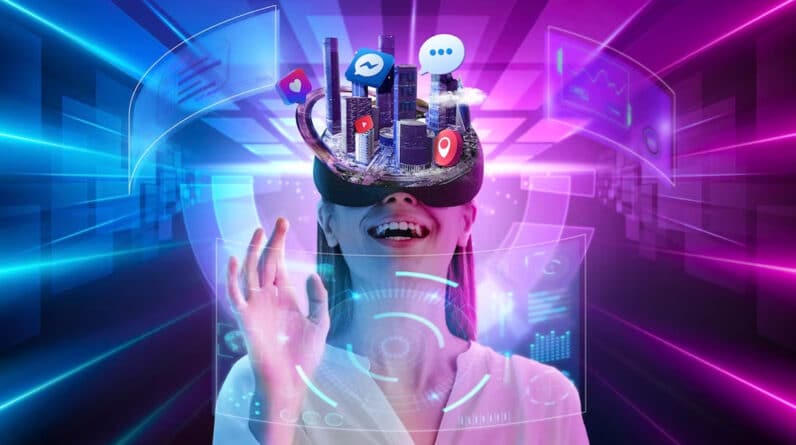
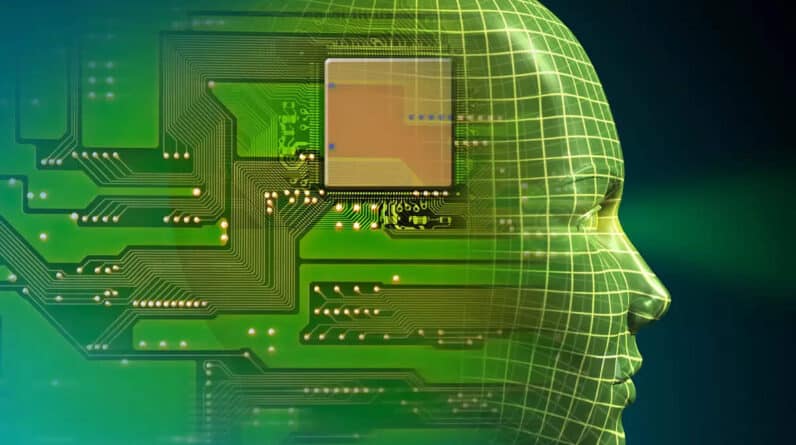
In this article, you will explore the exciting realm where artificial intelligence (AI) and augmented reality (AR) intertwine to create a seamless fusion of virtual and real worlds. With AI advancing at a rapid pace and AR technology becoming increasingly sophisticated, the possibilities for immersive and transformative experiences are endless. Learn how AI enhances AR applications, enabling intelligent interactions and personalized experiences that blur the boundaries between the digital and physical realms. Discover the potential impact of this convergence across various industries, from entertainment and gaming to education and healthcare. Get ready to step into a future where virtual and real worlds coexist harmoniously, propelling us into a new era of human-computer interaction.
The Basics of AI
Artificial Intelligence (AI) is a field of computer science that focuses on creating intelligent machines that can perform tasks and make decisions similar to humans. It involves the development of algorithms and models that enable machines to learn from data and improve their performance over time. AI can be applied to various domains, including computer vision, natural language processing, robotics, and machine learning.
Definition of AI
AI refers to the capability of a machine to exhibit human-like intelligence, such as reasoning, learning, problem-solving, and decision-making. It involves the development of algorithms and models that enable machines to process and understand data, make predictions or classifications, and generate insights.
Types of AI
There are different types of AI, ranging from weak AI to strong AI. Weak AI, also known as Narrow AI, is designed to perform specific tasks within a limited domain. It focuses on solving specific problems and does not possess general intelligence. In contrast, strong AI, also known as General AI, aims to replicate human intelligence across all domains and tasks.
Other types of AI include machine learning, which involves training machines to learn from data and improve their performance over time, and deep learning, a subset of machine learning that uses neural networks to simulate the human brain’s functioning.
Applications of AI
AI has various applications across numerous sectors and industries. In healthcare, AI is used for disease diagnosis, drug discovery, patient monitoring, and personalized medicine. In finance, AI facilitates fraud detection, automated trading, and risk assessment. AI is also widely used in customer service, virtual assistants, autonomous vehicles, and cybersecurity.
The Basics of Augmented Reality
Augmented Reality (AR) refers to the technology that overlays digital content onto the real world, enhancing the user’s perception and interaction with the environment. AR combines virtual elements with the physical world, providing users with an enriched experience that blends the digital and real worlds.
Definition of Augmented Reality
AR involves the integration of computer-generated content, such as images, sounds, and videos, with the user’s real-world environment. It overlays this digital content onto the physical world, allowing users to interact with both virtual and real objects simultaneously. AR can be experienced through various devices, ranging from smartphones and tablets to specialized headsets and glasses.
Types of Augmented Reality
There are different types of AR, including marker-based AR, markerless AR, projection-based AR, and superimposition-based AR. Marker-based AR uses visual markers, such as QR codes or symbols, to anchor digital content to the real world. Markerless AR, on the other hand, relies on computer vision algorithms to track and align digital content with the user’s environment.
Projection-based AR projects digital content onto real-world surfaces, while superimposition-based AR overlays digital objects onto the user’s view of the physical world. Each type of AR has its own advantages and is suited for different applications.
Applications of Augmented Reality
AR has found applications in various industries, including gaming, architecture and construction, education and training, marketing and advertising, and healthcare. In gaming, AR allows users to interact with virtual objects in their physical surroundings, creating immersive gaming experiences. In architecture and construction, AR enables visualization of building designs and facilitates on-site construction guidance.
In education and training, AR can enhance learning by providing interactive and immersive experiences. AR also has uses in marketing and advertising, enabling companies to create interactive campaigns and engage customers with virtual experiences. In healthcare, AR assists surgeons during surgeries and provides medical professionals with real-time patient information.

Intersection of AI and Augmented Reality
As AI and AR continue to advance, their intersection opens up new possibilities for merging virtual and real worlds. The combination of AI and AR technologies has the potential to revolutionize various industries and transform the way we perceive and interact with our environment.
Introduction to the Merging of AI and AR
The merging of AI and AR involves leveraging AI’s capabilities with AR’s ability to overlay digital content onto the real world. By integrating AI algorithms and models into AR applications, it becomes possible to enhance the realism, interactivity, and intelligence of augmented experiences. This merging enables AR to be more context-aware, adaptive, and responsive, providing users with personalized and intelligent interactions.
Benefits of Combining AI and AR
The combination of AI and AR offers several benefits. One of the key advantages is enhanced contextual understanding. AI algorithms can analyze and interpret data from the user’s environment, allowing AR to provide relevant and meaningful information in real-time. For example, AI can analyze facial expressions and gestures to understand the user’s emotions and intentions, enabling AR to respond accordingly.
Another benefit is improved object recognition and tracking. AI algorithms can help AR systems identify and track objects in the user’s environment, making it easier to overlay virtual content onto specific objects or surfaces. This enhances the realism and accuracy of augmented experiences.
Furthermore, combining AI and AR enables personalized and adaptive experiences. AI algorithms can learn from user interactions and preferences, tailoring AR content and interactions to suit individual needs. This personalization enhances user engagement and satisfaction.
Challenges in Merging AI and AR
While the merging of AI and AR holds significant potential, there are also challenges to overcome. One challenge is the need for robust and efficient AI algorithms that can process and analyze real-time data in AR environments. Real-time processing is crucial for delivering seamless and responsive augmented experiences.
Another challenge is ensuring privacy and security in AI and AR systems. As AI algorithms process and analyze large amounts of user data, there is a need to protect sensitive information and ensure data privacy. Similarly, AR systems must ensure the security of user interactions and prevent unauthorized access to the augmented content.
Additionally, there are technical challenges in integrating AI and AR hardware and software. The seamless integration of AI algorithms into AR devices requires efficient hardware and software architectures that can handle the computational requirements of both technologies. Collaboration between AI and AR developers is crucial to address these technical challenges.
Current Applications of AI and AR Integration
The integration of AI and AR is already being leveraged in multiple domains, revolutionizing various industries.
Education and Training
In education and training, AI and AR integration offers immersive and interactive learning experiences. AR can overlay virtual objects and simulations onto the real world, allowing students to visualize complex concepts and interact with virtual learning materials. AI algorithms can personalize these learning experiences based on student progress and provide real-time feedback and guidance. This integration has the potential to transform traditional teaching methods and improve knowledge retention and engagement.
Entertainment and Gaming
The entertainment and gaming industry has embraced the integration of AI and AR to create immersive experiences. AI algorithms can enhance gameplay by adapting to the player’s behavior and providing personalized challenges and content. AR allows users to interact with virtual characters and objects in their physical surroundings, blurring the line between the real and virtual worlds. This integration has opened up new possibilities for innovative and interactive gaming experiences.
Retail and eCommerce
AI and AR integration has transformed the retail and eCommerce industry by enhancing the shopping experience. AR allows customers to virtually try on clothes, visualize furniture in their homes, or see how products would look in real-life settings. AI algorithms can analyze customer preferences and behaviors, providing personalized recommendations and improving the overall shopping experience. This integration has the potential to increase customer engagement, reduce returns, and boost sales.
Healthcare and Medicine
The integration of AI and AR has significant implications for healthcare and medicine. AR can assist surgeons during surgeries by overlaying real-time patient data, such as vital signs or X-ray images, onto their field of view. AI algorithms can analyze this data to provide real-time insights and support decision-making. AR can also help in training medical professionals by simulating complex surgical procedures and allowing for hands-on practice. This integration has the potential to improve patient outcomes, enhance training programs, and revolutionize healthcare delivery.

Future Possibilities of AI and AR Integration
The merging of AI and AR is still in its early stages, and many exciting possibilities lie ahead.
Enhanced Communication and Collaboration
AI and AR integration have the potential to enhance communication and collaboration. By overlaying virtual elements onto video calls or conferences, users can experience more immersive and interactive meetings. AI algorithms can analyze facial expressions, gestures, and speech, improving communication by providing real-time feedback and insights. This integration can facilitate remote collaboration and enable more engaging virtual interactions.
Improved Human-Computer Interactions
AI and AR integration can lead to improved human-computer interactions by making systems more intuitive and responsive. Natural language processing algorithms can enable users to interact with AR systems using voice commands, eliminating the need for physical interfaces. AI algorithms can also analyze user behavior and preferences, tailoring AR content and interactions to individual needs. This integration has the potential to create more seamless and user-friendly augmented experiences.
Virtual Reality and AR Integration
The integration of AI and AR can also extend to Virtual Reality (VR), creating a truly immersive mixed reality experience. By combining AI algorithms, AR, and VR technologies, users can interact with virtual objects and environments in real-time, while AI provides intelligent responses and simulations. This integration can revolutionize fields such as training, gaming, and simulation, allowing users to blend virtual and real elements seamlessly.
Ethical Considerations in AI and AR Integration
The integration of AI and AR brings about several ethical considerations that need to be addressed.
Privacy and Security Concerns
As AI and AR systems collect and process large amounts of user data, privacy and security become paramount. There is a need for robust data protection measures to ensure that sensitive information is not compromised. Additionally, consent and transparency in data collection and usage need to be upheld to protect user privacy. It is essential for AI and AR developers to prioritize security and adopt ethical practices in handling user data.
Unemployment and Job Displacement
The integration of AI and AR may lead to concerns about unemployment and job displacement. As machines become more capable of performing tasks traditionally done by humans, there is a need to address the impact on the workforce. It is crucial to invest in reskilling and training programs to ensure a smooth transition and enable individuals to adapt to this changing technological landscape. Collaboration between industry, academia, and policymakers is key to mitigating the potential negative effects on employment.
Impact on Physical and Mental Health
The prolonged use of AI and AR systems can have physical and mental health implications. Physical health concerns may arise from extended exposure to AR and VR environments, such as eye strain or motion sickness. It is important for developers to prioritize user comfort and well-being by implementing ergonomic designs and providing breaks during prolonged use.
Mental health considerations include the potential for addiction or dependency on AI and AR systems. Continuous engagement with augmented experiences may affect human social interactions and contribute to feelings of isolation. It is crucial to strike a balance and ensure that technology enhances human experiences rather than replacing them.

Conclusion
The merging of AI and AR is paving the way for the seamless integration of virtual and real worlds. The combination of AI’s intelligence and AR’s ability to overlay digital content onto the physical world opens up a vast array of possibilities in various sectors. From education and entertainment to healthcare and communication, AI and AR integration are transforming industries and redefining human-computer interactions.
As this integration progresses, it is important to consider the ethical implications and address challenges such as privacy, unemployment, and health concerns. By fostering responsible development practices, collaboration, and continuous monitoring, we can harness the full potential of AI and AR integration while ensuring a positive impact on society. The future holds endless possibilities, and AI and AR integration are at the forefront of this exciting technological revolution.