In this article, you will explore the fascinating role of artificial intelligence (AI) in sentiment analysis, specifically in understanding emotions in both text and speech. As technology continues to advance, AI has become increasingly proficient at deciphering and interpreting human emotions, allowing businesses and individuals to gain valuable insights from customer feedback, social media posts, and other forms of communication. Discover how AI-powered sentiment analysis is revolutionizing the way we understand and respond to human emotions in the digital age.
The Role of Artificial Intelligence in Sentiment Analysis
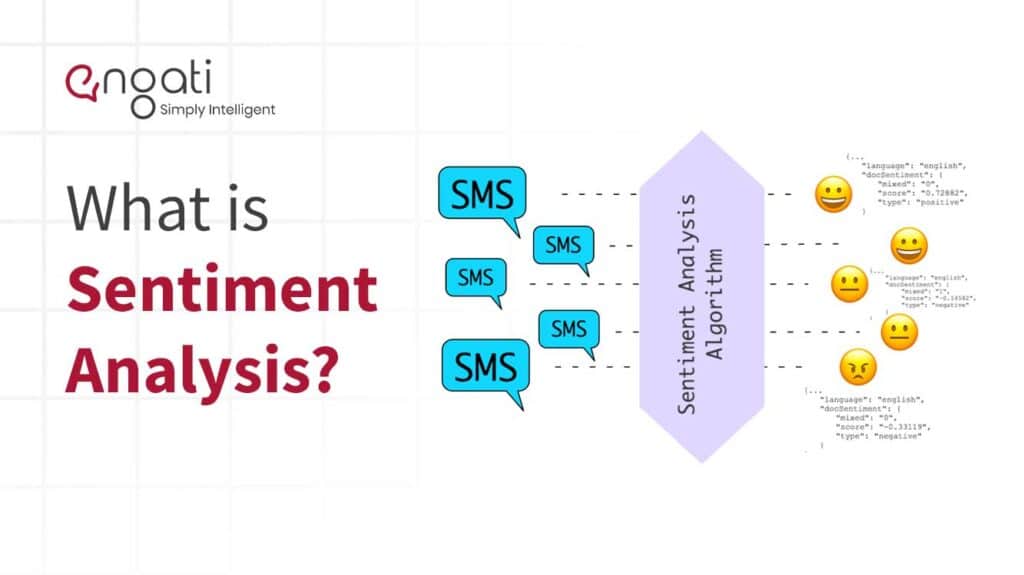
Artificial Intelligence (AI) has revolutionized many industries, and one area where its impact is particularly significant is sentiment analysis. Sentiment analysis, also known as opinion mining, is the process of determining and understanding the emotions, attitudes, and opinions expressed in text or speech. It plays a crucial role in understanding the sentiment of customers, users, or the general public towards a particular product, service, brand, or topic.
Definition of sentiment analysis
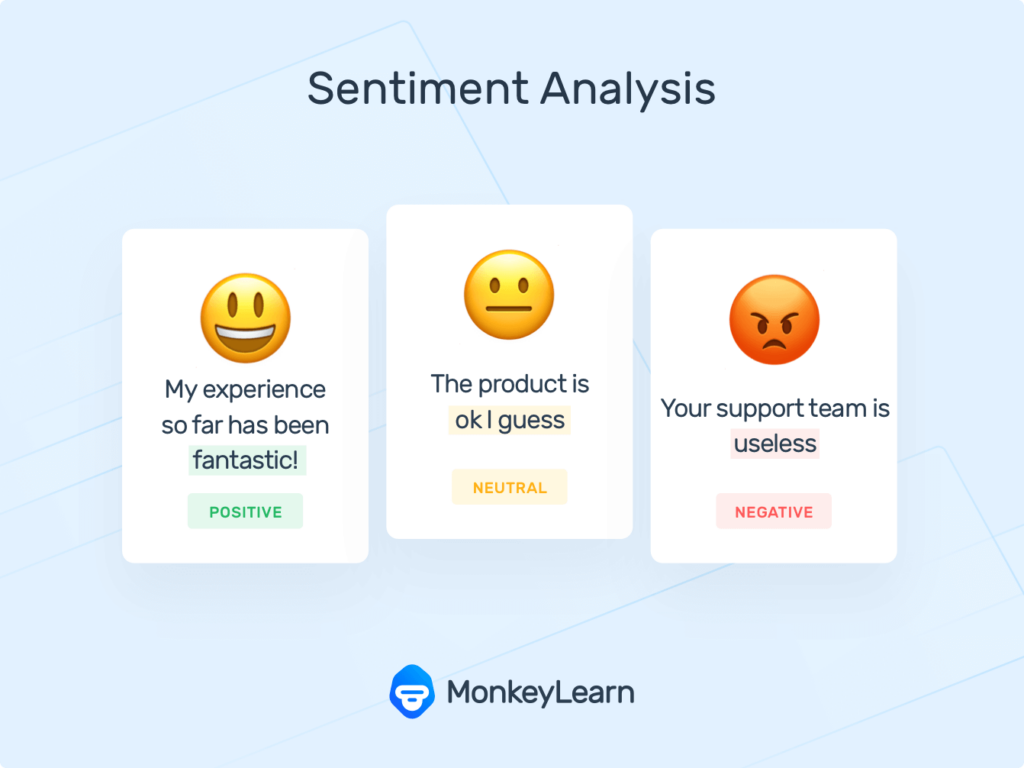
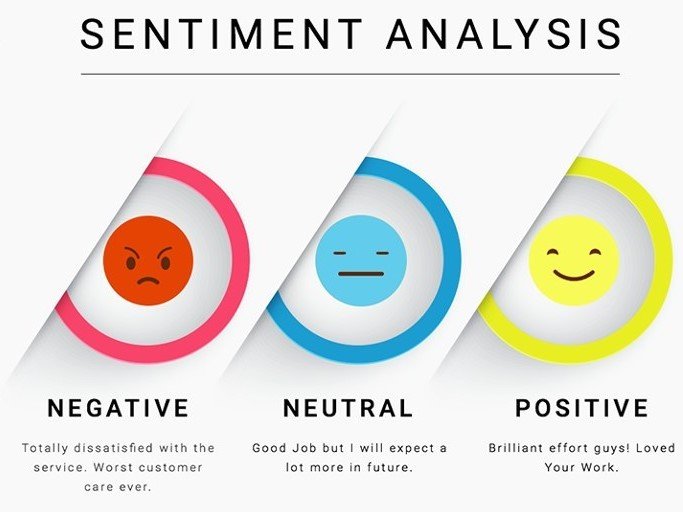
Sentiment analysis involves the use of natural language processing (NLP) techniques to analyze and interpret the sentiment present in textual or spoken data. It aims to classify the expressed emotion as either positive, negative, or neutral. By understanding the sentiment, organizations can gain valuable insights into customer preferences, public perception, and market trends.
Importance of understanding emotions in text and speech
Understanding the emotions contained within text and speech is vital for various reasons. In the business world, sentiment analysis can provide valuable insights into customer satisfaction, allowing companies to improve their products or services accordingly. It can also be used to track brand reputation, identify potential issues or concerns, and develop targeted marketing strategies.
Furthermore, sentiment analysis is crucial in social media monitoring. With millions of users expressing their opinions on various platforms, it becomes essential to analyze the sentiment of these conversations. This helps organizations understand public sentiment, respond to customer complaints, and engage with their audience more effectively.
Introduction to AI and its application in sentiment analysis
AI refers to the simulation of human intelligence in machines, enabling them to complete tasks that would typically require human intelligence. In the context of sentiment analysis, AI algorithms and techniques are employed to analyze and interpret emotions in textual or spoken data.
AI-powered sentiment analysis models can capture the nuances of human emotions, even taking into account context, sarcasm, and cultural differences. By utilizing AI, sentiment analysis becomes more accurate and efficient, enabling organizations to gather meaningful insights from vast amounts of data.
Types of Sentiment Analysis
Sentiment analysis can be performed at different levels, depending on the granularity of the analysis required. There are three primary types of sentiment analysis:
Aspect-based sentiment analysis
Aspect-based sentiment analysis focuses on analyzing the sentiment regarding specific aspects or features of a product or service. For example, in the context of a smartphone review, it can identify whether the sentiment towards the camera, battery life, or user interface is positive, negative, or neutral. This type of analysis provides more detailed insights into customer preferences and helps organizations improve specific features of their offerings.
Document-level sentiment analysis
Document-level sentiment analysis involves analyzing the overall sentiment of a document, such as an article, blog post, or social media post. It provides a general understanding of the emotional tone expressed throughout the entire document. This type of analysis is useful for gauging public opinion on a particular topic, identifying the overall sentiment towards a company or brand, or assessing the sentiment of a piece of news.
Sentence-level sentiment analysis
Sentence-level sentiment analysis focuses on analyzing the sentiment expressed in individual sentences or phrases. It allows for a more fine-grained analysis, capturing the sentiment fluctuations within a document. This type of analysis is beneficial in customer feedback analysis, where it can help identify specific issues or concerns raised by customers and assess the sentiment associated with each one.
Challenges in Sentiment Analysis
While sentiment analysis has proven to be a valuable tool, several challenges need to be overcome for accurate interpretation of emotions:
Subjectivity and context
One of the main challenges in sentiment analysis is the inherent subjectivity of human emotions. Emotions can be complex, and their interpretation can vary based on individual experiences and cultural background. Context also plays a crucial role in understanding sentiment accurately. Two similar sentences might have different sentiments based on the context in which they are used.
Irony and sarcasm
Detecting irony and sarcasm is another significant challenge in sentiment analysis. These forms of figurative language often involve the expression of an emotion contrary to the literal meaning of the words used. AI algorithms need to be trained to recognize and interpret these nuances correctly.
Negation handling
Negation is another challenge in sentiment analysis, as expressing negation reverses the sentiment of a statement. For example, “I do not like this product” conveys a negative sentiment, whereas “I like this product” conveys a positive sentiment. Accurate identification and handling of negations are crucial for correctly classifying sentiment.
Language and cultural nuances
Language and cultural differences add further complexity to sentiment analysis. Different languages have unique expressions, linguistic patterns, and sentiment indicators that need to be accounted for in the analysis. Cultural nuances can also impact the interpretation of emotions, as certain expressions may carry different emotional connotations in different cultures.
Natural Language Processing Techniques for Sentiment Analysis
To overcome the challenges faced in sentiment analysis, various Natural Language Processing (NLP) techniques are employed. These techniques assist in preprocessing textual data and extracting relevant features to train sentiment analysis models. Some of the commonly used NLP techniques for sentiment analysis include:
Tokenization
Tokenization involves breaking down a piece of text into individual tokens, such as words, phrases, or sentences. It serves as the first step in preprocessing textual data, enabling further analysis and feature extraction.
Stop word removal
Stop words are commonly occurring words in a language, such as “is,” “the,” “and,” etc., that do not carry significant meaning and can be removed without affecting the overall sentiment analysis. Removing stop words helps reduce noise and improve the accuracy of sentiment classification.
Part-of-speech tagging
Part-of-speech tagging involves classifying the words in a sentence into various grammatical categories, such as nouns, verbs, adjectives, etc. This technique aids in understanding the syntactic structure and semantic context of the text, contributing to more precise sentiment analysis.
Named entity recognition
Named entity recognition involves identifying and classifying named entities, such as people, organizations, locations, etc., within a piece of text. Recognizing named entities can provide valuable context and improve the accuracy of sentiment analysis by associating sentiments with specific entities.
Stemming and lemmatization
Stemming and lemmatization are techniques used to reduce words to their root form. Stemming involves removing prefixes or suffixes from words, while lemmatization transforms words to their base or dictionary form. Both techniques help reduce redundant features and improve the efficiency of sentiment analysis algorithms.
Machine Learning Approaches in Sentiment Analysis
Machine learning methods have proven to be highly effective in sentiment analysis, enabling systems to learn from labeled datasets and make accurate predictions on new data. Various approaches are used in machine learning-based sentiment analysis:
Supervised learning
Supervised learning involves training a model using a labeled dataset, where each data point is associated with a known sentiment label. The sentiment analysis model learns from this training data and predicts the sentiment of new, unlabeled data based on the patterns it has learned.
Unsupervised learning
Unsupervised learning does not rely on labeled datasets for training. Instead, it employs clustering and dimensionality reduction techniques to identify patterns and similarities in the data. Unsupervised learning techniques can be useful for exploring large amounts of unlabeled text data and identifying potential sentiment patterns.
Hybrid approaches
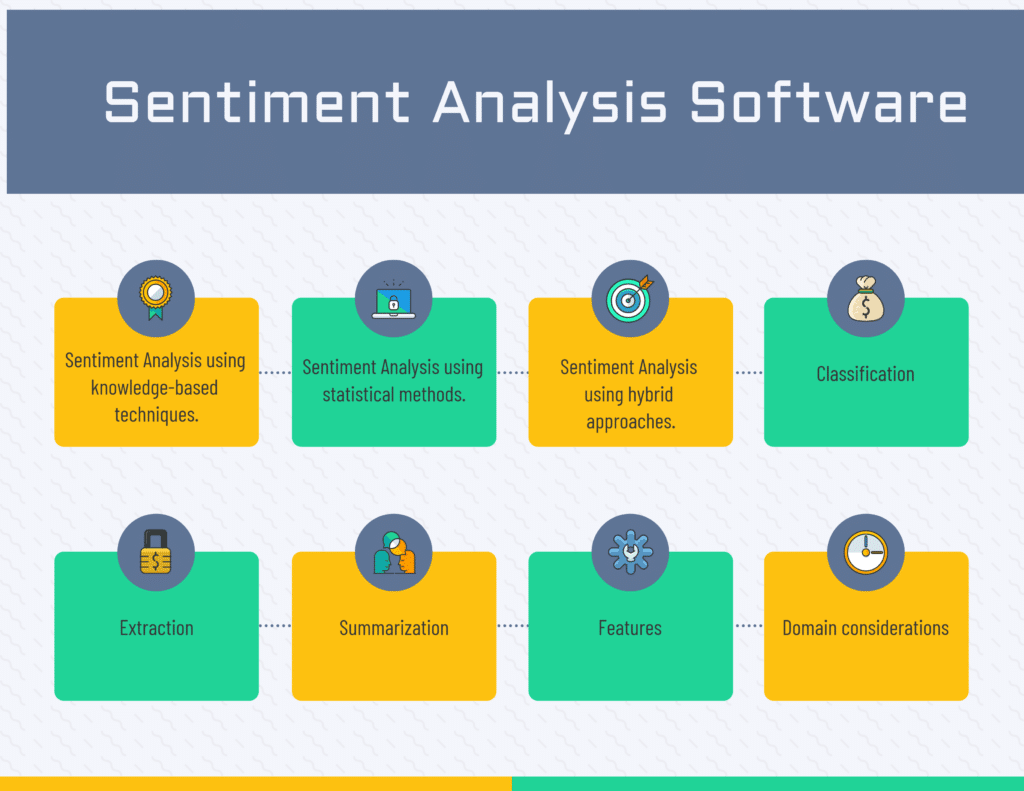
Hybrid approaches combine both supervised and unsupervised learning techniques to improve the accuracy and flexibility of sentiment analysis models. By leveraging the strengths of both approaches, hybrid models can achieve higher levels of accuracy and adaptability to different datasets and sentiment analysis tasks.
Deep learning and neural networks
Deep learning techniques, such as recurrent neural networks (RNNs) and convolutional neural networks (CNNs), have shown promising results in sentiment analysis. RNNs, with their ability to capture sequence information, are effective in sentence-level and aspect-based sentiment analysis. CNNs, known for their feature extraction capabilities, are well-suited for document-level sentiment analysis.
The Process of Sentiment Analysis
The sentiment analysis process involves several steps, each contributing to the accurate classification of sentiment:
Data collection and preprocessing
First, relevant data needs to be collected from various sources, such as social media platforms, customer reviews, or online articles. The collected data then undergoes preprocessing, which includes techniques like tokenization, stop word removal, and stemming/lemmatization.
Feature extraction
Next, relevant features are extracted from the preprocessed data. These features can include words, n-grams (sequences of adjacent words), syntactic patterns, or sentiment indicators. Extracting informative features is crucial for training a sentiment analysis model that can effectively capture sentiment patterns.
Model training
Once the features are extracted, a sentiment analysis model is trained using a labeled dataset. The model learns the patterns between the extracted features and the associated sentiment labels. Various machine learning algorithms or neural network architectures can be used for training the model, depending on the specific task and dataset.
Evaluation and validation
After the model is trained, it needs to be evaluated and validated using separate datasets to assess its performance. Metrics such as accuracy, precision, recall, and F1 score are commonly used to measure the effectiveness of the model. Validation allows for fine-tuning and optimizing the model parameters to improve its performance.
Applications of Sentiment Analysis
Sentiment analysis finds applications across various industries and domains, contributing to improved decision-making and customer understanding:
Social media monitoring
Organizations can leverage sentiment analysis to monitor and analyze public sentiment on social media platforms. This allows them to understand customer perceptions, identify emerging trends, respond to customer complaints or concerns, and engage with their audience effectively.
Customer feedback analysis
Sentiment analysis helps in analyzing customer feedback, such as reviews, surveys, or support tickets. By understanding the sentiment associated with specific features or aspects of a product or service, organizations gain valuable insights for improving customer satisfaction and enhancing their offerings.
Brand reputation management
Brand reputation is of utmost importance, and sentiment analysis helps organizations monitor and manage it effectively. By analyzing the sentiment expressed in media coverage, online articles, or customer reviews, companies can proactively address any negative sentiment and maintain a positive brand image.
Market research and trend analysis
Sentiment analysis provides a powerful tool for market research and trend analysis. By analyzing the sentiment of customers towards new products or emerging trends, organizations can identify market opportunities, make informed business decisions, and stay ahead of competitors.
Political sentiment analysis
Politicians and policymakers can benefit from sentiment analysis to gauge public opinion on specific policies or political events. By understanding public sentiment, they can adapt their strategies, address concerns, and make decisions that align with the sentiments of the people they represent.
Ethical Considerations in Sentiment Analysis
While sentiment analysis offers valuable insights, it also raises several ethical considerations that need to be addressed:
Privacy concerns
Sentiment analysis often requires analyzing personal data from social media or other sources. Organizations must ensure that the data used for sentiment analysis is obtained legally and that individuals’ privacy is protected in line with applicable regulations.
Bias and discrimination
AI algorithms used in sentiment analysis are susceptible to bias, as they learn from historical data that may reflect societal biases and prejudices. It is essential to mitigate biases and ensure fair and unbiased sentiment analysis to avoid perpetuating discrimination.
Misinterpretation of emotions
Due to the complexity of human emotions, there is a risk of sentiment analysis systems misinterpreting emotions and producing inaccurate results. Researchers must continuously improve algorithms and models to minimize misinterpretations and enhance the accuracy of sentiment analysis.
Transparency and accountability
Organizations employing sentiment analysis must be transparent about the methods and algorithms used. Users should be informed about the intent, purpose, and limitations of sentiment analysis. Being transparent and accountable helps build trust and safeguards against potential misuse of sentiment analysis technologies.

Limitations and Future Directions
While sentiment analysis has made significant progress, it still has some limitations and areas for improvement:
Accuracy challenges
Achieving perfect accuracy in sentiment analysis remains a challenge. The complexities of human emotions, individual variability, and the evolving nature of language make it difficult to capture sentiment accurately in all cases. Ongoing research and advancements are needed to improve the accuracy of sentiment analysis models.
Multilingual sentiment analysis
As sentiment analysis expands globally, it becomes crucial to develop models capable of analyzing sentiment in multiple languages. Different languages have unique linguistic characteristics and cultural nuances, and sentiment analysis must account for these diversities to achieve accurate results.
Emotion detection in speech
While most sentiment analysis focuses on text data, there is a growing need to analyze sentiment in spoken language. Emotion detection in speech requires sophisticated techniques, including voice analysis and prosody recognition, to accurately classify emotions expressed through tone, intonation, and other speech features.
Real-time sentiment analysis
The ability to perform sentiment analysis in real-time is crucial for applications such as social media monitoring or customer support. Real-time sentiment analysis requires efficient algorithms and scalable infrastructure to process and analyze large volumes of data in near real-time.
Improving AI algorithms
Continued research and development in AI algorithms, particularly those related to deep learning and neural networks, hold the promise of enhancing sentiment analysis. More efficient and accurate models can be developed by leveraging advancements in AI and related fields.
Conclusion
Artificial Intelligence (AI) has significantly enhanced the field of sentiment analysis, enabling organizations to understand and utilize emotions expressed in text and speech. Through NLP techniques and machine learning approaches, sentiment analysis provides valuable insights into customer satisfaction, brand reputation, market trends, and public opinion. However, ethical considerations, accuracy challenges, and the need for continuous improvements highlight the future directions for sentiment analysis. With AI as a driving force, sentiment analysis will continue to play a pivotal role in various industries, shaping the way organizations understand and engage with their customers and the public.