As you delve into the realm of artificial intelligence, you may encounter the concept of the “singularity.” This term refers to a hypothetical point in the future when AI surpasses human intelligence, leading to rapid and unpredictable advancements in technology. The singularity is not merely a theoretical construct; it represents a pivotal moment that could redefine the very fabric of human existence. As you explore this topic, you will find that the implications of such a transformation are profound, touching on every aspect of life, from personal relationships to global economies.
Understanding the singularity requires you to consider both the potential benefits and the risks associated with advanced AI. While some envision a future where machines enhance human capabilities and solve complex problems, others warn of the dangers posed by superintelligent systems that may operate beyond our control. As you navigate this landscape, it becomes essential to engage with the various perspectives surrounding AI’s singularity, recognizing that your views may evolve as new developments unfold.
Key Takeaways
- The concept of AI’s Singularity refers to the hypothetical point in the future when artificial intelligence surpasses human intelligence and capabilities.
- Artificial intelligence has evolved from simple rule-based systems to complex machine learning algorithms and neural networks, enabling it to perform a wide range of tasks and functions.
- The potential impact of AI’s Singularity on society includes concerns about job displacement, economic inequality, and the ethical implications of autonomous decision-making by AI systems.
- Ethical considerations surrounding AI’s Singularity include issues related to privacy, bias, accountability, and the potential for AI to be used for malicious purposes.
- Regulation and governance will play a crucial role in shaping the development and deployment of AI technologies, ensuring that they are used responsibly and ethically.
The Evolution of Artificial Intelligence
To appreciate the significance of AI’s singularity, you must first understand the evolution of artificial intelligence itself. The journey began in the mid-20th century when pioneers like Alan Turing and John McCarthy laid the groundwork for machine learning and cognitive computing. Early AI systems were rudimentary, relying on simple algorithms and limited data.
However, as computational power increased and access to vast datasets became more prevalent, AI began to evolve rapidly. You may find it fascinating that the development of neural networks in the 1980s marked a significant turning point in AI’s evolution. These networks mimicked the human brain’s structure, allowing machines to learn from experience and improve their performance over time.
This breakthrough paved the way for deep learning, which has since revolutionized fields such as image recognition, natural language processing, and autonomous systems. As you reflect on this progression, consider how each advancement has brought us closer to the possibility of achieving a singularity.
The Potential Impact of AI’s Singularity on Society
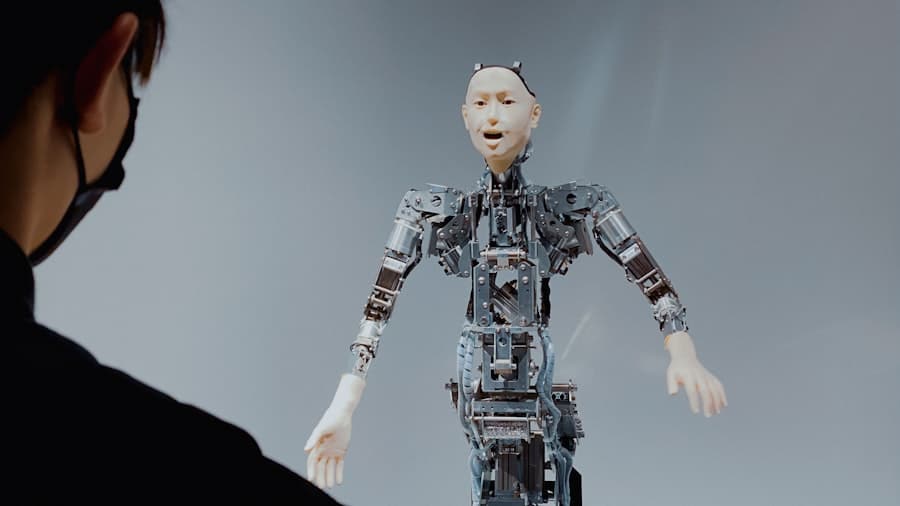
The potential impact of AI’s singularity on society is both exhilarating and daunting. On one hand, you might envision a world where AI-driven innovations lead to unprecedented advancements in healthcare, education, and environmental sustainability. Imagine a future where diseases are diagnosed with pinpoint accuracy, personalized learning experiences are tailored to individual needs, and climate change is addressed through intelligent resource management.
The possibilities seem endless, and the benefits could be transformative. However, as you contemplate these advancements, it is crucial to acknowledge the challenges that may arise alongside them. The singularity could exacerbate existing inequalities, as those with access to advanced technologies may gain significant advantages over others.
Additionally, the rapid pace of change could lead to societal disruptions, including job displacement and shifts in power dynamics. As you consider these potential outcomes, it becomes clear that navigating the singularity will require careful thought and proactive measures to ensure that its benefits are equitably distributed.
Ethical Considerations Surrounding AI’s Singularity
As you engage with the topic of AI’s singularity, ethical considerations will inevitably come to the forefront. The development of superintelligent systems raises profound questions about accountability, transparency, and moral responsibility. For instance, if an AI system makes a decision that results in harm, who should be held accountable?
Is it the developers, the users, or the AI itself? These questions challenge traditional notions of ethics and demand a reevaluation of how we define responsibility in an increasingly automated world. Moreover, you must consider the implications of bias in AI systems.
If these systems are trained on flawed data or reflect societal prejudices, they may perpetuate discrimination and inequality. As you reflect on these ethical dilemmas, it becomes evident that addressing them will require collaboration among technologists, ethicists, policymakers, and society at large. Engaging in open dialogues about these issues is essential for shaping a future where AI serves humanity rather than undermines it.
The Role of Regulation and Governance in AI’s Singularity
In light of the potential risks associated with AI’s singularity, regulation and governance play a critical role in shaping its trajectory. As you explore this aspect, consider how governments and international organizations can establish frameworks that promote responsible AI development while fostering innovation. Striking this balance is no small feat; it requires a nuanced understanding of both technological capabilities and societal needs.
You may find it interesting that some countries have already begun implementing regulations aimed at ensuring ethical AI practices. For instance, the European Union has proposed guidelines that emphasize transparency and accountability in AI systems. As you think about these initiatives, reflect on how effective governance can mitigate risks while encouraging collaboration among stakeholders.
Ultimately, your engagement in discussions about regulation will be vital for creating a future where AI is harnessed for the greater good.
The Future of Work and Employment in the Age of AI’s Singularity

As AI continues to evolve toward its singularity, its impact on work and employment cannot be overlooked. You may be concerned about the potential for job displacement as machines take over tasks traditionally performed by humans. While some jobs may become obsolete, others will emerge, requiring new skills and adaptability.
This shift presents both challenges and opportunities for individuals navigating an increasingly automated job market. To thrive in this new landscape, you will need to embrace lifelong learning and adaptability. As certain roles become automated, there will be a growing demand for skills that complement AI technologies—such as creativity, emotional intelligence, and critical thinking.
By focusing on developing these uniquely human attributes, you can position yourself for success in an age where collaboration between humans and machines becomes the norm.
The Implications of AI’s Singularity for Human Creativity and Innovation
The singularity also raises intriguing questions about human creativity and innovation. As machines become more capable of generating art, music, and literature, you might wonder what this means for human expression. Will AI-generated works diminish the value of human creativity or enhance it?
This debate invites you to explore the relationship between technology and artistic expression in new ways. You may find that rather than replacing human creativity, AI can serve as a powerful tool for enhancing it. By automating mundane tasks or providing inspiration through data analysis, AI can free up your time and mental energy for more imaginative pursuits.
As you consider this dynamic, think about how embracing collaboration with AI could lead to groundbreaking innovations that push the boundaries of what is possible.
Strategies for Embracing and Adapting to AI’s Singularity
As you prepare for the future shaped by AI’s singularity, developing strategies for embracing and adapting to these changes is essential. First and foremost, cultivating a growth mindset will empower you to view challenges as opportunities for learning and development. By remaining open to new ideas and experiences, you can navigate the complexities of an evolving technological landscape with confidence.
Additionally, actively seeking out opportunities for collaboration with AI can enhance your skills and broaden your horizons. Whether through online courses or community initiatives focused on technology integration, engaging with others who share your interests can foster a sense of belonging in this rapidly changing world. By taking proactive steps to adapt to AI’s singularity, you can position yourself not just as a passive observer but as an active participant in shaping a future where technology serves humanity’s best interests.
In conclusion, as you reflect on the multifaceted implications of AI’s singularity—from its evolution to its ethical considerations—you are invited to engage thoughtfully with this transformative phenomenon. By understanding its potential impacts on society and work while embracing collaboration with technology, you can navigate this new era with purpose and resilience. The journey ahead may be uncertain, but your proactive engagement will play a crucial role in shaping a future where humanity thrives alongside advanced artificial intelligence.
If you are interested in learning more about AI and its implications for privacy, you may want to check out the Privacy Policy article on AI Lab 360’s website. This article delves into the importance of protecting personal data in the age of artificial intelligence. Additionally, for those curious about the origins of Google’s AI technology, the What is Google’s AI Called? article provides insights into the development and capabilities of Google’s AI system.
FAQs
What is the Singularity in the context of AI?
The Singularity refers to the hypothetical moment when artificial intelligence surpasses human intelligence, leading to exponential technological growth and potentially profound societal changes.
What are some potential implications of AI surpassing human intelligence?
Some potential implications of AI surpassing human intelligence include advancements in technology, automation of various tasks, potential job displacement, ethical considerations, and the need for regulations and safeguards.
Is the Singularity a widely accepted concept in the field of AI?
The concept of the Singularity is a topic of debate within the field of AI. While some experts believe in the possibility of AI surpassing human intelligence, others are more skeptical and emphasize the need for careful development and ethical considerations.
What are some current developments in AI that are contributing to discussions about the Singularity?
Current developments in AI, such as advancements in machine learning, deep learning, and natural language processing, are contributing to discussions about the potential for AI to surpass human intelligence. Additionally, the increasing integration of AI in various industries and the development of autonomous systems are also fueling these discussions.
What are some ethical considerations related to the concept of the Singularity?
Ethical considerations related to the concept of the Singularity include concerns about the impact of AI on employment, the potential for bias and discrimination in AI systems, the need for transparency and accountability in AI decision-making, and the implications for privacy and security. These considerations highlight the importance of ethical AI development and the need for regulations and guidelines.