The journey of underwater robotics has been nothing short of remarkable, evolving from rudimentary designs to sophisticated machines capable of exploring the ocean’s most enigmatic depths. In the early days, underwater exploration was limited to basic submersibles and remotely operated vehicles (ROVs) that could only perform simple tasks. These early models were often tethered to surface vessels, relying on cumbersome cables for power and communication.
As you delve into the history of these innovations, you will find that the 20th century marked a significant turning point. The introduction of advanced materials and electronics allowed for the development of more agile and capable underwater robots. As technology progressed, so did the capabilities of underwater robotics.
The advent of autonomous underwater vehicles (AUVs) in the late 20th century revolutionized the field. These vehicles could operate independently, navigating through complex underwater environments without direct human control. Equipped with advanced sensors and imaging systems, AUVs began to uncover secrets hidden beneath the waves, mapping the ocean floor and studying marine life in unprecedented detail.
You might find it fascinating that these advancements have not only enhanced our understanding of marine ecosystems but have also paved the way for new applications in various fields, from environmental monitoring to resource exploration.
Key Takeaways
- Underwater robotics has evolved significantly, allowing for more advanced exploration of the oceanic depths.
- Exploring the oceanic depths is important for understanding and preserving marine ecosystems and resources.
- AI is revolutionizing ocean exploration by enabling autonomous underwater vehicles to collect and analyze data more efficiently.
- Underwater AI plays a crucial role in environmental monitoring by providing real-time data on oceanic conditions and marine life.
- Advancements in underwater AI technology are accompanied by challenges such as power supply and communication limitations.
The Importance of Exploring the Oceanic Depths
Exploring the oceanic depths is crucial for several reasons, and as you consider these factors, you may realize just how vital this endeavor is for humanity. The oceans cover more than 70% of our planet’s surface and play a critical role in regulating climate, supporting biodiversity, and providing resources. By venturing into these depths, you can gain insights into the complex interactions within marine ecosystems and how they respond to environmental changes.
Understanding these dynamics is essential for developing effective conservation strategies and ensuring the sustainability of ocean resources. Moreover, the ocean is a treasure trove of untapped potential. From pharmaceuticals derived from marine organisms to renewable energy sources like tidal and wave energy, the possibilities are vast.
As you explore the depths, you may uncover new species and ecosystems that could hold the key to breakthroughs in science and technology. The ocean’s mysteries are not just about what lies beneath; they also encompass the potential for innovation that can benefit society as a whole. By investing in ocean exploration, you are contributing to a future where we can harness these resources responsibly while preserving the delicate balance of marine life.
How AI is Revolutionizing Ocean Exploration

Artificial intelligence (AI) is transforming ocean exploration in ways that were once unimaginable. As you consider the integration of AI into underwater robotics, you will see how it enhances data collection, analysis, and decision-making processes. AI algorithms can process vast amounts of data collected by underwater vehicles, identifying patterns and anomalies that would be difficult for human researchers to discern.
This capability allows for more efficient exploration and a deeper understanding of complex marine environments. Furthermore, AI-driven systems can adapt to changing conditions in real-time, making them invaluable for navigating unpredictable underwater landscapes. For instance, when faced with obstacles or varying currents, AI can adjust a vehicle’s path autonomously, ensuring that exploration missions remain on course.
This level of adaptability not only increases the efficiency of data collection but also reduces the risk associated with human-operated missions in challenging environments. As you reflect on these advancements, it becomes clear that AI is not just a tool; it is a game-changer in how we approach ocean exploration.
The Role of Underwater AI in Environmental Monitoring
Underwater AI plays a pivotal role in environmental monitoring, providing researchers with powerful tools to assess the health of marine ecosystems. As you explore this aspect of AI technology, you will discover how it enables continuous monitoring of water quality, temperature, and other critical parameters. By deploying AI-equipped sensors on underwater vehicles, researchers can gather real-time data that informs conservation efforts and policy decisions.
One significant application of underwater AI is in tracking changes in marine biodiversity. By analyzing data collected from various locations over time, AI algorithms can identify trends in species populations and distributions. This information is crucial for understanding the impacts of climate change, pollution, and overfishing on marine life.
As you consider the implications of this technology, you may realize that underwater AI not only aids in monitoring but also empowers scientists to take proactive measures to protect vulnerable ecosystems.
Challenges and Advancements in Underwater AI Technology
Despite its potential, underwater AI technology faces several challenges that researchers must navigate to fully realize its capabilities. One major hurdle is the harsh underwater environment itself. High pressures, low temperatures, and limited visibility can hinder the performance of sensors and communication systems.
As you delve into this topic, you will find that engineers are continually working to develop more robust materials and designs that can withstand these conditions while maintaining functionality. Another challenge lies in data management and analysis. The sheer volume of data generated by underwater vehicles can be overwhelming, making it difficult for researchers to extract meaningful insights efficiently.
However, advancements in machine learning techniques are helping to address this issue. By developing more sophisticated algorithms capable of processing large datasets quickly and accurately, researchers can unlock valuable information that was previously inaccessible. As you reflect on these challenges and advancements, it becomes evident that overcoming obstacles is essential for pushing the boundaries of underwater AI technology.
The Future of Underwater AI: Potential Applications and Discoveries
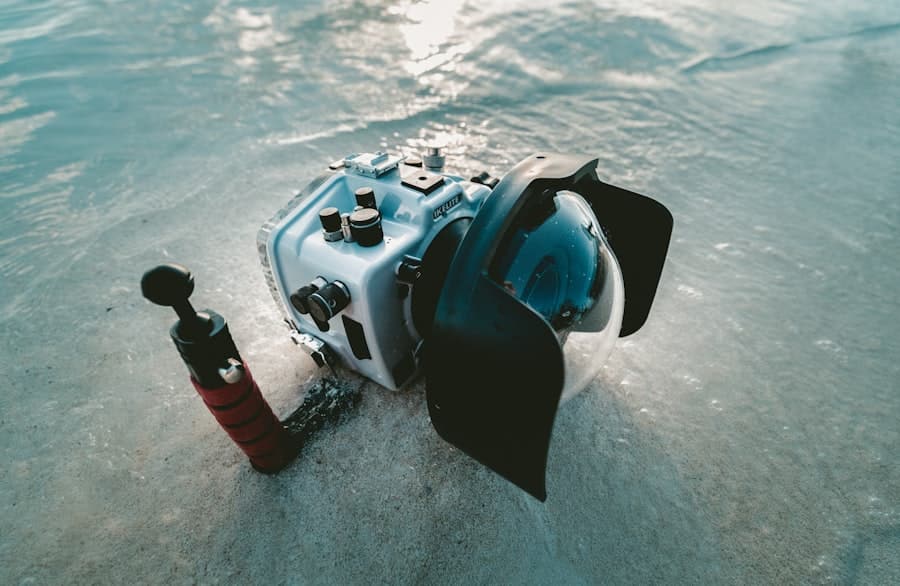
Looking ahead, the future of underwater AI holds immense promise for both scientific discovery and practical applications. As you consider potential developments, think about how AI could enhance our ability to explore uncharted territories of the ocean. With ongoing advancements in robotics and machine learning, we may soon see autonomous vehicles capable of conducting long-duration missions in remote areas, gathering data that could reshape our understanding of marine ecosystems.
Moreover, underwater AI could play a crucial role in resource management and sustainable practices. For instance, AI systems could optimize fishing practices by analyzing fish populations and migration patterns, ensuring that fishing activities are conducted responsibly. Additionally, as climate change continues to impact ocean health, AI could assist in monitoring changes in coral reefs and other critical habitats, enabling timely interventions to protect these ecosystems.
As you envision these possibilities, it becomes clear that the future of underwater AI is not just about exploration; it is about fostering a sustainable relationship with our oceans.
Collaborations between AI and Human Researchers in Ocean Exploration
The collaboration between AI technologies and human researchers is essential for maximizing the potential of underwater exploration. As you consider this partnership, think about how AI can augment human capabilities rather than replace them. While AI excels at processing data and identifying patterns, human researchers bring intuition, creativity, and contextual understanding to the table.
This synergy allows for a more comprehensive approach to ocean exploration. For example, when analyzing data collected from underwater missions, researchers can leverage AI tools to identify areas of interest or anomalies that warrant further investigation. This collaboration enables scientists to focus their efforts on specific regions or phenomena while relying on AI to handle routine data processing tasks.
As you reflect on this dynamic relationship between humans and machines, it becomes evident that combining strengths leads to more effective exploration strategies and deeper insights into our oceans.
Ethical Considerations in the Use of Underwater AI
As with any technological advancement, ethical considerations must be at the forefront when deploying underwater AI systems. As you contemplate these issues, think about the potential impacts on marine ecosystems and local communities. The use of autonomous vehicles raises questions about accountability and responsibility—who is liable if an AI system causes harm to marine life or disrupts fragile habitats?
Addressing these concerns requires careful regulation and oversight to ensure that exploration efforts prioritize environmental protection. Additionally, there are ethical implications related to data privacy and ownership. As underwater vehicles collect vast amounts of data from sensitive areas, questions arise about who has access to this information and how it will be used.
Ensuring transparency and equitable access to data is crucial for fostering collaboration among researchers while protecting the interests of local communities who rely on marine resources for their livelihoods. As you consider these ethical dimensions, it becomes clear that responsible stewardship is essential for harnessing the power of underwater AI in a way that benefits both humanity and the oceans we seek to understand better.
In a related article titled Teaching AI: The Challenges and Rewards of Educating Machines, the complexities of training artificial intelligence systems are explored. Just as AI’s Oceanic Odyssey delves into the depths of the ocean with robotic intelligence, this article delves into the challenges and rewards of educating machines. It highlights the importance of proper training and the potential benefits that can be reaped from successfully teaching AI systems. Both articles showcase the incredible capabilities of artificial intelligence and the exciting possibilities that lie ahead in the field.
FAQs
What is AI’s Oceanic Odyssey: Exploring the Depths with Robotic Intelligence about?
AI’s Oceanic Odyssey: Exploring the Depths with Robotic Intelligence is an article that discusses the use of artificial intelligence (AI) and robotic technology to explore the depths of the ocean. It explores how these technologies are being used to gather data, conduct research, and make new discoveries in the oceanic environment.
How is AI being used to explore the ocean depths?
AI is being used in combination with robotic technology to explore the ocean depths. Autonomous underwater vehicles (AUVs) and remotely operated vehicles (ROVs) equipped with AI are able to navigate the ocean floor, collect data, and perform tasks such as mapping the seafloor, studying marine life, and monitoring environmental conditions.
What are the benefits of using AI and robotic intelligence for ocean exploration?
Using AI and robotic intelligence for ocean exploration offers several benefits. These technologies can operate in environments that are too dangerous or difficult for humans to access, allowing for the collection of valuable data and the study of marine ecosystems. They also have the potential to increase the efficiency and accuracy of oceanic research and exploration.
What are some examples of AI and robotic technology being used for ocean exploration?
Examples of AI and robotic technology being used for ocean exploration include AUVs equipped with machine learning algorithms to identify and classify marine organisms, ROVs with AI capabilities to perform complex tasks such as underwater maintenance and repair, and underwater drones that can autonomously navigate and collect data in the ocean depths.
What are the future prospects for AI’s role in ocean exploration?
The future prospects for AI’s role in ocean exploration are promising. As AI technology continues to advance, it is expected to play an increasingly important role in oceanic research and exploration. This includes the development of more sophisticated AI algorithms for data analysis, improved autonomous capabilities for underwater vehicles, and the use of AI to support environmental monitoring and conservation efforts in the ocean.