As you step into the world of modern industry, you find yourself amidst a transformative wave known as the Fourth Industrial Revolution. This era is characterized by the fusion of advanced technologies, blurring the lines between the physical, digital, and biological realms. Unlike its predecessors, which were defined by steam power, electricity, and computing, this revolution is driven by innovations such as artificial intelligence (AI), the Internet of Things (IoT), and robotics.
You may notice that these technologies are not merely tools; they are reshaping how industries operate, interact, and evolve. In this new landscape, the manufacturing sector stands at the forefront of change. The integration of AI into manufacturing processes is not just a trend; it represents a fundamental shift in how products are designed, produced, and delivered.
As you explore this dynamic environment, you will discover that AI is not only enhancing efficiency but also enabling manufacturers to respond more adeptly to market demands. The Fourth Industrial Revolution is not just about technology; it’s about rethinking traditional practices and embracing a future where innovation drives growth and sustainability.
Key Takeaways
- The Fourth Industrial Revolution is characterized by the fusion of technologies blurring the lines between the physical, digital, and biological spheres.
- AI plays a crucial role in manufacturing by optimizing production processes, predictive maintenance, and quality control.
- The benefits of AI in manufacturing include increased efficiency, reduced downtime, improved product quality, and enhanced safety.
- Challenges of implementing AI in manufacturing include high initial costs, data privacy concerns, and the need for upskilling the workforce.
- Examples of AI in manufacturing include autonomous robots, predictive maintenance systems, and quality control through machine learning algorithms.
- The future outlook for AI in manufacturing is promising, with continued advancements in AI technology leading to further optimization and automation of production processes.
- Ethical considerations of AI in manufacturing include job displacement, data privacy, and the potential for AI to be used for malicious purposes.
- Embracing AI in manufacturing is crucial for staying competitive and meeting the demands of the future, despite the ethical considerations and challenges.
The Role of AI in Manufacturing
As you delve deeper into the role of AI in manufacturing, you will find that it serves as a catalyst for unprecedented advancements. AI technologies are being employed to optimize production lines, enhance quality control, and streamline supply chain management. By leveraging machine learning algorithms and data analytics, manufacturers can predict equipment failures before they occur, thereby minimizing downtime and reducing maintenance costs.
This predictive maintenance is just one example of how AI is revolutionizing operational efficiency. Moreover, AI is transforming the design process itself. With generative design software powered by AI, engineers can input parameters such as materials, manufacturing methods, and cost constraints to generate thousands of design alternatives.
This capability allows for innovative solutions that may not have been conceived through traditional design methods. As you observe these changes, it becomes clear that AI is not merely an addition to existing processes; it is fundamentally altering the way products are conceived and brought to market.
Benefits of AI in Manufacturing
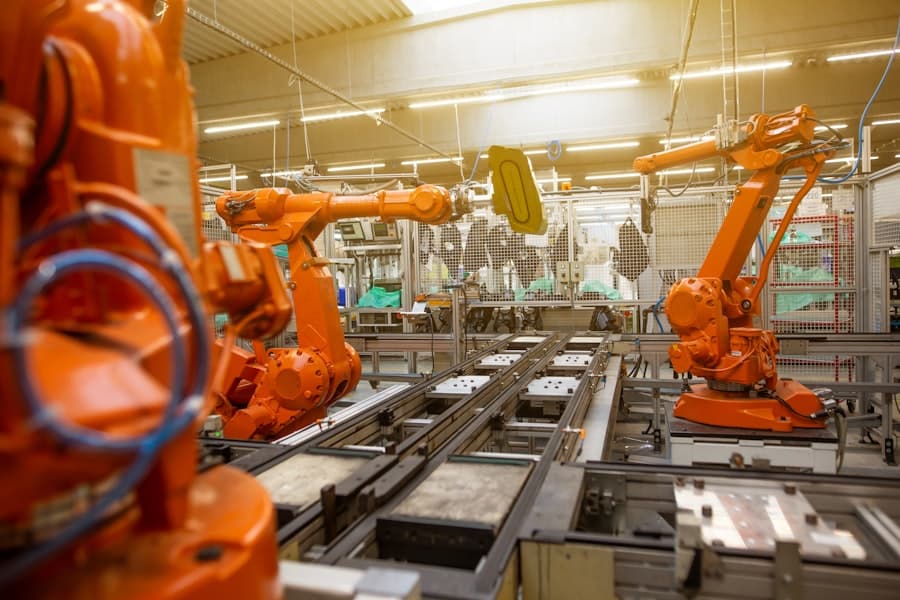
The benefits of integrating AI into manufacturing are manifold and far-reaching. One of the most significant advantages is the enhancement of productivity. By automating repetitive tasks and optimizing workflows, AI enables workers to focus on more complex and creative aspects of their jobs.
This shift not only increases output but also fosters a more engaged workforce. As you consider the implications of this transformation, you realize that a more skilled and satisfied workforce can lead to higher quality products and improved customer satisfaction. In addition to productivity gains, AI contributes to cost savings across various facets of manufacturing.
For instance, by utilizing AI-driven analytics, companies can better manage inventory levels, reducing excess stock and minimizing waste. Furthermore, AI can enhance energy efficiency by optimizing machinery operation based on real-time data. As you reflect on these benefits, it becomes evident that the financial implications of adopting AI are substantial, positioning companies for greater competitiveness in an increasingly globalized market.
Challenges of Implementing AI in Manufacturing
Despite the numerous advantages that AI offers, implementing these technologies in manufacturing is not without its challenges. One significant hurdle is the initial investment required for AI systems and infrastructure. Many manufacturers may find it daunting to allocate resources for advanced technologies when faced with tight budgets and competing priorities.
As you navigate this landscape, you may encounter organizations that are hesitant to embrace change due to concerns about return on investment. Another challenge lies in the integration of AI with existing systems and processes. Many manufacturing environments rely on legacy systems that may not be compatible with modern AI solutions.
This incompatibility can lead to disruptions during implementation and necessitate extensive retraining for employees. As you consider these obstacles, it becomes clear that successful adoption of AI requires not only financial investment but also a commitment to change management and workforce development.
Examples of AI in Manufacturing
As you explore real-world applications of AI in manufacturing, several compelling examples come to light. One notable instance is the use of AI-powered robots in assembly lines. These robots can work alongside human operators, performing tasks such as welding or painting with precision and speed.
Companies like Tesla have integrated such systems into their production processes, resulting in increased efficiency and reduced labor costs. Another example is the application of AI in quality control. Manufacturers are employing computer vision systems powered by AI to inspect products for defects at a speed and accuracy that surpasses human capabilities.
For instance, companies in the semiconductor industry utilize these systems to detect minute flaws on chips during production, ensuring that only high-quality products reach consumers. As you examine these examples, it becomes evident that AI is not just a theoretical concept; it is actively reshaping manufacturing practices across various sectors.
Future Outlook for AI in Manufacturing
Looking ahead, the future of AI in manufacturing appears promising yet complex. As technology continues to evolve, you can expect even greater integration of AI into all aspects of production. The rise of smart factories—where machines communicate with each other and make autonomous decisions—will redefine operational paradigms.
You may envision a scenario where real-time data analytics drive continuous improvement processes, allowing manufacturers to adapt swiftly to changing market conditions. Moreover, advancements in AI will likely lead to more personalized manufacturing experiences. As consumer preferences become increasingly diverse, manufacturers will need to leverage AI to create customized products at scale.
This shift towards mass customization will require agile production systems capable of responding to individual customer needs without sacrificing efficiency or quality. As you contemplate these developments, it becomes clear that embracing AI will be essential for manufacturers seeking to thrive in an ever-evolving landscape.
Ethical Considerations of AI in Manufacturing
As you engage with the topic of AI in manufacturing, it’s crucial to consider the ethical implications that accompany these advancements. One pressing concern is the potential impact on employment. While AI can enhance productivity and create new job opportunities, there is also a fear that automation may displace workers in certain roles.
As you reflect on this issue, you may recognize the importance of developing strategies for workforce transition and reskilling programs to ensure that employees are equipped for the jobs of the future. Additionally, there are ethical considerations surrounding data privacy and security. The implementation of AI often involves collecting vast amounts of data from various sources, raising questions about how this data is used and protected.
Manufacturers must navigate these concerns carefully to maintain trust with consumers and comply with regulations. As you ponder these ethical dimensions, it becomes evident that responsible implementation of AI requires a commitment to transparency and accountability.
Embracing AI in Manufacturing for the Future
In conclusion, as you stand at the intersection of technology and industry, it is clear that embracing AI in manufacturing is not just an option; it is a necessity for future success. The Fourth Industrial Revolution presents both challenges and opportunities that require proactive engagement from manufacturers at all levels. By harnessing the power of AI, you can unlock new levels of efficiency, innovation, and competitiveness.
As you move forward in this rapidly changing landscape, remember that the journey toward integrating AI into manufacturing is ongoing. It demands a willingness to adapt, invest in new technologies, and prioritize ethical considerations. By doing so, you position yourself—and your organization—at the forefront of a revolution that promises to redefine what is possible in manufacturing for years to come.
Embrace this change with an open mind and a commitment to continuous improvement; the future awaits those who dare to innovate.
In a related article discussing the impact of AI on society, “The Socioeconomic Impacts of AI: Job Creation vs Automation” explores the potential consequences of AI on the workforce. The article delves into the debate surrounding whether AI will create more jobs or lead to widespread automation, ultimately shaping the future of employment. To read more about this topic, visit here.
FAQs
What is the Fourth Industrial Revolution?
The Fourth Industrial Revolution refers to the ongoing automation of traditional manufacturing and industrial practices, using modern smart technology. It involves a combination of cyber-physical systems, the Internet of Things, and the Internet of Systems.
What is AI in Manufacturing?
AI in manufacturing refers to the use of artificial intelligence technologies such as machine learning, computer vision, and natural language processing to automate and optimize various processes within the manufacturing industry.
How is AI used in Manufacturing?
AI is used in manufacturing for predictive maintenance, quality control, supply chain optimization, autonomous robots, and smart manufacturing processes. It helps in improving efficiency, reducing downtime, and enhancing overall productivity.
What are the benefits of AI in Manufacturing?
The benefits of AI in manufacturing include improved productivity, reduced operational costs, enhanced product quality, predictive maintenance, and the ability to adapt to changing market demands more effectively.
What are the challenges of implementing AI in Manufacturing?
Challenges of implementing AI in manufacturing include high initial investment costs, the need for specialized technical expertise, data security and privacy concerns, and potential job displacement due to automation.