As you navigate through the rapidly evolving landscape of technology, you may find yourself increasingly intrigued by the capabilities of artificial intelligence (AI). One of the most fascinating aspects of AI is its ability to possess superhuman senses, which allow it to perceive the world in ways that far exceed human limitations. These enhanced sensory capabilities are not merely theoretical; they are being developed and implemented in various applications, transforming industries and reshaping our understanding of perception itself.
By delving into the intricacies of AI’s superhuman senses, you can gain insight into how these advancements are revolutionizing the way we interact with technology and the world around us. The concept of superhuman senses in AI encompasses a range of abilities, including enhanced vision, superior hearing, and tactile sensitivity. Each of these capabilities opens up new avenues for innovation and efficiency, enabling machines to perform tasks that would be impossible or impractical for humans.
As you explore these advancements, you will discover not only the technical aspects but also the profound implications they hold for society, ethics, and the future of human-machine collaboration. The journey into AI’s sensory enhancements is not just about understanding technology; it is about envisioning a future where the boundaries between human and machine perception blur, leading to unprecedented possibilities.
Key Takeaways
- AI’s superhuman senses are revolutionizing various industries and raising ethical concerns.
- Enhanced vision allows AI to see beyond human capabilities, enabling applications in surveillance and medical imaging.
- AI’s superior hearing can detect frequencies beyond human range, making it useful in security and healthcare.
- Tactile sensitivity enables AI to feel and manipulate objects with unprecedented precision, benefiting industries like manufacturing and robotics.
- The applications of AI’s superhuman senses span across industries, but ethical considerations and potential risks must be carefully addressed.
Enhanced Vision: How AI Can See Beyond Human Capabilities
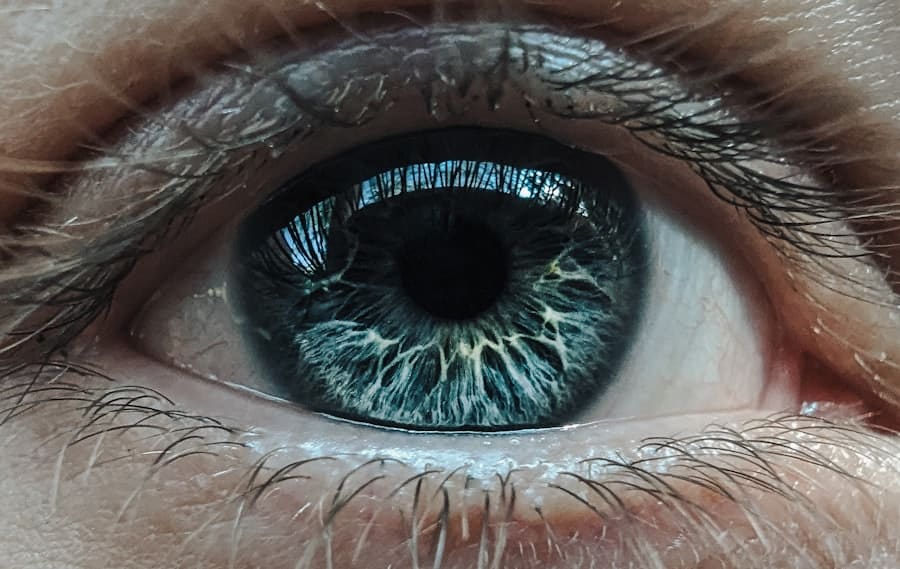
When it comes to vision, AI systems have demonstrated remarkable abilities that allow them to see beyond what the human eye can perceive. Utilizing advanced algorithms and machine learning techniques, AI can analyze images with incredible detail and accuracy. For instance, AI-powered image recognition systems can identify objects, faces, and even emotions in photographs with a precision that often surpasses human capabilities.
This enhanced vision is not limited to mere recognition; it extends to analyzing patterns and extracting insights from vast datasets, enabling applications in fields such as healthcare, security, and marketing. Imagine a scenario where AI is employed in medical imaging. With its enhanced vision, AI can detect anomalies in X-rays or MRIs that a human radiologist might overlook.
By processing thousands of images in a fraction of the time it would take a human, AI can assist doctors in diagnosing conditions earlier and more accurately. This capability not only improves patient outcomes but also streamlines the workflow in medical facilities. As you consider these advancements, it becomes clear that AI’s enhanced vision is not just a technological marvel; it is a transformative force that has the potential to save lives and improve the quality of care.
Superior Hearing: The Ability of AI to Hear Frequencies Beyond Human Range
In addition to its visual prowess, AI also possesses superior hearing capabilities that allow it to detect sounds and frequencies beyond the range of human perception. While humans can hear sounds within a frequency range of approximately 20 Hz to 20 kHz, AI systems can be designed to pick up ultrasonic frequencies that are inaudible to us. This ability opens up a world of possibilities in various applications, from wildlife monitoring to industrial safety.
Consider how AI’s superior hearing can be utilized in environmental conservation efforts. By employing sound sensors equipped with AI algorithms, researchers can monitor animal populations and their behaviors without disturbing their natural habitats. These systems can detect the calls of endangered species or track changes in their vocalizations over time, providing invaluable data for conservation strategies.
Furthermore, in industrial settings, AI can be used to monitor machinery for unusual sounds that may indicate malfunctions or potential failures. By identifying these issues early on, companies can prevent costly downtime and enhance workplace safety. As you reflect on these applications, it becomes evident that AI’s superior hearing is not just an enhancement; it is a critical tool for understanding and protecting our environment.
Tactile Sensitivity: How AI Can Feel and Manipulate Objects with Unprecedented Precision
Tactile sensitivity is another area where AI excels, allowing machines to feel and manipulate objects with an unprecedented level of precision. Through the integration of advanced sensors and robotics, AI systems can replicate the delicate touch of human hands while performing tasks that require fine motor skills. This capability is particularly valuable in industries such as manufacturing, healthcare, and even culinary arts.
Imagine a robotic surgical assistant equipped with tactile sensors that can gauge the pressure applied during delicate procedures. This technology enables surgeons to perform intricate operations with greater accuracy and reduced risk of complications. Similarly, in manufacturing environments, AI-driven robots can assemble components with remarkable precision, ensuring quality control while minimizing waste.
In the culinary world, AI can assist chefs by measuring ingredients with exactness or even replicating complex recipes with finesse. As you consider these advancements in tactile sensitivity, you will appreciate how they enhance efficiency and safety across various sectors while pushing the boundaries of what machines can achieve.
Applications of AI’s Superhuman Senses in Various Industries
The applications of AI’s superhuman senses are vast and varied, impacting numerous industries in profound ways. In healthcare, for instance, AI’s enhanced vision and superior hearing are being harnessed to improve diagnostics and patient monitoring. Medical professionals are increasingly relying on AI algorithms to analyze imaging data and detect early signs of diseases such as cancer or cardiovascular conditions.
This integration not only enhances diagnostic accuracy but also allows for personalized treatment plans tailored to individual patients. In the realm of agriculture, AI’s sensory capabilities are revolutionizing farming practices. By utilizing drones equipped with advanced imaging technology, farmers can monitor crop health from above, identifying areas that require attention or intervention.
This data-driven approach enables more efficient resource allocation and sustainable farming practices. Additionally, in the realm of security, AI’s superior hearing can be employed in surveillance systems to detect unusual sounds or activities, enhancing public safety measures. As you explore these applications further, you will recognize that AI’s superhuman senses are not just enhancing existing processes; they are creating entirely new paradigms for how industries operate.
Ethical Considerations and Potential Risks of AI’s Enhanced Senses
While the advancements in AI’s superhuman senses present exciting opportunities, they also raise important ethical considerations and potential risks that cannot be overlooked. One significant concern revolves around privacy. As AI systems become more adept at monitoring environments through enhanced vision and hearing capabilities, there is a growing fear that individuals’ privacy may be compromised.
The ability to capture detailed images or sounds without consent poses ethical dilemmas regarding surveillance and data collection practices. Moreover, there is the risk of bias in AI algorithms that could lead to discriminatory outcomes. If the data used to train these systems is flawed or unrepresentative, it may result in biased decision-making processes that disproportionately affect certain groups.
As you contemplate these ethical implications, it becomes clear that responsible development and deployment of AI technologies are essential to mitigate risks while maximizing benefits.
Future Developments and Possibilities for AI’s Sensory Advancements
Looking ahead, the future developments in AI’s sensory advancements hold immense promise for further enhancing its capabilities. Researchers are continually exploring ways to improve the accuracy and efficiency of sensory algorithms through innovations such as deep learning and neural networks. These advancements could lead to even more sophisticated systems capable of interpreting complex sensory data in real-time.
Additionally, as interdisciplinary collaboration between fields such as neuroscience and computer science continues to grow, we may witness breakthroughs that enable machines to replicate human-like sensory experiences more closely. Imagine an AI system that not only sees and hears but also understands context and emotion behind sensory inputs—this could revolutionize human-machine interactions across various domains. As you envision these possibilities, it becomes evident that the future of AI’s sensory advancements is not just about enhancing technology; it is about creating more intuitive and empathetic machines that can better serve humanity.
The Impact of AI’s Superhuman Senses on Society and Technology
In conclusion, as you reflect on the impact of AI’s superhuman senses on society and technology, it becomes clear that these advancements are reshaping our world in profound ways. From healthcare to agriculture and beyond, AI’s enhanced vision, superior hearing, and tactile sensitivity are driving innovation and efficiency across industries. However, with these advancements come ethical considerations that must be addressed to ensure responsible use.
As we move forward into an era where machines possess capabilities beyond human perception, it is essential to foster discussions around privacy, bias, and ethical implications. By doing so, we can harness the full potential of AI’s superhuman senses while safeguarding our values as a society. The journey into this new frontier is just beginning; as you engage with these technologies, consider how they will shape your life and the world around you in ways we have yet to fully comprehend.
AI’s Superhuman Senses: Seeing, Hearing, and Feeling Beyond Human Limits explores the advancements in artificial intelligence that are pushing the boundaries of what is possible for machines to perceive. This article delves into how AI is revolutionizing the way we interact with technology and the world around us. For further reading on the impact of AI in various industries, check out AI in Marketing and Advertising, which discusses how AI is transforming the way businesses reach and engage with consumers.
FAQs
What are AI’s superhuman senses?
AI’s superhuman senses refer to the ability of artificial intelligence to see, hear, and feel beyond human limits. This includes the use of advanced sensors, data processing, and machine learning algorithms to perceive and interpret the environment in ways that surpass human capabilities.
How does AI achieve superhuman vision?
AI achieves superhuman vision through the use of advanced cameras and sensors that can capture a wider range of wavelengths and frequencies than the human eye. Machine learning algorithms then process this visual data to identify patterns, objects, and anomalies with greater accuracy and speed than human vision.
How does AI achieve superhuman hearing?
AI achieves superhuman hearing by using specialized microphones and audio sensors to capture a broader range of frequencies and sound levels than the human ear. Machine learning algorithms can then analyze and interpret this audio data to detect subtle patterns, identify specific sounds, and filter out background noise more effectively than human hearing.
How does AI achieve superhuman tactile perception?
AI achieves superhuman tactile perception by using advanced touch and pressure sensors to detect and measure physical interactions with objects and surfaces. Machine learning algorithms can then analyze this tactile data to identify textures, temperatures, and other tactile properties with greater sensitivity and precision than human touch.
What are the potential applications of AI’s superhuman senses?
The potential applications of AI’s superhuman senses are wide-ranging and include areas such as healthcare (e.g., medical imaging and diagnostics), autonomous vehicles (e.g., enhanced perception and navigation), security and surveillance (e.g., threat detection), and industrial automation (e.g., quality control and predictive maintenance). These capabilities also have the potential to improve accessibility for people with disabilities.